Foshan kung fu
Guangdong Lion Dance in Foshan: A First-Viewer’s Guide
Separate heritage identity from training, ritual, staged performance and competition, then verify the organiser and every live detail.
On this page
- Start with the official heritage category
- Use careful language for Guangdong and southern lion dance
- Understand the relationship with martial arts
- Watch the team create one character
- Keep percussion detail in the listening guide
- Read four different event contexts
- Training
- Ritual and community occasions
- Staged public performance
- Competition
- Avoid fixed origin stories and rankings
- Watch respectfully and safely
- Keep current programmes in a live layer
- Continue exploring Foshan culture
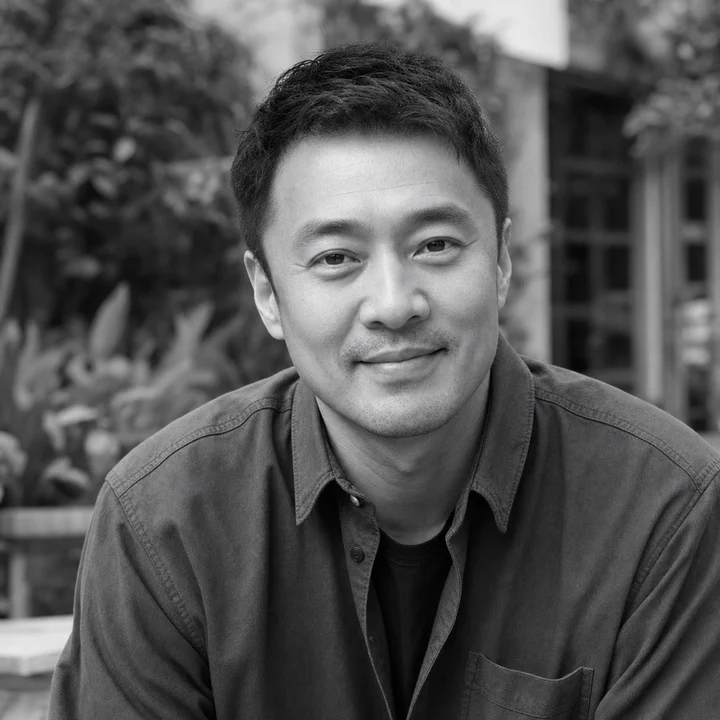
- About Zhang Wei
Guangdong lion dance is registered as traditional dance and has documented historical relationships with southern martial-arts communities. Those two facts belong together, but they are not interchangeable: lion dance should not be reduced to combat or treated as a generic tourist stunt.
For a first-time viewer, begin with context. Ask whether the organiser describes the occasion as training, a community or ritual event, a staged public performance or a competition. These are Foshan Living’s editorial viewing categories, not an official national taxonomy. Each setting has a different purpose, and every live date, programme and access rule must be checked again.
Start with the official heritage category
The national intangible-cultural-heritage system records Guangdong lion dance as a traditional-dance project. That classification is the firm starting point for this guide.
It tells us that the practice belongs within an accountable heritage framework. It does not certify every troupe, establish a single standard routine or prove every claim made in promotional material. “Intangible cultural heritage” is not a quality badge that can be transferred automatically from a recognised project to any commercial show, class or product using a lion image.
The official category also helps prevent a common misunderstanding. Guangdong lion dance may appear alongside martial arts, but its registered category is traditional dance. The relationship with martial practice needs its own explanation rather than a shortcut such as “lion dance is kung fu.”
Use careful language for Guangdong and southern lion dance
English-language introductions often use “southern lion dance” as a broad contrast with northern lion forms. The official Chinese source used here names the project Guangdong xingshi—Guangdong lion dance. Those terms overlap in everyday explanation, but they are not evidence that every southern tradition is identical.
This article therefore follows a simple boundary:
- Guangdong lion dance refers to the official project and the Guangdong/Foshan context supported by the source register;
- southern lion dance is used only as a broad regional description, not as proof that every troupe shares one history, costume, musical language or routine;
- a specific style, school or sequence should be named only when its own source identifies it.
This is not excessive caution. Heritage practices develop through communities, teachers, venues and changing public contexts. A broad English label can help orientation, but it should not flatten local variation.
Understand the relationship with martial arts
Research published through the national heritage platform discusses historical relationships among Guangdong lion dance, southern martial-arts halls, physical training and community transmission. That evidence explains why the practices may share institutions and training environments. It does not make lion dance a martial-arts style or allow a viewer to translate a visible movement into a combat technique.
A lion-dance team is not necessarily a public martial-arts school, and a martial-arts school does not automatically offer safe visitor training. A separate Foshan martial-arts guide will carry the wider evidence framework around styles, lineages, public memory and screen stories once that page has passed publication review. This page keeps only the relationship needed to understand lion dance as a distinct heritage and performance practice.
Watch the team create one character
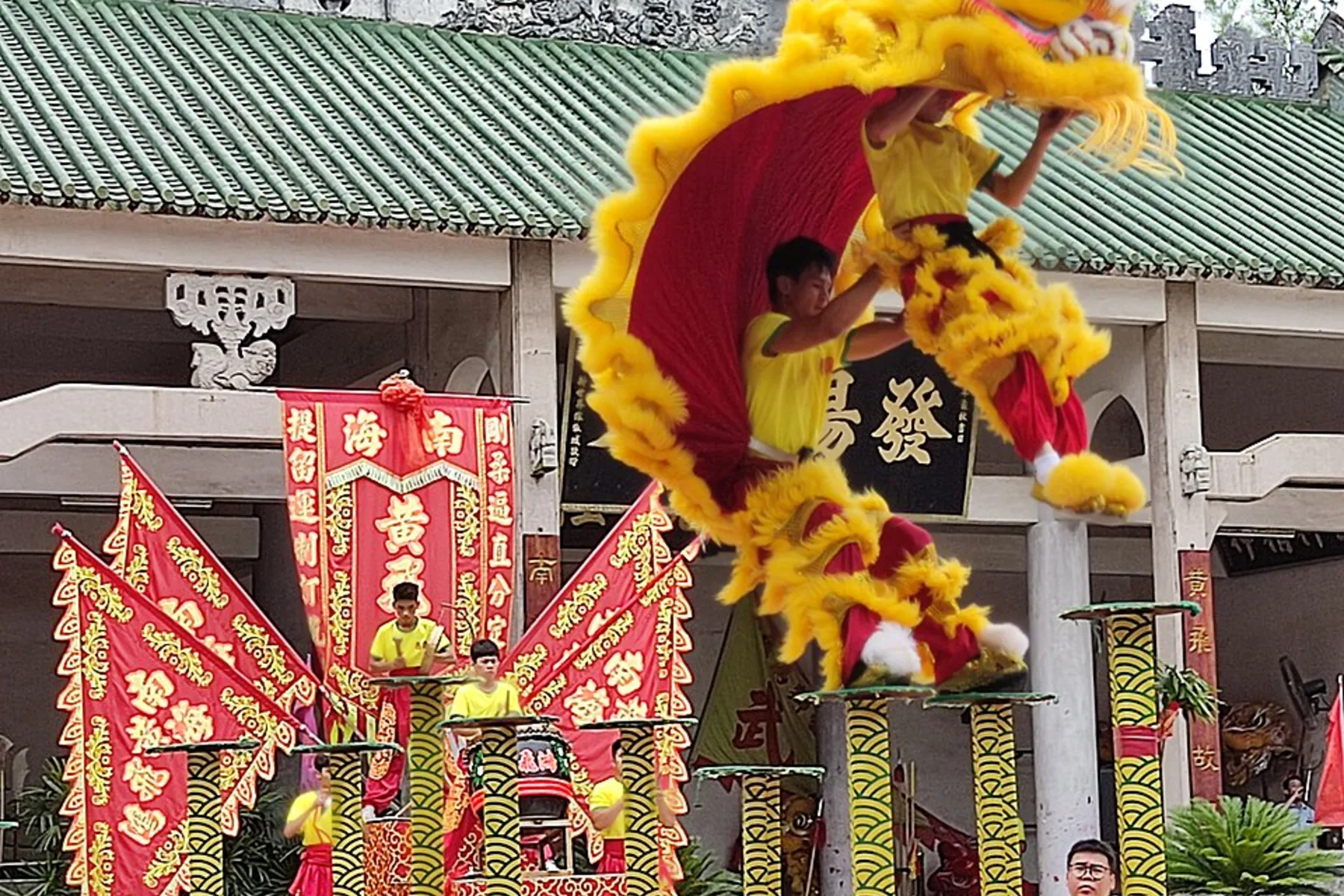
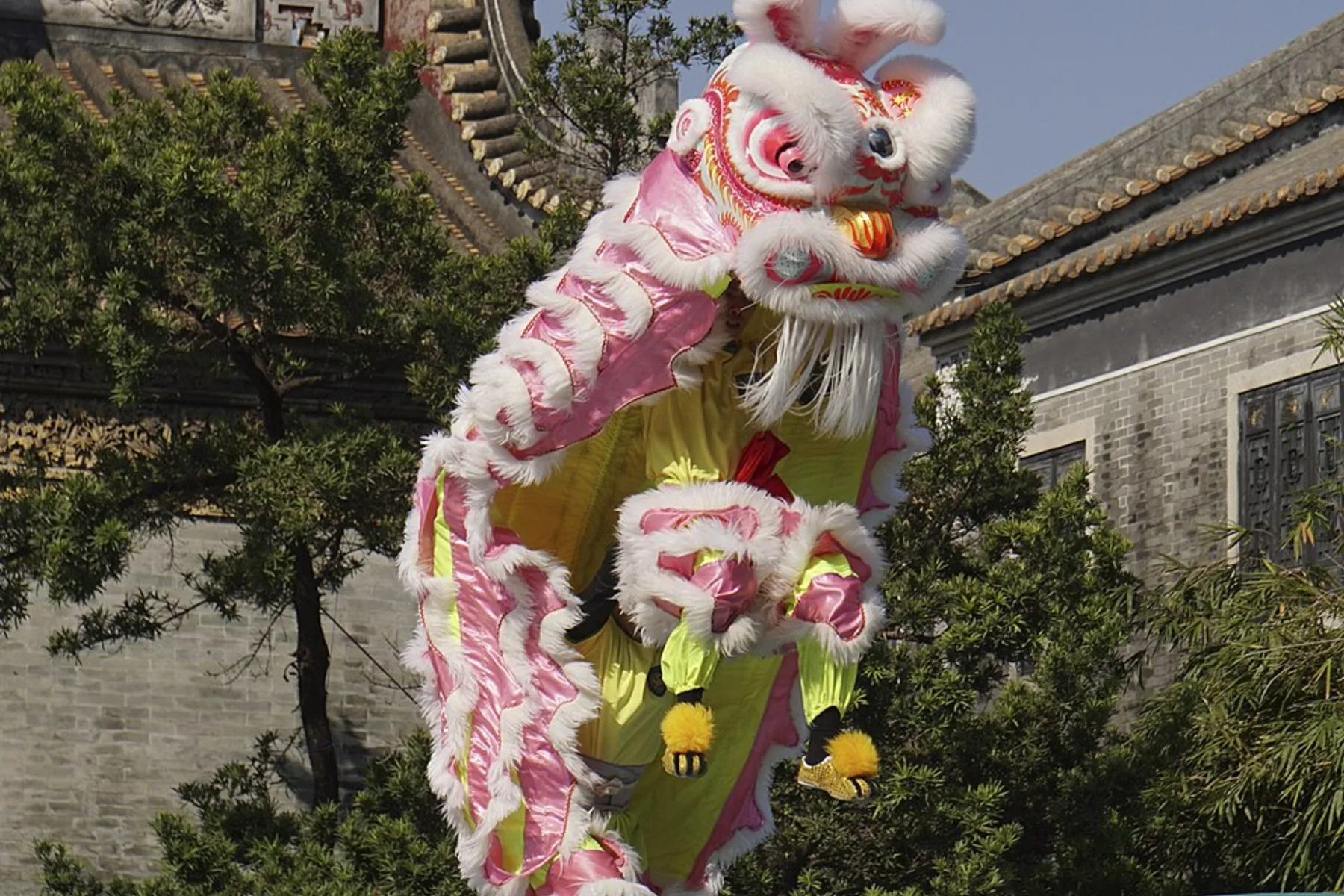
A first-time viewer can follow the lion as one character rather than isolating a single trick. Notice where it directs attention, how its height and pace change, and how the costume’s head and body remain coordinated.
When the form in front of you uses two people under one costume, watch the line between them rather than assuming that the head performer creates the whole effect. Do not turn that observation into a universal rule for every troupe, style or sequence. Names and meanings for specific movements should come from the performers or an accountable programme source.

Keep percussion detail in the listening guide
Percussion and movement operate as a team, but this foundational page does not teach instruments, rhythmic vocabulary or sound-to-action translations. A separate guide to lion-dance percussion and performance contexts will carry the bounded method based on cue, energy, repetition and performer response after it passes publication review.
On this page, keep only one principle: sound may help a viewer notice a change, but a spectator cannot infer a universal meaning from one beat or one recording.

Read four different event contexts
The same heritage label can appear in settings with different purposes. The four categories below are an editorial checklist, not an official classification. Confirm the organiser’s own description before assigning a context.
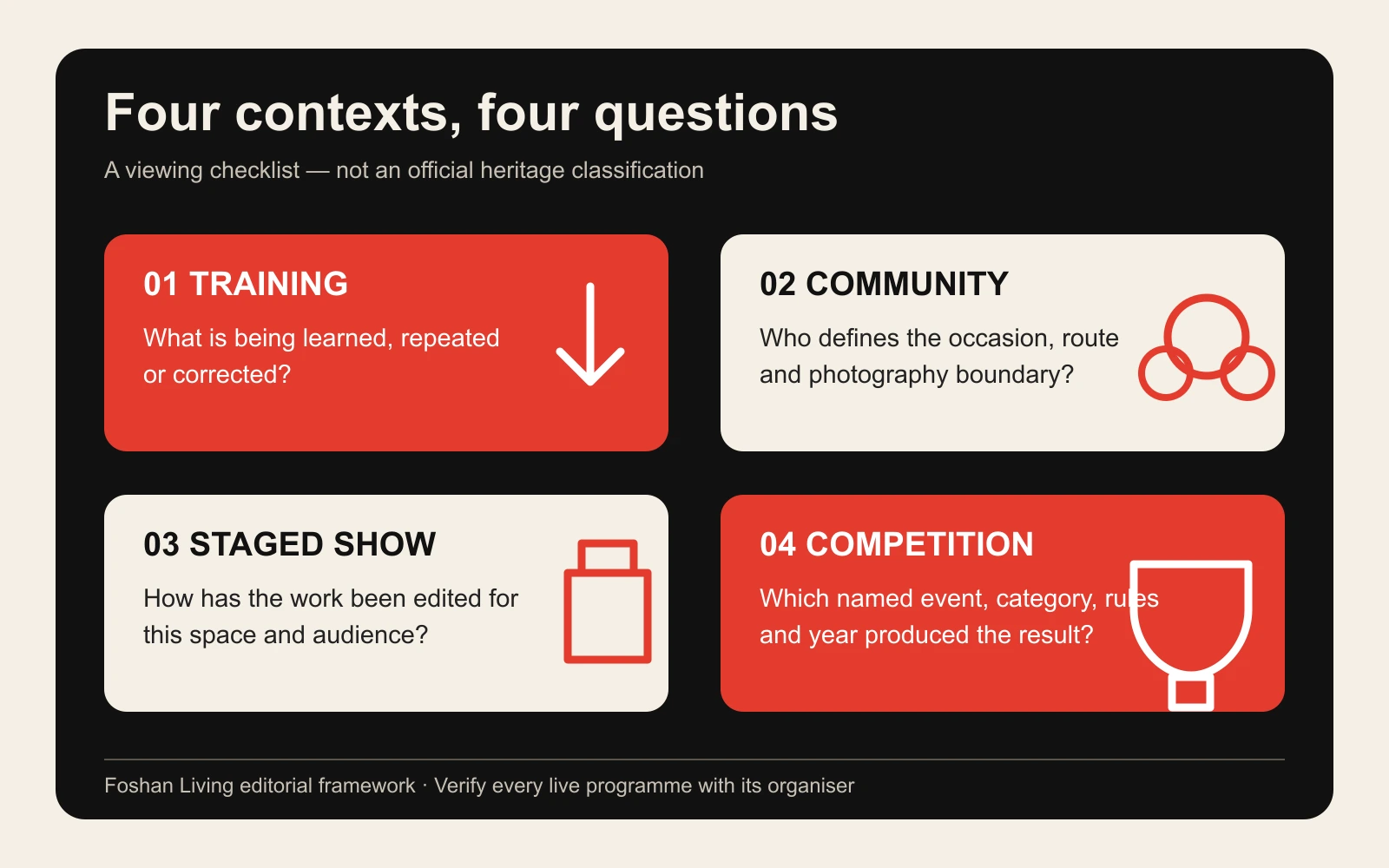
Training
Training is a learning environment rather than a public-performance promise. Repetition and correction may matter more than spectacle. A documented base or a visible class is not automatically open to visitors, participation or filming.
Ritual and community occasions
At a temple, festival or community gathering, the responsible community defines the occasion’s meaning, order and photography boundary. Do not infer ritual meaning from costume or location, and do not treat offerings, entrances or routes as props.
Staged public performance
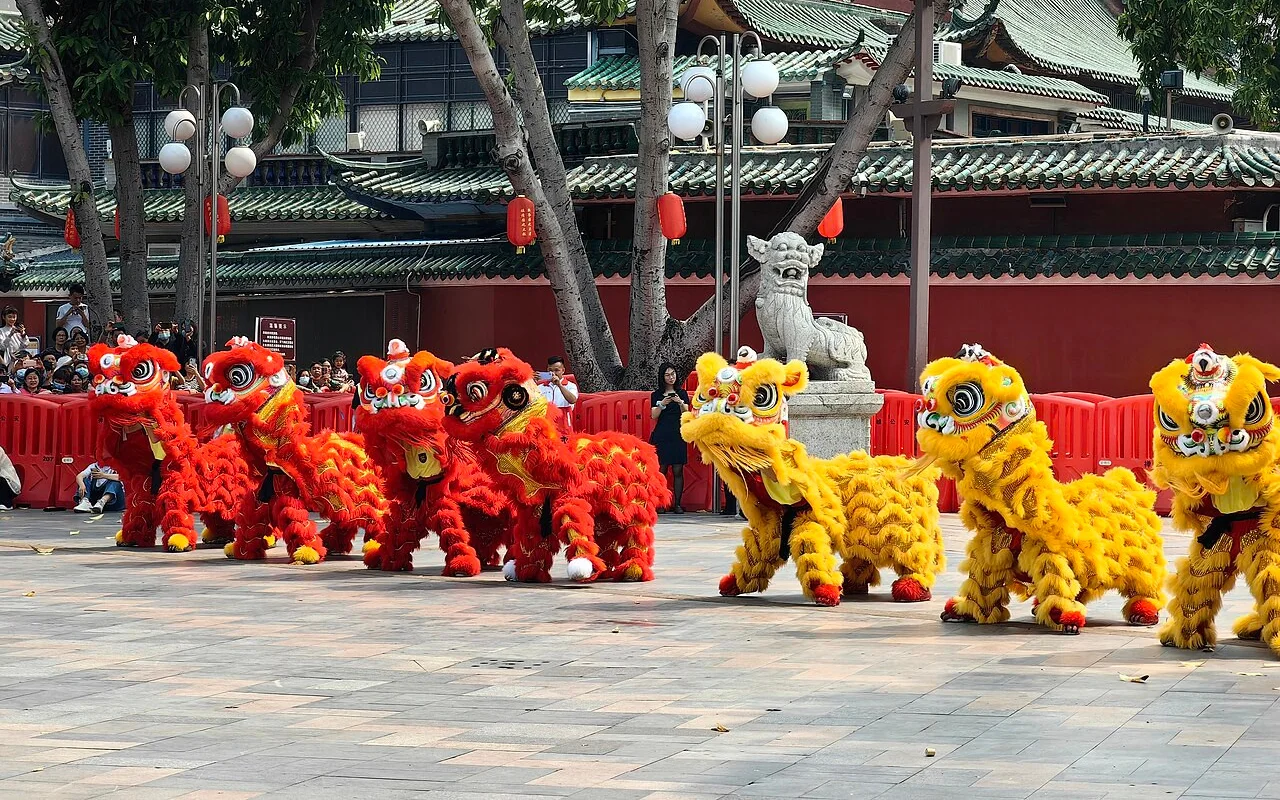
A museum or visitor programme may be edited for a defined space and audience. It can be an accessible first encounter without representing the complete tradition. The venue’s current notice must confirm whether a performance exists at all.
.jpg)
Competition
Competition adds declared rules, categories, judging and results. Every result belongs to a named event, category and year; it does not create a permanent hierarchy of Foshan teams. Follow designated viewing areas and do not reproduce demanding movements without qualified instruction and appropriate equipment.

Avoid fixed origin stories and rankings
Lion-dance introductions often compress complex transmission into a single colourful origin story. Such stories may be meaningful within a community, but this article does not select one as the only proven beginning.
Attribute an origin account to the source that preserves it. Separate official heritage identity from later legend, troupe history and tourism copy. The national heritage record establishes the project; it does not settle every local genealogy.
Rankings need the same discipline. “Best,” “most authentic” and “number one” require a named comparison, metric, category and date. A competition result proves a result under that event’s rules. It does not prove permanent cultural authority, teaching quality or suitability for visitors.
Foshan Living therefore does not rank troupes or recommend a team merely because it appears frequently online.
Watch respectfully and safely
Give performers, musicians and organisers working space. Keep exits, residential doors, ritual routes and equipment areas clear. Never touch the lion head, instruments or preparation equipment unless invited.
Ask before photographing preparation, children, worshippers or close-up performer faces. Follow barriers and staff directions, especially where movement uses height, speed or heavy equipment. If sound sensitivity matters, prepare hearing protection without obstructing others.
For families, verify crowd density, duration, seating, shade and exit options. For accessibility, ask the organiser about surfaces, standing time, viewing areas and routes rather than assuming that a public square is barrier-free.
Keep current programmes in a live layer
The heritage identity, martial relationship and viewing framework can remain useful over time. Schedules cannot.
For any current appearance, verify the date, venue, organiser, event context, admission, start time, expected duration, weather plan, crowd controls, photography rules and cancellation channel. Festival dates, temple-fair routes and competition entries or results require the current year’s official notice.
Use the responsible venue or organiser first. The Foshan Ancestral Temple Museum is an official current-information entry for its own site, not a promise of a permanent show. The Nanhai Museum heritage-base page documents a Guangdong lion-dance training base and display space in Dali, but it does not prove present access, training, visitor participation or photography permission. Treat reposts and travel platforms as discovery only.
Continue exploring Foshan culture
Place Guangdong lion dance within the Foshan culture framework rather than treating it as an isolated show. The planned Foshan martial-arts guide will cover the related but distinct training traditions, while the planned lion-dance percussion guide will examine sound and movement without inventing a universal rhythm system. Those links should be added only after their own canonical pages return HTTP 200.
The most useful first reading is simple: follow the character, listen to the percussion, identify the event context and keep every current programme claim dated.
About Zhang Wei
Zhang Wei writes about Foshan’s culture, martial arts and performing traditions. He separates official heritage evidence from transmission accounts, promotional claims and changing event operations, helping international readers approach living culture with curiosity and precision. Visit his author page to see all of his Foshan Living articles.
Image credits and disclosures
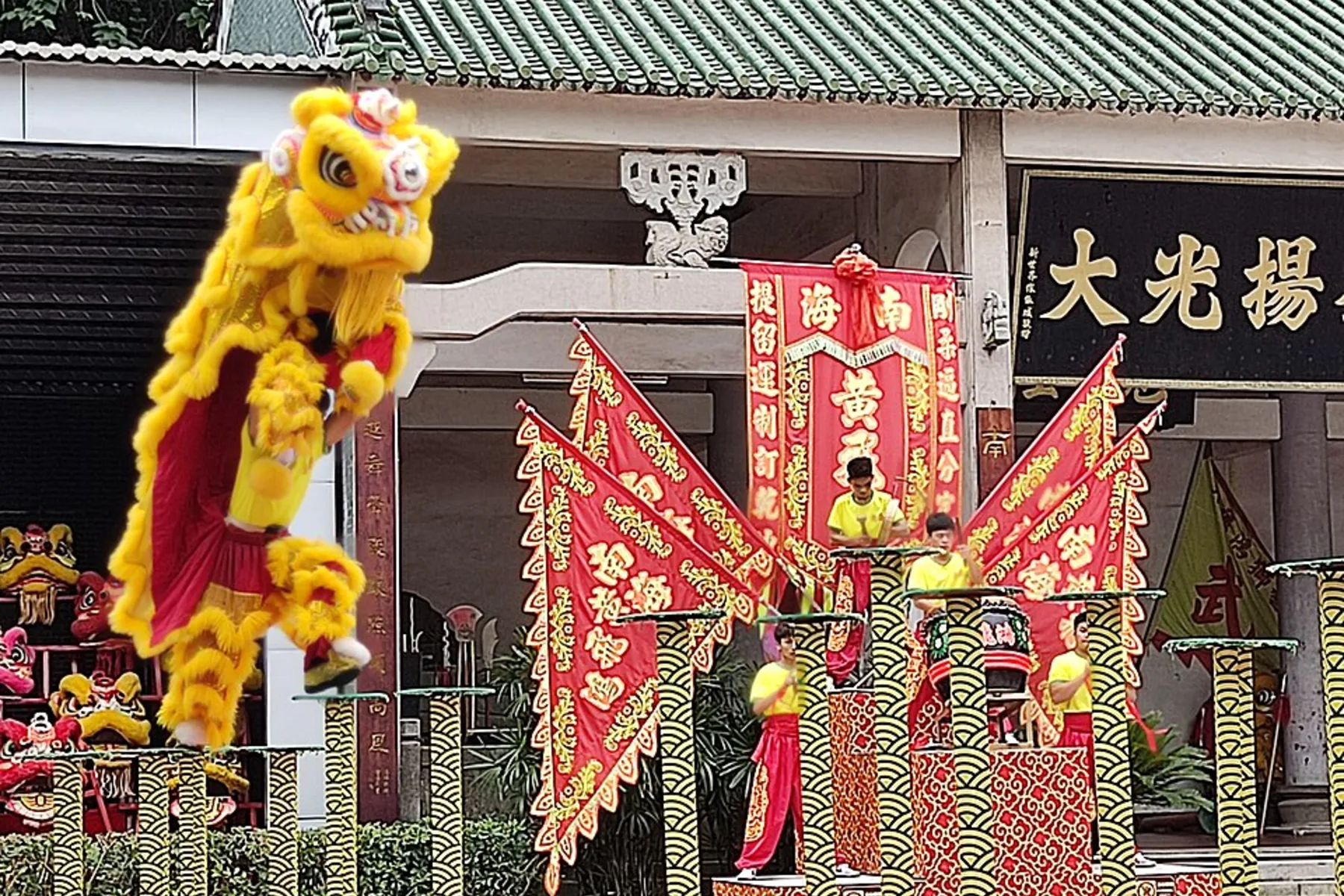
- hero.webp A June 2023 high-pole performance at the Wong Fei-hung Lion Dance and Martial Arts School in Xiqiao, Foshan; it does not confirm a current programme or permanent show time. Lukwo RuoShuma Simonz · CC BY-SA 4.0; cropped, resized and converted to WebP · CC BY-SA 4.0
- body-01-xiqiao-team.webp A second June 2023 frame from the same Xiqiao performance makes coordination inside one lion visible; it does not establish a universal team size, movement name or training method. Lukwo RuoShuma Simonz · CC BY-SA 4.0; cropped, resized and converted to WebP · CC BY-SA 4.0
- body-02-zumiao.webp A lion-dance performance photographed at Foshan Ancestral Temple on 29 January 2023; it does not confirm a present programme, timetable, team or visitor-access condition. Hexocat · CC BY-SA 4.0; cropped, resized and converted to WebP · CC BY-SA 4.0
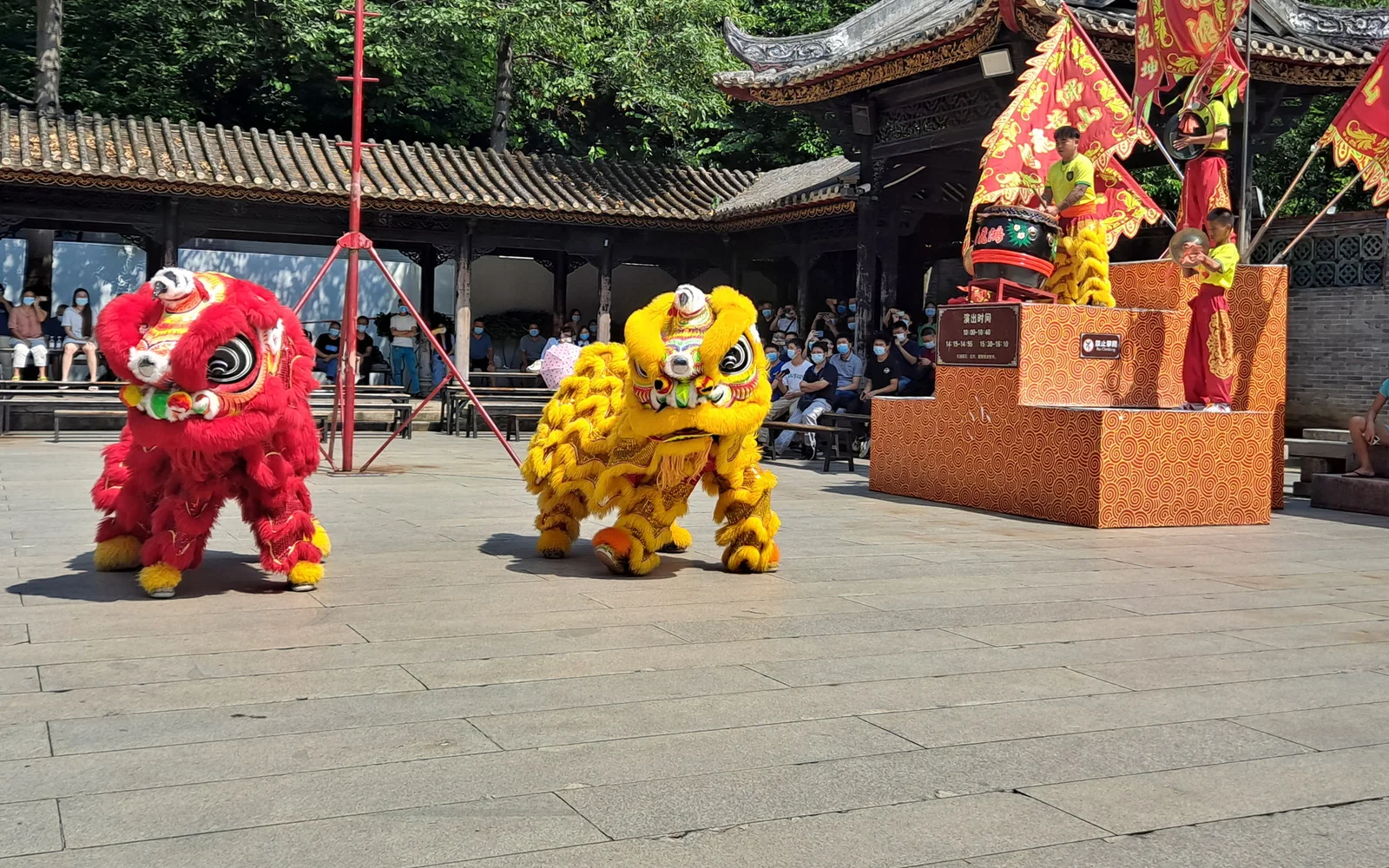
- body-03-memorial-hall.webp This 3 September 2022 frame places two lions and percussion musicians in one staged occasion; it does not define a universal ensemble or rhythm. 钉钉 · CC BY-SA 4.0; cropped, resized and converted to WebP · CC BY-SA 4.0
- body-04-formation.webp A dated lion formation photographed in Foshan on 11 April 2024; it does not identify an event category, result, ranking or current programme by itself. Uuongkinghe · CC BY-SA 4.0; cropped, resized and converted to WebP · CC BY-SA 4.0
- body-05-four-contexts.webp Foshan Living’s original editorial diagram summarises four questions for first-time viewers; it is not an official heritage taxonomy. Foshan Living editorial desk · Project-original SVG converted to WebP; editable source retained


Keep exploring
Related Foshan guides
 Explore Foshan
Chancheng or Shunde: Where Should You Start in Foshan?
Choosing between Chancheng and Shunde for a first Foshan trip? Compare heritage, food, neighbourhood pace, transport planning and where to stay.
 Explore Foshan
Understanding Foshan: A City of Five Districts
Learn how Foshan’s five districts differ, which areas suit culture, food, urban life or nature, and why every short trip needs a specific local base.
 Explore Foshan
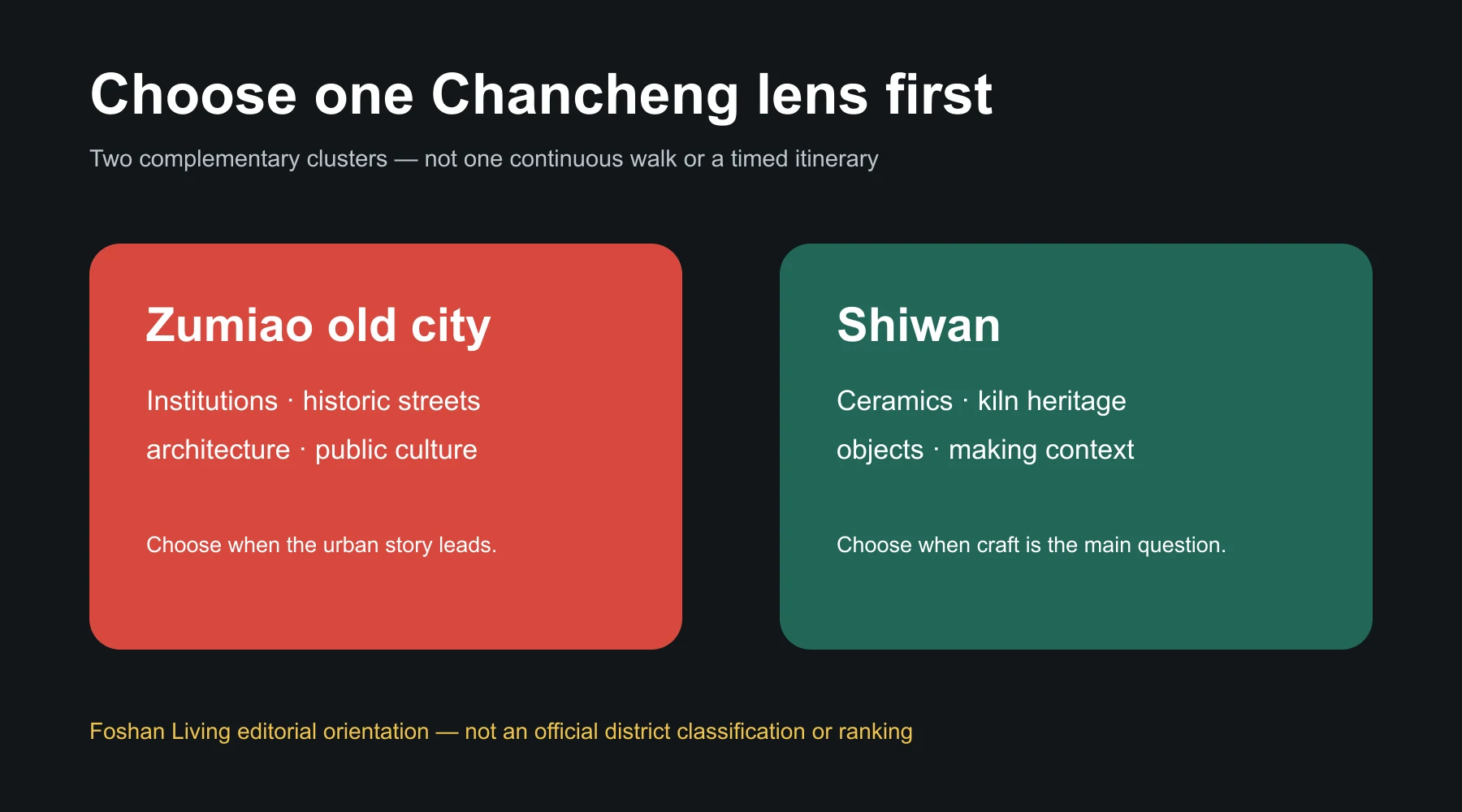
Zumiao Old City or Shiwan: How to Choose Your Chancheng Day
Compare Zumiao old city and Shiwan, choose one main Chancheng cluster, and add the other only after checking the complete route and current access.
 Explore Foshan
Chancheng: Foshan’s Historic Urban Core
Understand Chancheng through the Zumiao old city and Shiwan’s ceramic heritage, with guidance on walking scale, transport checks and where to base.
Plan your visitFirst Time in Foshan
Build a first trip around districts, transport, food and one deeper cultural interest.