Explore Foshan
Guangzhou South to Foshan: Choose the Destination Before the Transport System
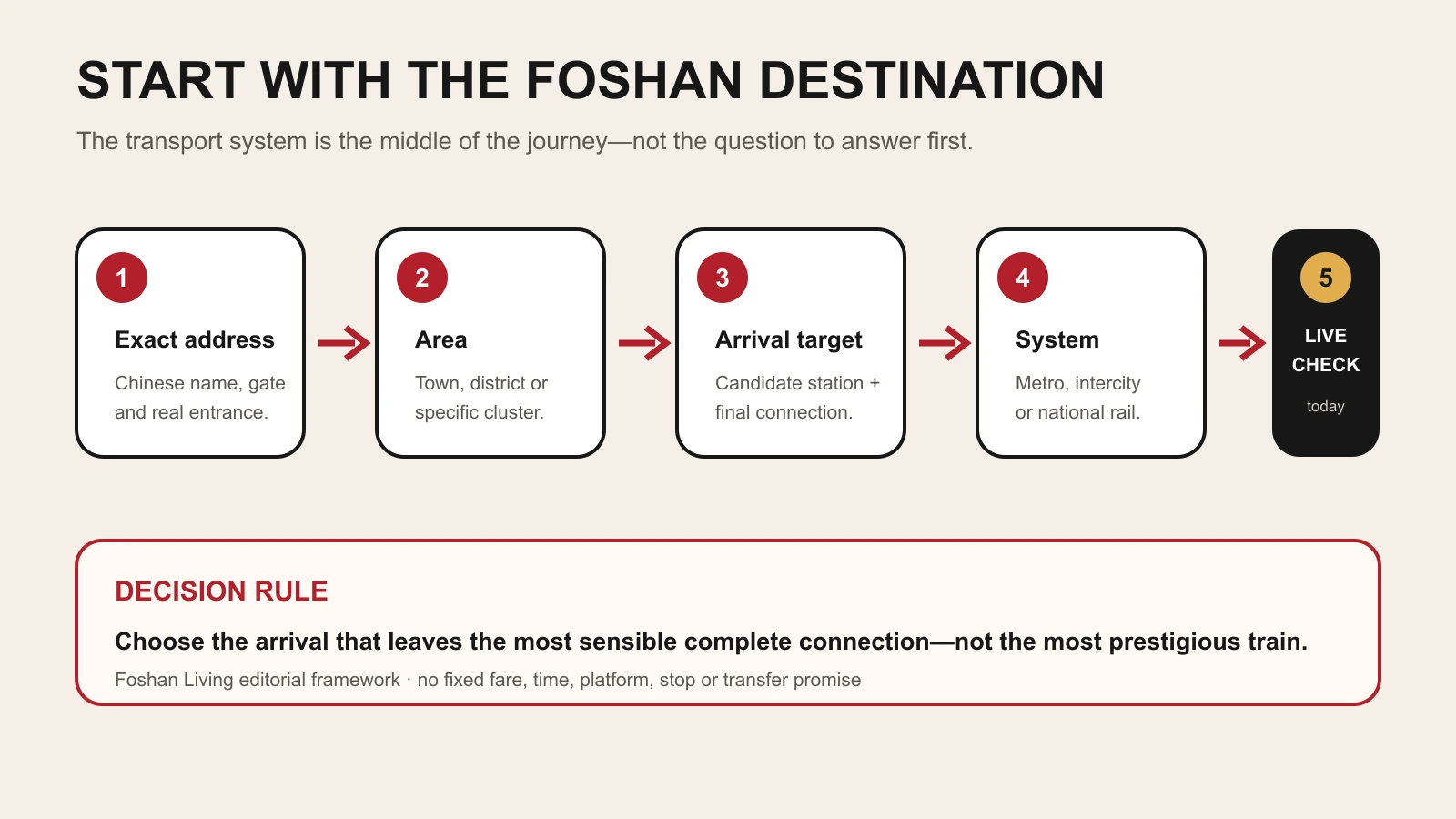
Name the exact Foshan destination first, then compare metro, Guangdong Intercity and national rail by the arrival station and final connection.

On this page
- Start with the destination, not the system
- Understand the three rail layers at Guangzhou South
- Metro is the urban-network layer
- Guangdong Intercity uses adjacent Panyu station
- National rail is a dated train search
- Translate a Foshan address into an arrival target
- Choose the branch that matches your destination
- Central Chancheng and Zumiao
- Shiwan, Zhangcha and Nanzhuang
- Chencun and Beijiao
- Daliang and Ronggui
- Foshan West, Shishan and Sanshui
- Gaoming and places beyond direct rail coverage
- Compare the complete door-to-door chain
- Plan for luggage and access before committing
- Verify the live layer on the day
- Use this pre-departure worksheet
- Continue planning Foshan
- About the author
The useful question is not “Which train goes from Guangzhou South to Foshan?” It is “Which Foshan address am I trying to reach, and which arrival station leaves the most sensible final connection?”
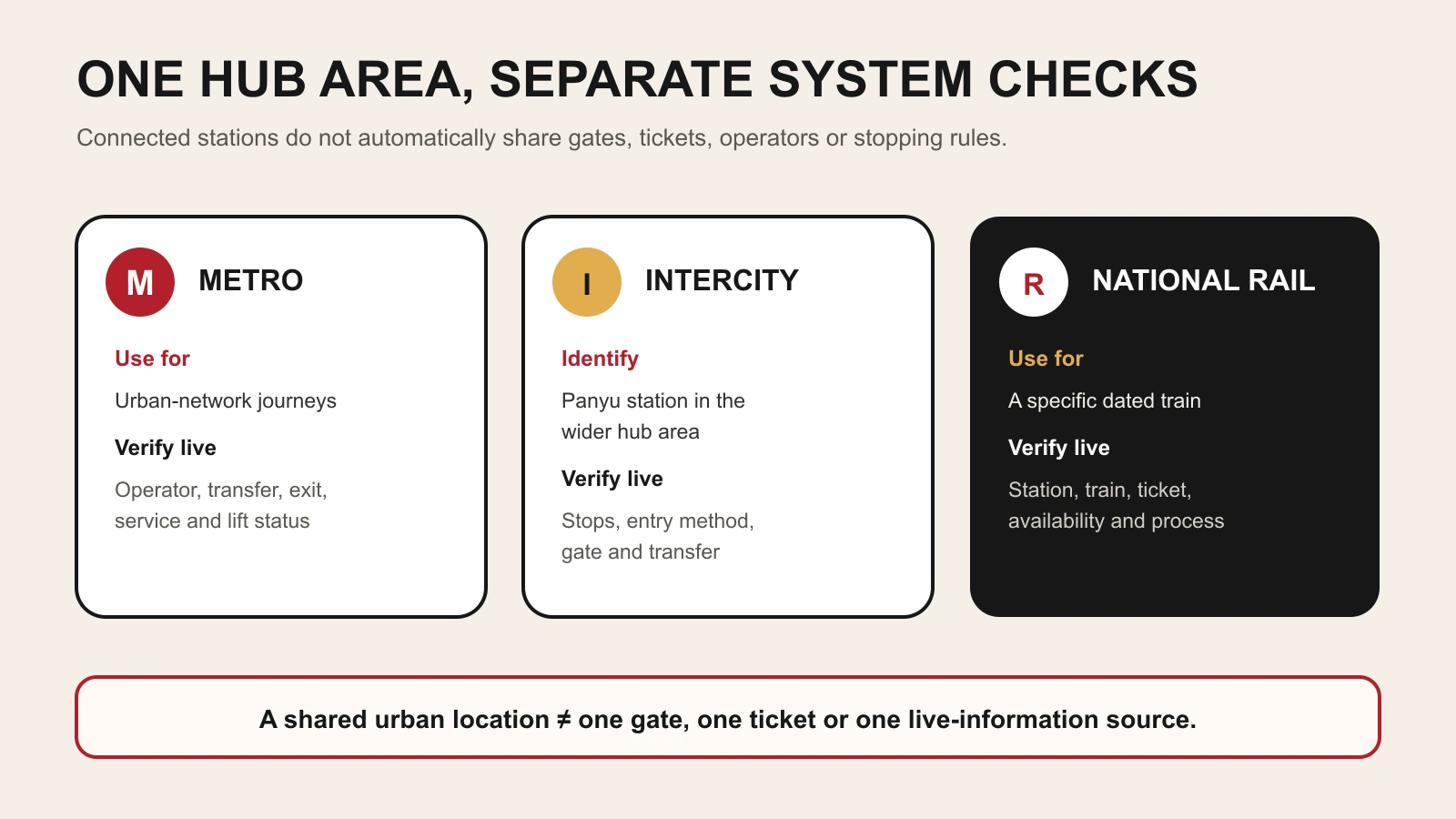
Guangzhou South is a powerful gateway because several rail systems meet in the same wider hub area. That is also why it can be confusing. National rail, Guangzhou and Foshan metro services, and Guangdong Intercity do not become one system simply because their stations are connected. Their gates, tickets, stopping patterns and live-information sources can differ.
This guide gives you a destination-first method. It deliberately does not publish fixed fares, journey times, first or last trains, or permanent transfer instructions. Check those details with the responsible operator on the day you travel.
Start with the destination, not the system
“Foshan” is not one transport stop. It is a multi-centred city whose visitor destinations extend across five districts and many towns and subdistricts. “Shunde” and “Nanhai” are still too broad for a reliable route choice.
Before opening a journey planner, collect three pieces of information:
- the destination’s full Chinese address;
- the nearest useful landmark or station named by the hotel, venue or host;
- whether you must reach a particular entrance rather than the general area.
Then place the destination in a practical area: central Chancheng, Shiwan, Chencun, Beijiao, Daliang, Ronggui, Foshan West, Shishan, Sanshui, Gaoming or another specific town. If you are not yet sure which area fits your visit, start with Understanding Foshan’s Five Districts.
This order matters because a rail line can look direct while leaving a long, awkward or unclear final connection. Another route may involve an apparent transfer but place you closer to the actual entrance. The map line is only the middle of the journey.
Do not choose by the prestige of the system. A high-speed or intercity train is not automatically better than metro, and metro is not automatically easier when the final address is far from its station. Choose by the complete chain.
Understand the three rail layers at Guangzhou South
The Guangzhou South hub area should be read as several connected transport layers. Identify the layer before deciding which sign, gate, ticket or app to follow.
Metro is the urban-network layer
Metro is the first system to investigate when your destination sits naturally on the connected Guangzhou–Foshan urban network.
From Guangzhou South, Foshan Metro Line 2 creates a connection toward Foshan’s urban area. Guangzhou Metro Line 7 extends toward Chencun and Beijiao and can connect with Foshan Metro Line 3 at Beijiao Park. Other Foshan metro lines may become relevant after a transfer.
The stable fact is the network relationship. The live facts include service hours, the best transfer, an appropriate exit, lift status and any disruption. Use the current Guangzhou Metro and Foshan Metro tools for those.

Guangdong Intercity uses adjacent Panyu station
Guangdong Intercity’s station in this hub is named Panyu. It is connected with the wider Guangzhou South interchange area, but it is not simply another name for the national-rail or metro gate.
This system is worth investigating for destinations along the Panyu–Foshan West corridor and beyond. However, seeing a station on the line does not prove that the next train stops there. Service patterns can change, and different trains may serve different stations.
Confirm the operator, the stopping pattern, the entry method and the physical transfer before committing. Do not assume that a ticket, code or payment method used on one rail layer automatically works on another.

National rail is a dated train search
National rail can be useful when your destination is close to a railway station such as one in the Shunde or Foshan West station family and when a suitable train exists for your date.
Treat this as a dated search in the official China Railway 12306 system. A route that appeared yesterday may not offer a useful train at your chosen time. A station name that sounds geographically right may still leave an inconvenient final connection.
National rail is therefore not a permanent recommendation for a district. It is one option to compare after you know the exact destination and travel date.
,_Foshanxi_Railway_Station_20240825-A.jpg)
Translate a Foshan address into an arrival target
A route planner can optimise what it can see. It cannot decide what matters to your group unless you define the target carefully.
Use this translation sequence:
Similar English names are not enough.
site may have several gates.
rail only where the audited network makes them plausible.
access from each arrival station.
return chain fails later in the day.
- Confirm the place. Match the Chinese name, district and street address.
- Find the true entrance. A museum, hotel, market, campus or industrial
- List candidate arrival stations. Include metro, intercity and national
- Inspect the final connection. Check walking, local transit or road
- Check the return. A convenient outward route is incomplete if the
Ask the destination operator or accommodation for the Chinese address rather than a screenshot alone. A map pin can be misplaced, and a translated place name can point to the wrong branch.
If the last connection is by taxi or ride-hailing, save the exact Chinese destination and a contact number supplied by the venue or host. Do not expect “Foshan” or even a district name to be sufficient.
Choose the branch that matches your destination
The branches below tell you which system to investigate first. They are not promises of the fastest route and do not replace a live journey search.
Central Chancheng and Zumiao
For the Zumiao old-city area, one documented network pattern from Guangzhou South is Foshan Metro Line 2, a transfer at Kuiqi Lu, and the Guangfo Line toward Zumiao. The network relationship is stable enough to explain; the transfer path, service state and best exit remain live.
This branch makes sense when your first Foshan anchor is the old city rather than a vaguely defined “downtown”. Once you arrive, use Foshan in One Day to keep one core cluster and one optional extension rather than forcing several parts of Chancheng into the same day.
Check the entrance of your actual hotel or venue. A station that serves the general area does not prove a short or step-free path to every address.
Shiwan, Zhangcha and Nanzhuang
Foshan Metro Line 2 is the first system to investigate for many destinations in this westward urban corridor from Guangzhou South. The correct station and final connection depend on the exact place.
Do not treat Shiwan, Zhangcha and Nanzhuang as one walkable cluster. They are separate destination labels with different last-mile needs. A ceramics venue, business address and residential street can require different arrival choices even when they appear under the same broad route.
If your purpose is cultural rather than purely geographic, decide whether your main area is Zumiao old city or Shiwan before choosing the arrival station. The area decision should lead the transport decision, not follow it.
Chencun and Beijiao
Guangzhou Metro Line 7 is the first network to investigate for many Chencun and Beijiao destinations from Guangzhou South. That does not mean every address in northern Shunde sits beside a Line 7 station.
Compare the destination’s actual entrance with candidate stations. If another rail system appears in the results, confirm its operator and gate rather than assuming it is part of the same metro trip.
For Beijiao, also distinguish the town or subdistrict destination from any railway station with a related name. A familiar place name does not guarantee that the station is the right arrival point.
Daliang and Ronggui
Daliang and Ronggui must be planned separately.
For a Daliang anchor near the relevant urban network, investigate Guangzhou Metro Line 7 to Beijiao Park and the connection to Foshan Metro Line 3 toward Daliang Zhonglou. This is a verified network relationship, not a guarantee about today’s service, transfer circulation or journey duration.
For Ronggui, compare that broader metro journey with a dated national-rail search in 12306 using the exact station and final address. Do not conclude that national rail is available or preferable until the date, train and last-mile connection all work.
Choose the exact Shunde town before treating “Shunde” as one destination. A food visit in Daliang, a business meeting in Beijiao and an address in Ronggui are three different transport problems.
Foshan West, Shishan and Sanshui
Panyu–Foshan West is a documented Guangdong Intercity corridor, making intercity one system to investigate for Foshan West, parts of Shishan and onward Sanshui destinations. National rail may also appear for Foshan West, depending on the date and journey.
Confirm which system your result belongs to. Foshan West handles more than one rail context, and a shared hub name does not make tickets or gates interchangeable.
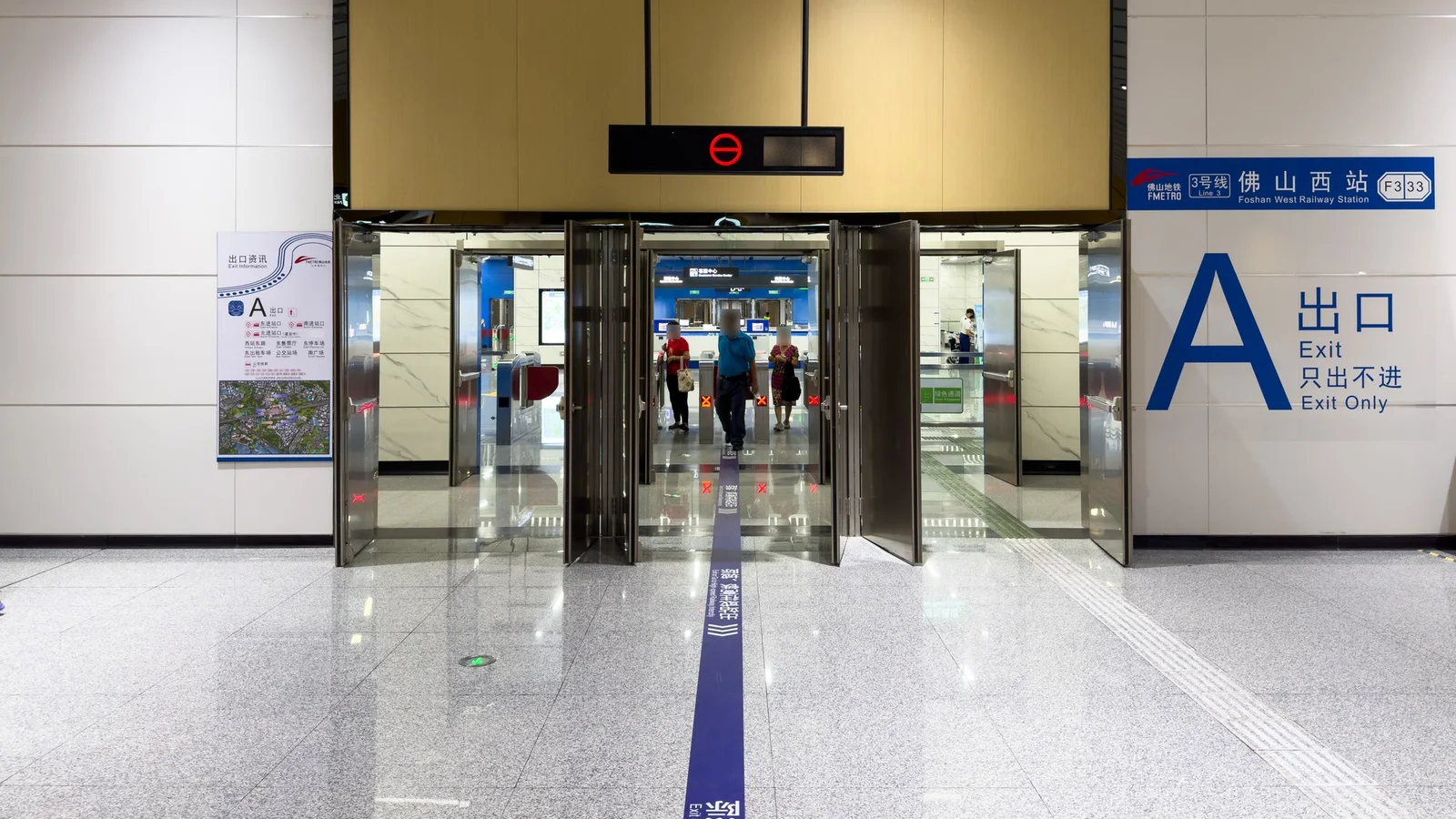

For Sanshui, identify the specific town, attraction, campus or hotel. A station carrying a district-related name may still require a significant final connection. Verify whether the train you plan to take actually stops there and how you will continue after arrival.
Gaoming and places beyond direct rail coverage
For many Gaoming destinations and other places outside a convenient direct rail catchment, the decision is often between rail to a Foshan hub plus a road connection and a longer road journey from Guangzhou South.
Compare the real burdens:
- the number of transfers;
- luggage handling;
- the reliability of the final road connection;
- the size and mobility of the group;
- the return plan;
- the exact rural, mountain, industrial or hotel entrance.
Do not force a rail route merely because it covers the first part of the map. For a group with luggage or a destination far from a station, fewer changes may matter more than the nominal speed of one segment.
Compare the complete door-to-door chain
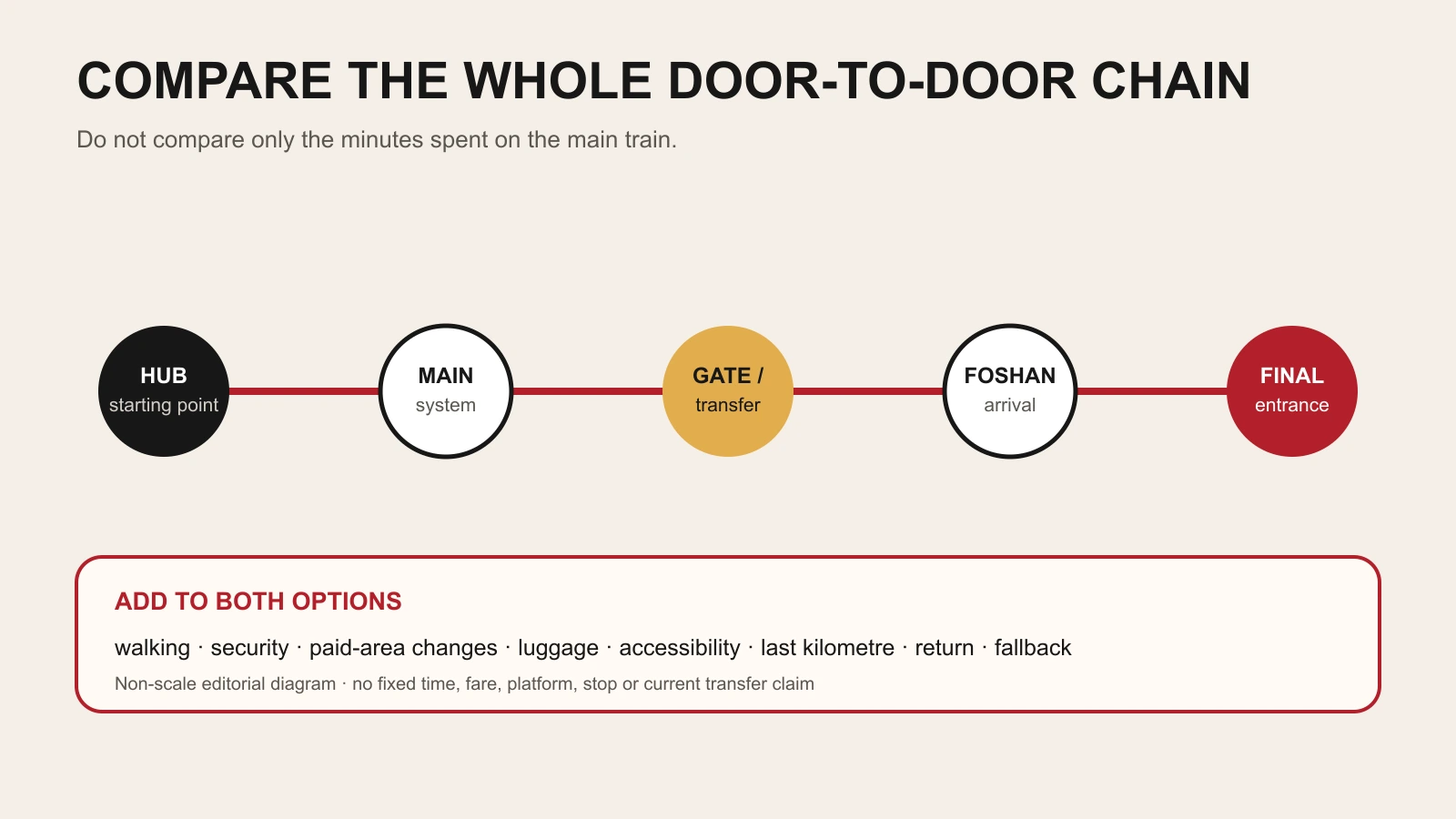
Once you have two plausible routes, compare the whole journey rather than one headline segment.
For each option, write down:
- the starting point inside the Guangzhou South hub;
- the operator and system;
- every required transfer;
- whether a transfer stays within one gate system;
- the arrival station in Foshan;
- the final walk, local transit or road connection;
- the return route at the time you expect to leave;
- one acceptable fallback if the live plan changes.
A route with fewer rail minutes can lose its advantage through a difficult cross-system walk or a long final taxi connection. A route with more stops can still be simpler when it keeps the group inside a familiar metro network. These are planning judgements, not permanent rankings.
Keep screenshots only as temporary personal references. Re-run the search before departure because stopping patterns, entrances and service conditions can change.
Plan for luggage and access before committing
The existence of a transfer does not prove that it is comfortable with a suitcase, stroller or wheelchair. The existence of a lift symbol does not prove a continuous step-free chain from one platform to the next destination entrance.
Before travel, verify:
check or leaving one paid area;
- whether the relevant station entrance and transfer path are currently open;
- lift and escalator information for the stations you will actually use;
- whether a cross-system transfer involves a long walk, another security
- space and rules for large luggage;
- the final pavement, crossing and building entrance;
- staff or language support needed by your group.
If an access requirement is essential, contact the current operator and destination rather than inferring the answer from a route map. Build extra margin without turning that margin into a published universal transfer time.
Verify the live layer on the day
The evergreen method chooses the correct search. The live layer decides whether that search works today.
Use the responsible source:
access;
- Guangzhou Metro for its metro services;
- Foshan Metro for Foshan metro routes, stations and service notices;
- the current Guangdong Intercity service entry for intercity stopping and
- China Railway 12306 for national-rail trains, tickets and station names;
- the destination or accommodation for its entrance and last-mile advice.
Confirm:
- the exact origin and destination;
- the system and operator for every segment;
- current stopping and transfer conditions;
- ticketing, identity and payment requirements;
- first and last usable services for the complete chain;
- disruption or temporary access information;
- the return and fallback.
If two official sources appear to disagree, do not average them. Prefer the responsible operator’s current service information and ask staff when the physical hub is unclear.
Use this pre-departure worksheet
Complete this short worksheet before leaving Guangzhou South:
- My exact Foshan destination: Chinese name and full address
- My area: town, subdistrict or visitor cluster
- My candidate arrival station: exact name
- Its system: metro, Guangdong Intercity or national rail
- My final connection: walk, local transit or road
- My live source: responsible operator
- My access requirement: luggage, step-free route, stroller or assistance
- My return check: complete chain, not only the first segment
- My fallback: one route that remains acceptable
If you cannot fill in the system and final connection, the route is not ready. Go back to the destination address before comparing trains.
Continue planning Foshan
Use Understanding Foshan’s Five Districts to place your destination, then Foshan in One Day when a central first visit needs one core cluster and one optional extension. The dedicated metro/intercity/national-rail system guide will be linked here only after its own canonical is live.
About the author
Priya Nair is Foshan Living’s Explore Foshan correspondent. She turns districts, towns and transport gateways into practical area-first decisions while keeping schedules, fares and operating conditions in a clearly marked live-check layer. See all articles by Priya Nair.
Image credits and disclosures
- hero.webp Start with the exact Foshan address, translate it into an area and useful arrival target, then choose the system and run a live operator check. This original diagram is non-scale and contains no fixed route, fare, time, platform or stopping pattern. Priya Nair / Foshan Living · Project-original SVG rendered locally to WebP
- body-01-foshan-west-metro.webp Foshan West metro Exit A, photographed in 2024. The image shows one Foshan-side layer of a multi-system hub; it does not establish a current transfer, gate or best route from Guangzhou South. Tim Wu · CC BY-SA 4.0; attribution, licence link and derivative disclosure required · CC BY-SA 4.0
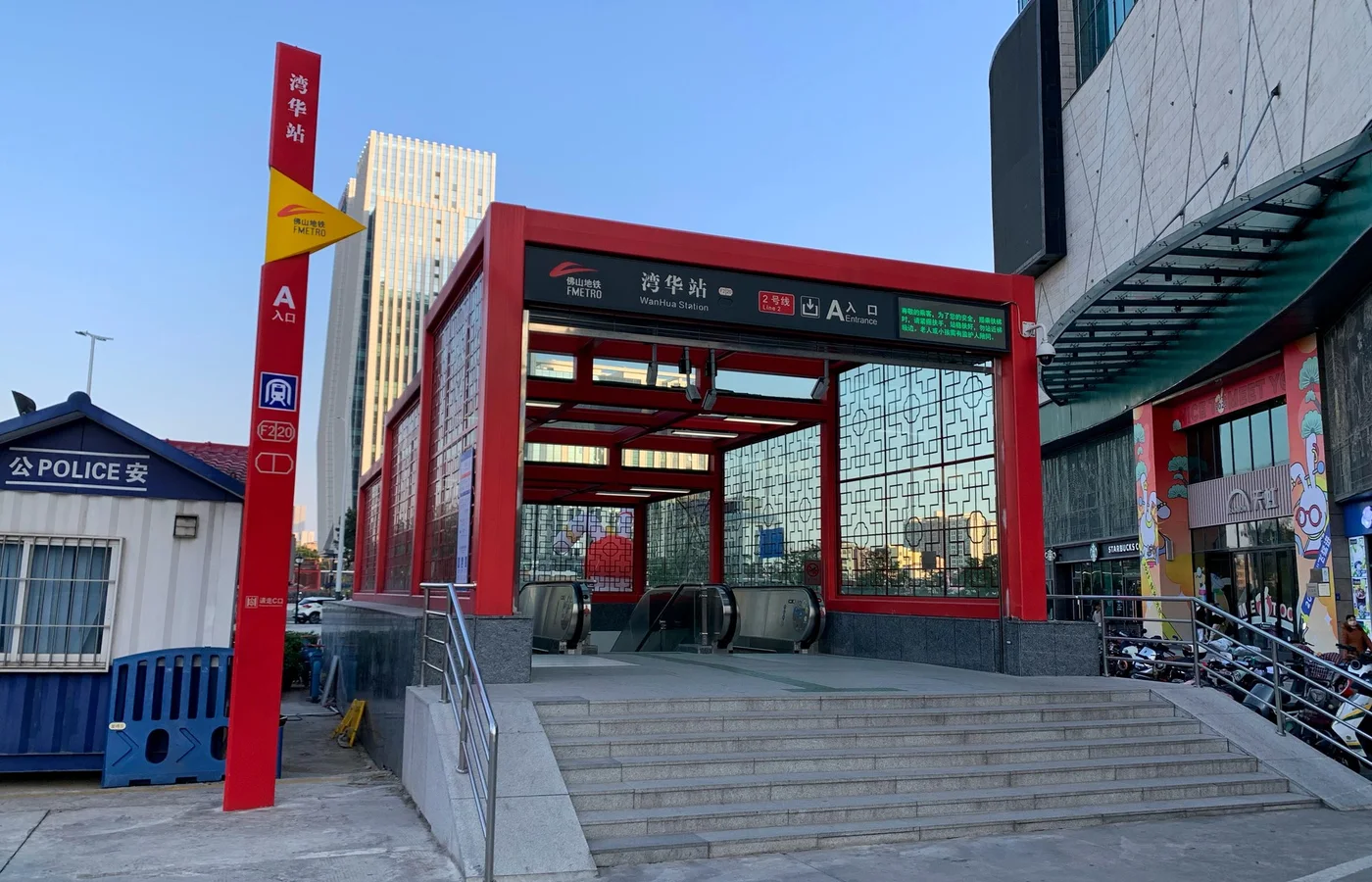
- body-02-wanhua-metro.webp Wanhua metro exit in Foshan, photographed in 2022. This Foshan-side scene does not depict Guangzhou South, prove a current route or identify the best exit for a particular journey. Tim Wu · CC BY-SA 4.0; attribution, licence link and derivative disclosure required · CC BY-SA 4.0
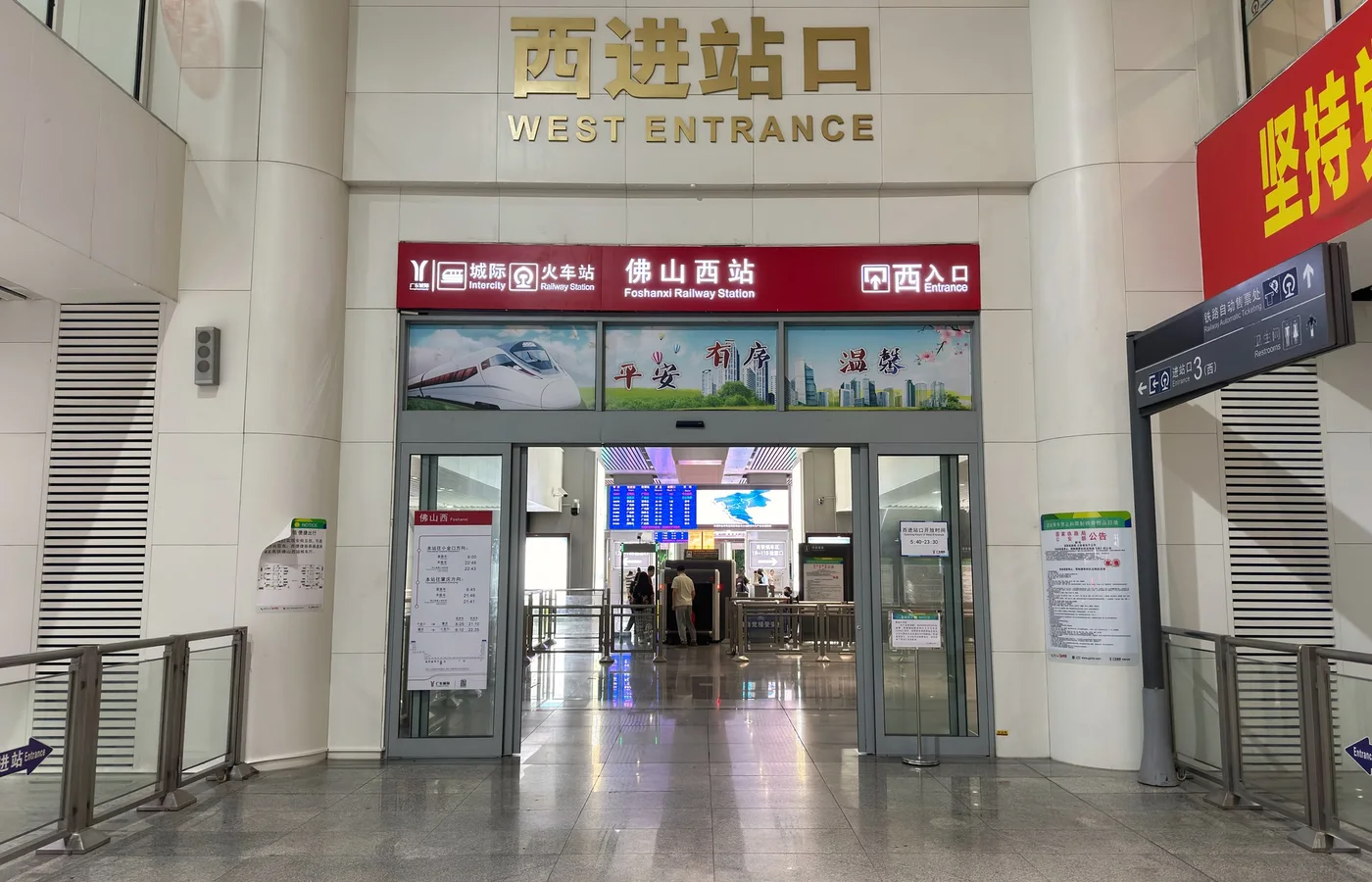
- body-03-foshan-west-intercity.webp The west entrance for Guangdong Intercity at Foshan West, photographed in 2024. The image demonstrates that a shared hub can contain a distinct system entrance; it does not show Panyu station or guarantee current access. Tim Wu · CC BY-SA 4.0; attribution, licence link and derivative disclosure required · CC BY-SA 4.0
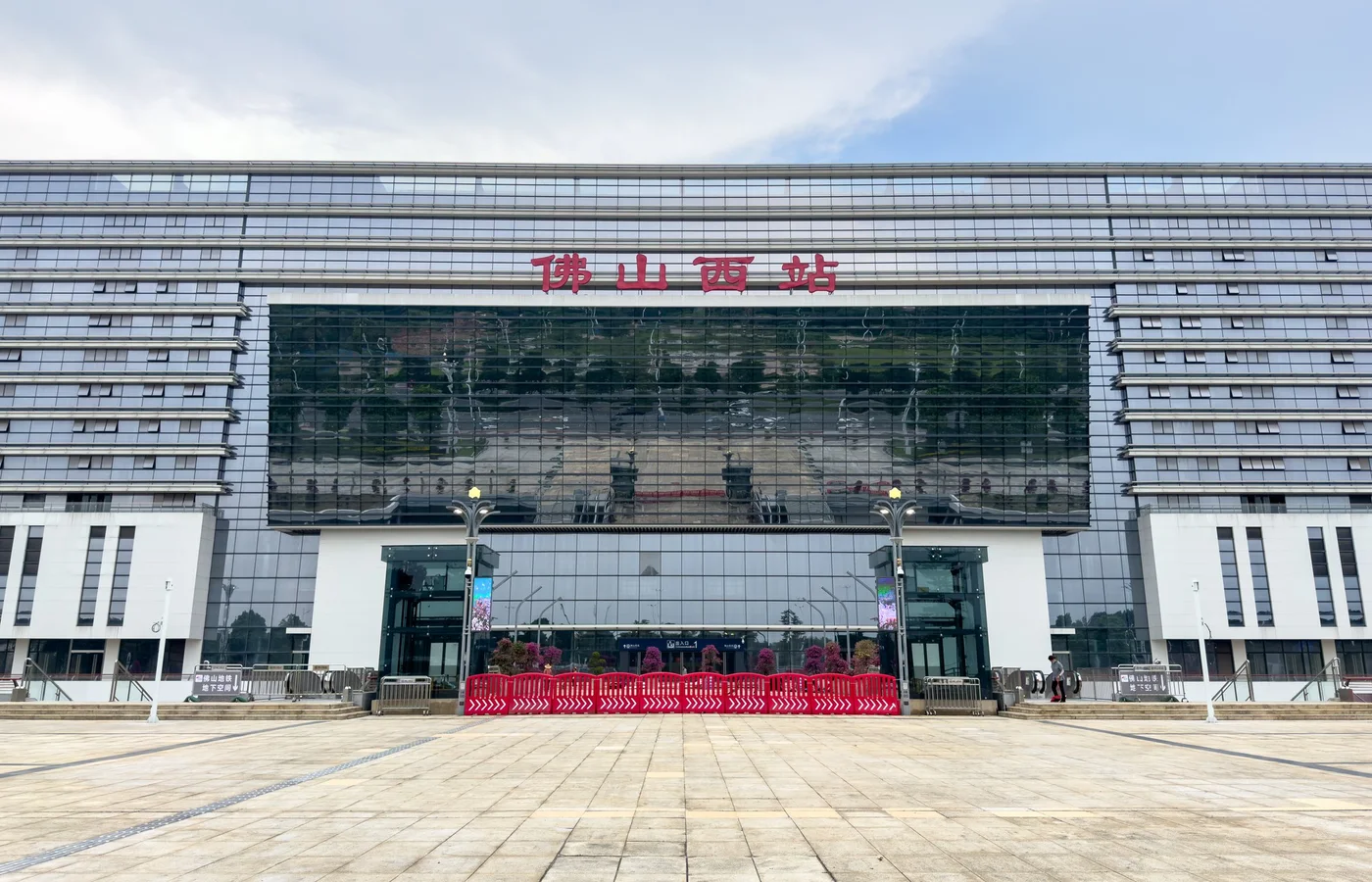
- body-04-foshan-west-rail.webp Foshan West railway station south exterior, photographed in 2024. This is Foshan-side national-rail context, not Guangzhou South and not evidence of a train running on a particular date. Tim Wu · CC BY-SA 4.0; attribution, licence link and derivative disclosure required · CC BY-SA 4.0
- body-05-system-check.webp Check metro, Guangdong Intercity and national rail separately. This original diagram is non-scale and contains no fixed fare, time, platform, stop or current transfer instruction. Priya Nair / Foshan Living · Project-original SVG rendered locally to WebP
- body-06-door-to-door.webp Compare the entire chain from the hub through the correct system and Foshan arrival point to the final entrance. This original diagram is non-scale and does not encode current service conditions. Priya Nair / Foshan Living · Project-original SVG rendered locally to WebP
Keep exploring
Related Foshan guides
 Explore Foshan
Chancheng or Shunde: Where Should You Start in Foshan?
Choosing between Chancheng and Shunde for a first Foshan trip? Compare heritage, food, neighbourhood pace, transport planning and where to stay.
 Explore Foshan
Understanding Foshan: A City of Five Districts
Learn how Foshan’s five districts differ, which areas suit culture, food, urban life or nature, and why every short trip needs a specific local base.
 Explore Foshan
Zumiao Old City or Shiwan: How to Choose Your Chancheng Day
Compare Zumiao old city and Shiwan, choose one main Chancheng cluster, and add the other only after checking the complete route and current access.
 Explore Foshan
Chancheng: Foshan’s Historic Urban Core
Understand Chancheng through the Zumiao old city and Shiwan’s ceramic heritage, with guidance on walking scale, transport checks and where to base.
Plan your visitFirst Time in Foshan
Build a first trip around districts, transport, food and one deeper cultural interest.