Living & business
Understanding Foshan's Metro, Intercity and Rail Systems
Learn which Foshan rail system you are looking at, how its journey logic differs and what must be checked before travelling.

On this page
- Start with the exact destination
- Compare the three systems at a glance
- Use urban metro for network-based city travel
- Identify the responsible metro operator
- Treat Guangdong intercity as a separate regional system
- Do not carry metro assumptions across the gate
- Use national rail for a specific train journey
- Read hubs and station names carefully
- Adjacent does not mean identical
- Choose the system in seven steps
- 1. Pin the exact entrance
- 2. List candidate stations
- 3. Identify each system and operator
- 4. Build the full chain
- 5. Test the time window
- 6. Add passenger constraints
- 7. Keep an alternative
- Plan for luggage, mobility and the last kilometre
- Recheck the live journey before departure
- Continue planning transport in Foshan
- About the author
Foshan is served by urban metro, Guangdong intercity rail and China’s national railway. These systems can meet inside a wider transport hub or appear close together on a map, but they are not interchangeable. They have different operators, station identities, journey logic and current ticketing rules.
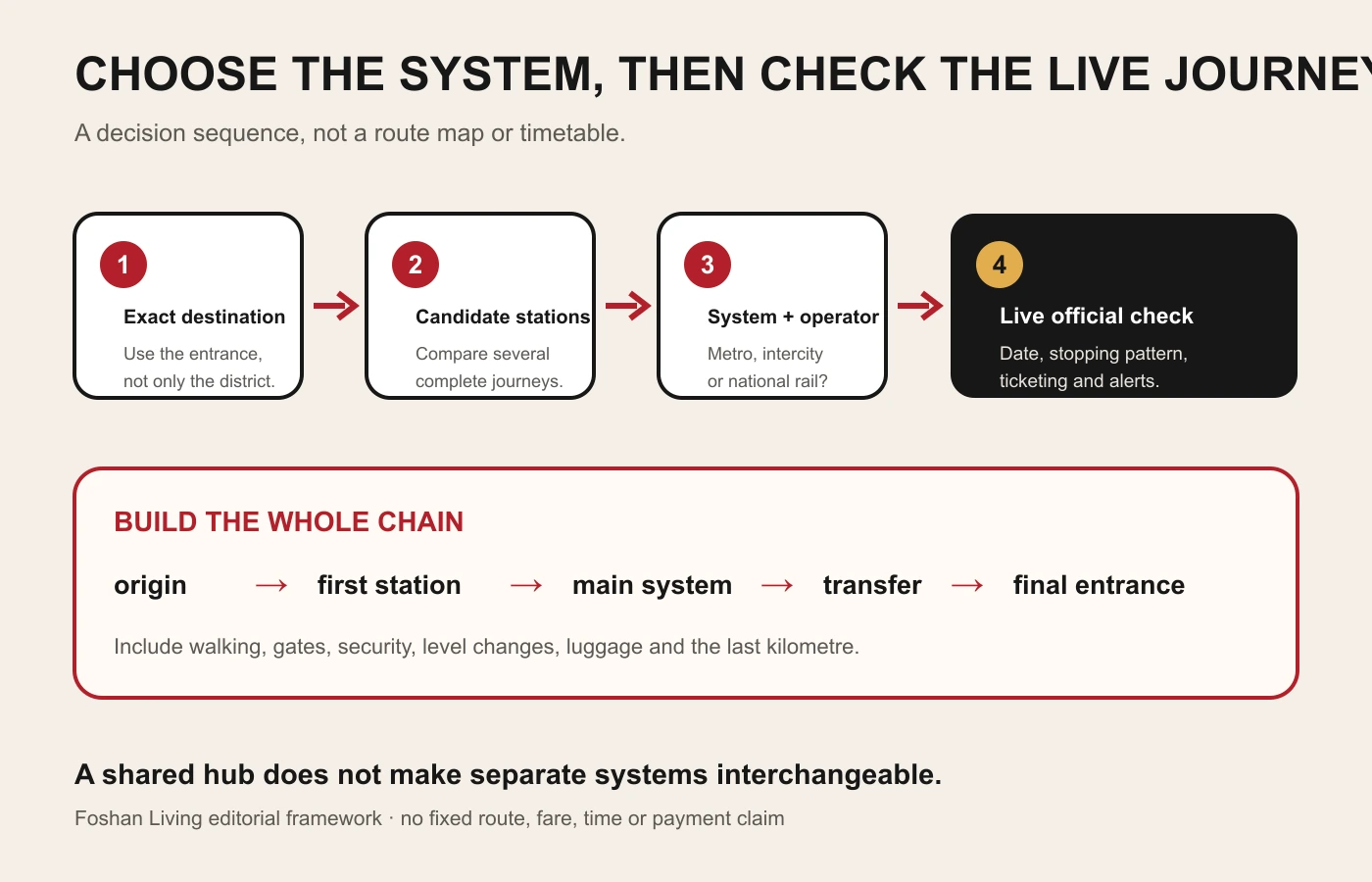
The safest planning order is:
``text exact destination → suitable station → transport system → operator → live journey ``
Do not begin with a line colour, a station name remembered from a video or the assumption that every railway inside Foshan works like a metro.
What you will get from this guide: a durable distinction between the three systems, a method for recognising the correct station and operator, and a travel-day checklist that keeps timetables, fares and payment rules out of the evergreen layer.
Start with the exact destination
A query such as “Guangzhou to Foshan” is too broad. Foshan contains five districts and many town-level centres. The nearest useful station depends on the exact workplace, home, market, hotel, school or public-service office.
Begin with the destination entrance. Then identify several candidate stations and compare the complete route:
``text origin → first station → main system → transfer → final station → destination entrance ``
This prevents a common planning error: choosing a service because its station name appears close to the district name, even though the final road journey is long or the interchange is awkward.
The district and station are different geographic layers. A station can be useful for one part of a district and irrelevant to another.
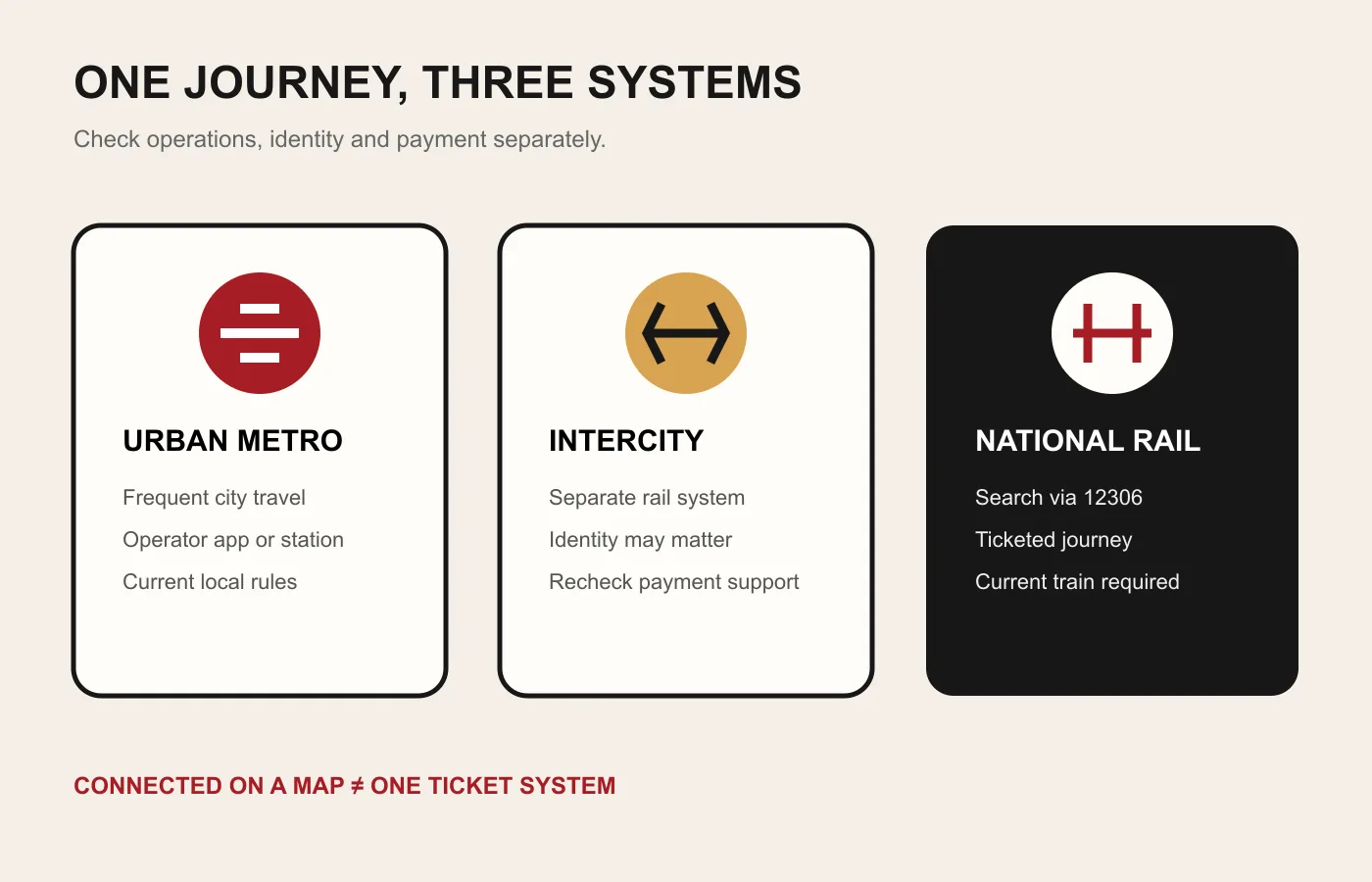
Compare the three systems at a glance
| System | Basic journey logic | Primary live source | Do not assume |
|---|---|---|---|
| Urban metro | travel through a city network without reserving one named train | Foshan Metro or the responsible metro operator | every cross-city metro service uses the same operator, fare product or notice channel |
| Guangdong intercity | regional rail with its own operating, identity and ticketing rules | current Guangdong intercity government/operator guidance | ordinary metro payment or gate rules apply |
| National rail | choose a station and a specific train through the national railway system | China Railway 12306 | a nearby metro or intercity station is the same station or paid area |
The table describes systems, not every journey. An individual trip may combine two or three of them.
Use urban metro for network-based city travel
Urban metro is generally planned as a network journey: select an origin station, destination station and transfer path, then use the current operator information.
The Foshan Metro website is the primary source for Foshan-operated lines, stations and service notices. Its current tools should be used for real journeys rather than copying first and last service times into a permanent article.
Metro is often useful when:
- both ends are reasonably close to stations;
- the transfer path is clearer than a road-only journey;
- you do not need to reserve a specific train;
- the service window matches the real departure and return.
It is not automatically the best choice because a line exists. Count the walk to the entrance, transfer movement and final connection.

Identify the responsible metro operator
Foshan’s urban rail connections include services associated with different metro operators. Cross-city travel can therefore involve operator boundaries even when the passenger experience looks like one network.
Before relying on an alert or route result, confirm:
- the official name of the line;
- the responsible operator;
- the station name and entrance;
- where service changes are published;
- whether the planned transfer remains inside the paid area.
Use Guangzhou Metro for services it operates and Foshan Metro for Foshan-operated services. Do not assume that a notice from one operator covers every metro line in both cities.
Treat Guangdong intercity as a separate regional system
Guangdong intercity connects regional stations across the Greater Bay Area. Official opening and operating documents describe it separately from urban metro and national rail.
The system can be useful when a regional station pair fits the destination better than a multi-transfer metro trip. That is a route question, not a general claim that intercity is always faster.
Intercity details can change with operating plans. Official running-plan notices demonstrate why stopping patterns and service organisation belong in a live layer.

Do not carry metro assumptions across the gate
Government guidance for Guangdong intercity discusses real-name and payment arrangements that differ from ordinary metro use. The important evergreen lesson is not one current payment method. It is that passengers must check the intercity rules in force on the travel date.
Verify:
- whether the journey requires identity verification;
- the current ticket or entry options;
- which gates serve the intercity system;
- whether a chosen service stops at the required station;
- what happens if the planned service is missed;
- any child, concession or baggage conditions relevant to the group.
A device, card or app that works on one system should never be presumed valid on another.
Use national rail for a specific train journey
National rail is organised around a station, train number and travel date. Current schedules, fares, ticket availability and passenger details belong in the 12306 system.
Use national rail when the real journey calls for a particular train connection or a station served by the national network. Do not use an old timetable, screenshot or third-party summary as final evidence.
Before booking:
- confirm the exact departure and arrival station names;
- check the travel date and passenger information;
- read the current train and ticket conditions;
- plan arrival time for the station process;
- map the trip from the arrival station to the final address.
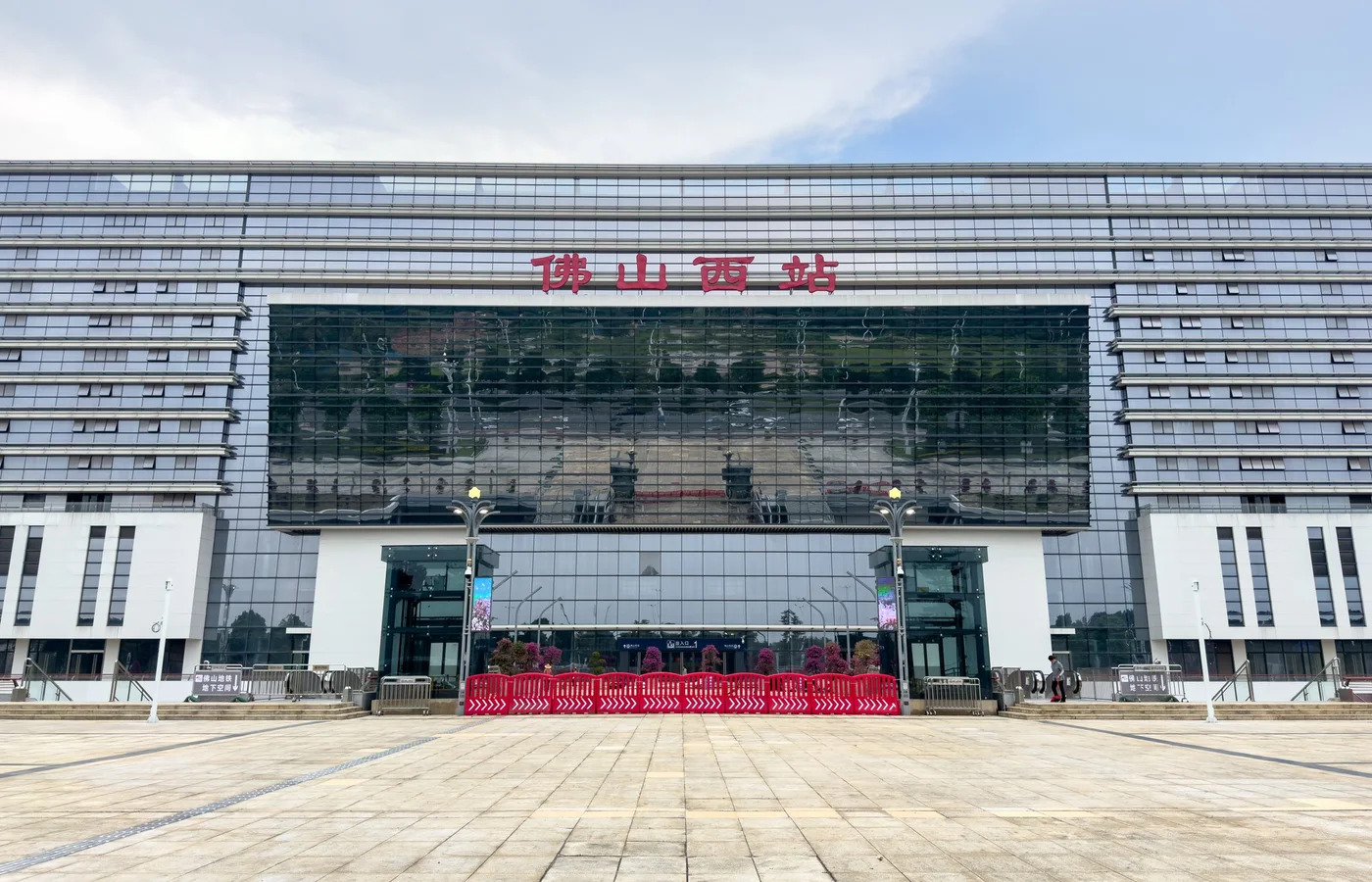
“Foshan station” in ordinary conversation may not identify the station printed on a ticket. Copy the official station name exactly.
,_Foshanxi_Railway_Station_20240825-A.jpg)
Read hubs and station names carefully
A transport hub can contain several systems, buildings, entrances or station names. Map interfaces often compress them into one cluster, which hides the passenger work between them.
A transfer may require you to:
- leave one paid area;
- follow public wayfinding;
- change floor or building;
- pass a new security or identity process;
- enter another gate;
- wait for a service with a different operating pattern.
That movement is part of the journey. Do not record only the time spent on trains.
Adjacent does not mean identical
Guangzhou South railway station and the adjacent Guangdong intercity station named Panyu are a useful regional example. Official information links the broader area, but the two names refer to different systems and passenger processes.
The evergreen lesson applies elsewhere: a shared urban location does not erase station identity. Read the ticket, sign and operator channel rather than relying on the appearance of one large hub.
In Foshan, confirm whether a name refers to metro, intercity or national rail before following directions or arranging a pickup.
Choose the system in seven steps
1. Pin the exact entrance
Use the actual destination entrance, not only the business or district name.
2. List candidate stations
Include stations from different systems if they create plausible full routes.
3. Identify each system and operator
Label every candidate as metro, Guangdong intercity or national rail. Record the responsible live source.
4. Build the full chain
Include walking, road connections, transfers, security, gates and the final kilometre.
5. Test the time window
Use current official journey information for the actual day and approximate departure time.
6. Add passenger constraints
Consider luggage, children, mobility needs, language, identity requirements and the risk of a missed connection.
7. Keep an alternative
Record a second route or road connection in case an operating change affects the preferred chain.
This method does not need a static “fastest route” table. It produces a choice that matches one journey.
Plan for luggage, mobility and the last kilometre
The route with the fewest train minutes may not be the easiest route with luggage or limited mobility.
Check the official station information for:
- accessible entrances and lifts;
- toilets and passenger-service points;
- transfer distance and level changes;
- baggage restrictions or storage expectations;
- taxi, ride-hailing or bus pickup areas;
- the condition of the final walking route.
Facilities and entrances can change. If a step-free route is essential, verify the complete chain with the relevant operators before travel.
For an airport, factory, furniture market or outer-district address, the last road segment may decide the system choice. A train can solve the regional part without solving the final arrival.
Recheck the live journey before departure
Review the route when you book, again before leaving and once more if an alert appears.
Live checks include:
- metro first and last service;
- temporary line or station changes;
- intercity operating pattern and stopping service;
- national-rail train, platform and ticket status;
- current identity and payment requirements;
- station entrance, security and interchange access;
- weather or road conditions affecting the last kilometre.
If official sources disagree with an old guide, screenshot or social-media post, use the current operator source. The purpose of this evergreen article is to help you recognise the correct system—not to preserve one day’s operations.
Continue planning transport in Foshan
Read Living in Foshan: The Basic City Structure before choosing a station from a district name. When transport affects a longer stay, keep a dated moving checklist, but do not rely on an unpublished route: Foshan Living will link its dedicated checklist only after one canonical has passed publication review. For administrative trips, confirm the exact office before building the route; the public-services guide will be linked here only after it is live.
About the author
Tom Ashworth covers living and business for Foshan Living. He explains transport, public systems and commercial geography through practical decision frameworks, while keeping timetables, fares, policy and operator changes in a dated verification layer. See all articles by Tom Ashworth.
Image credits and disclosures
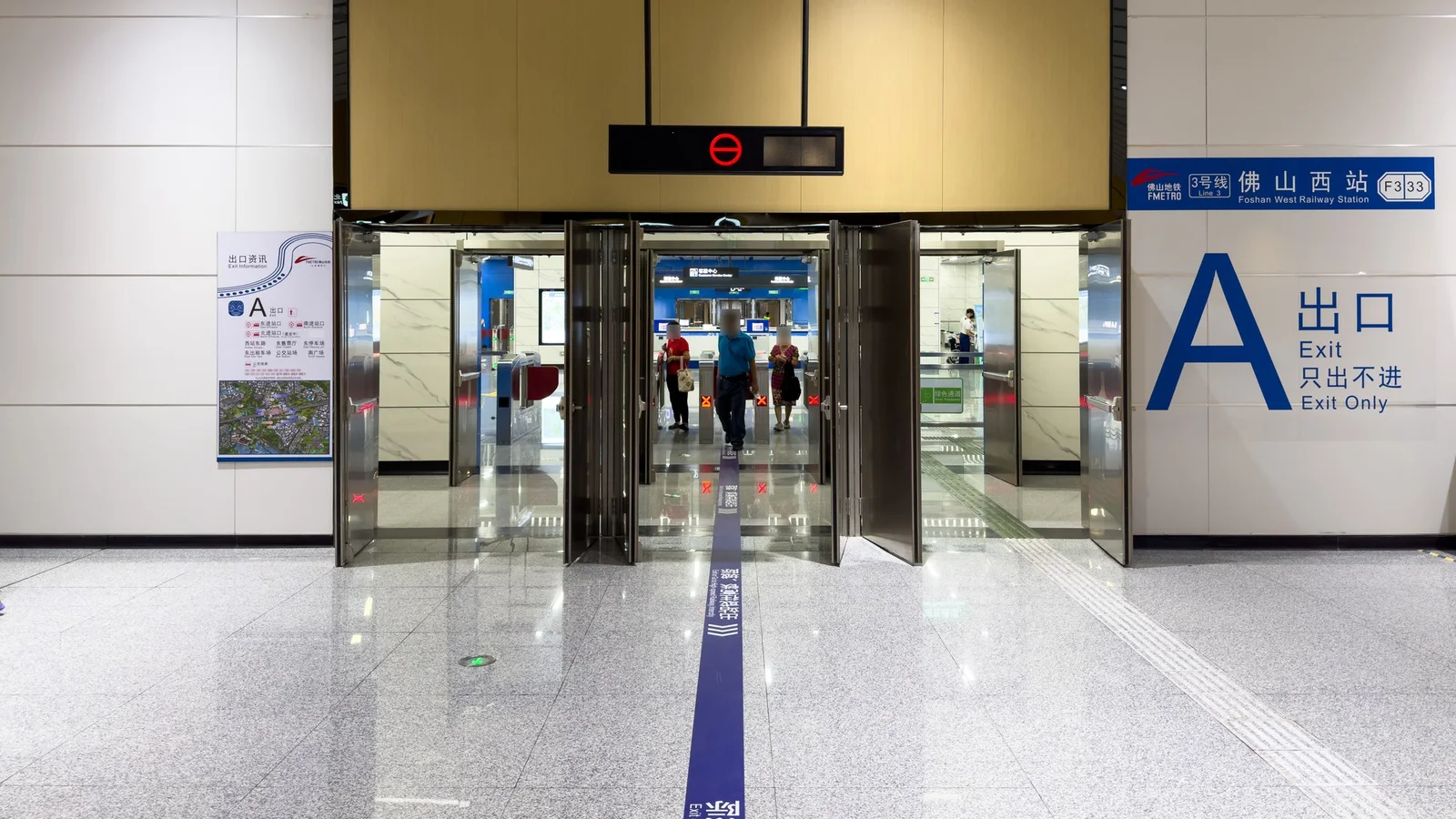
- hero.webp Foshan West Railway Station metro Exit A, photographed on 25 August 2024. The image identifies a dated interchange threshold; it does not confirm today's line, exit, gate or operating status. Tim Wu · CC BY-SA 4.0; attribution, licence link and derivative disclosure required · CC BY-SA 4.0
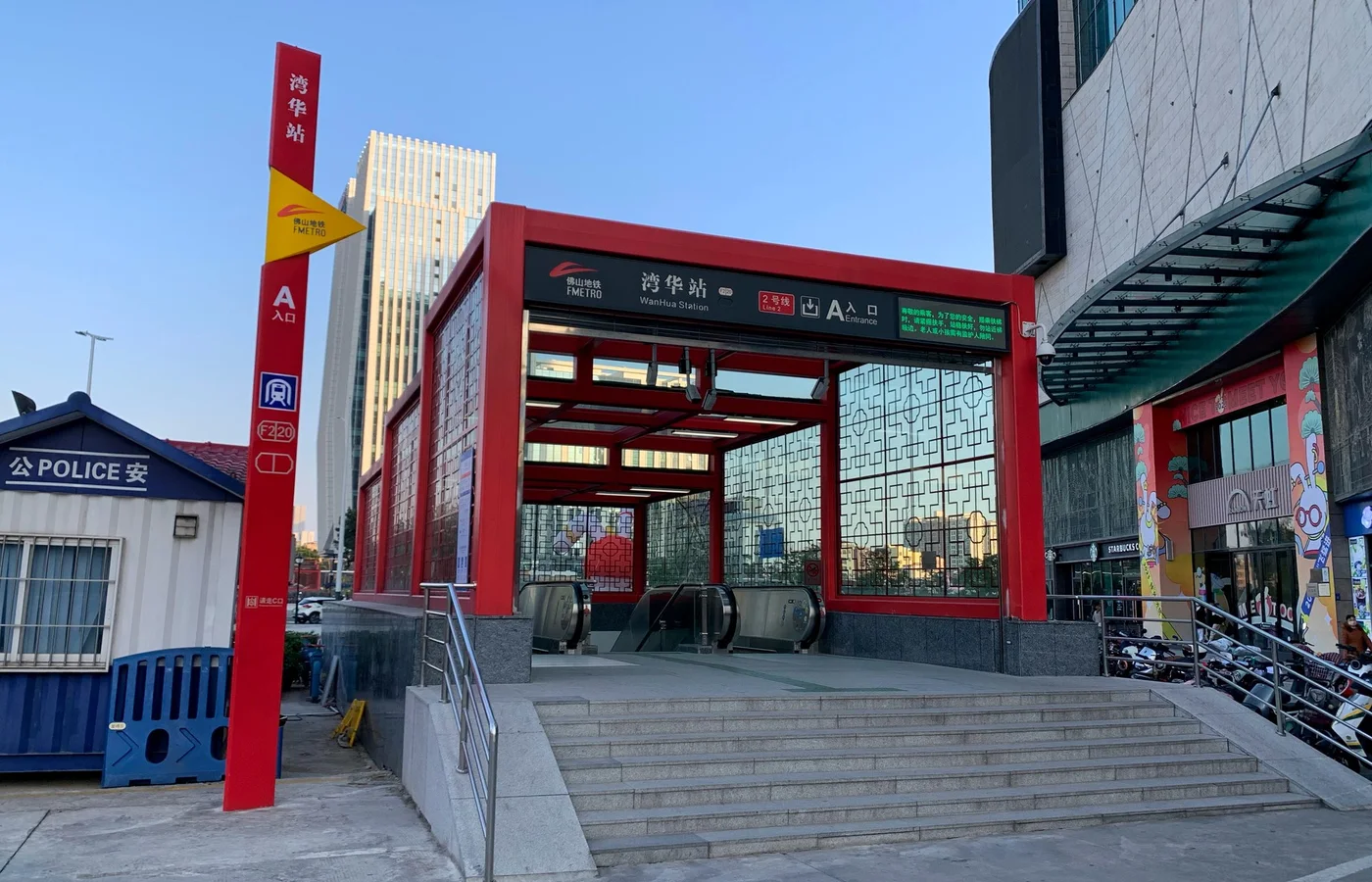
- body-01-metro.webp Wanhua Station Exit A, photographed on 31 December 2022. The image identifies a dated Foshan metro entrance and street context; it does not confirm today's line, entrance, accessibility or service status. Tim Wu · CC BY-SA 4.0; attribution, licence link and derivative disclosure required · CC BY-SA 4.0
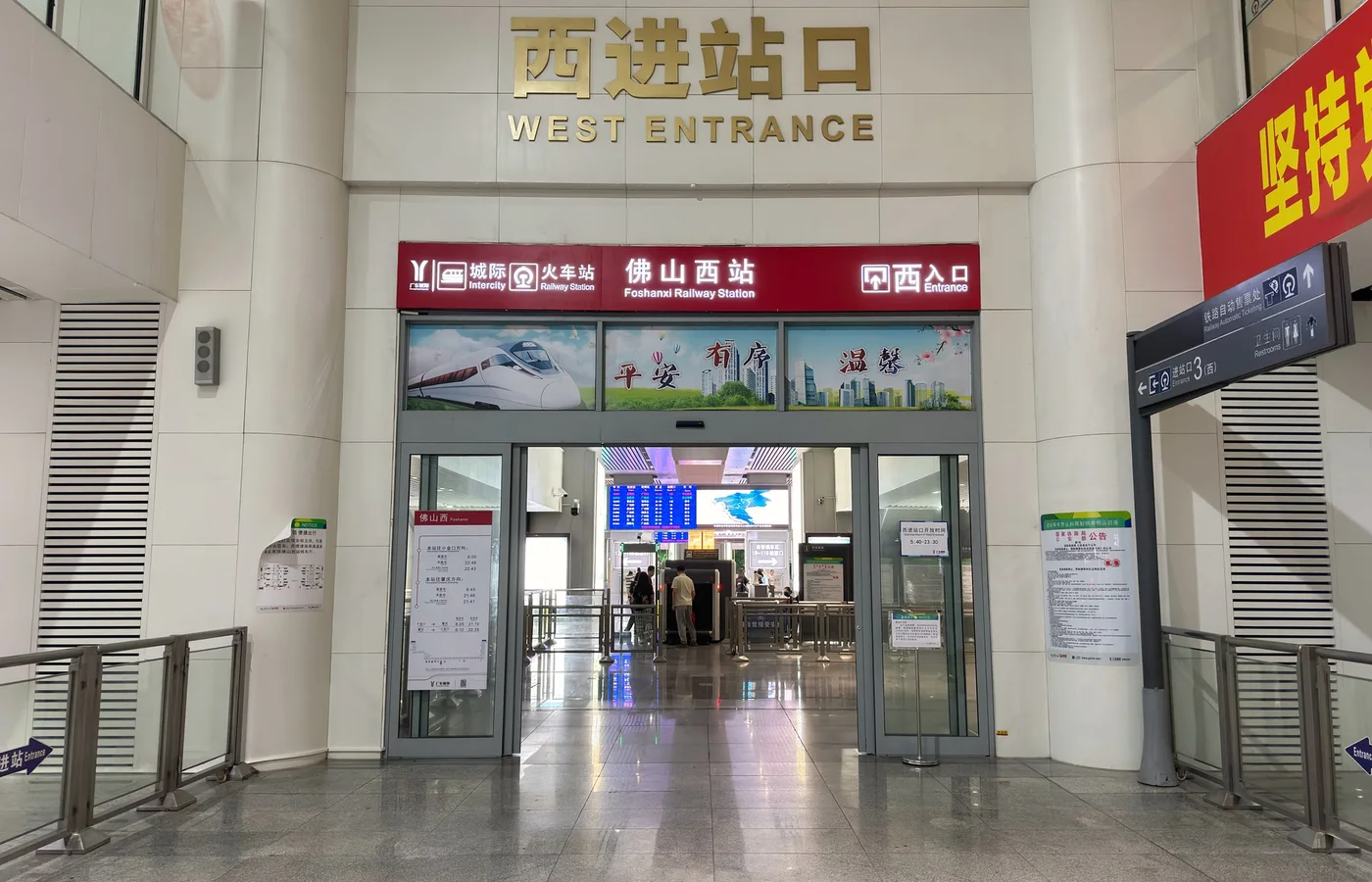
- body-02-intercity.webp The west entrance associated with the intercity area at Foshan West Railway Station, photographed on 26 May 2024. Use the scene to recognise a separate system threshold, not as evidence of current stopping patterns, gate rules or opening status. Tim Wu · CC BY-SA 4.0; attribution, licence link and derivative disclosure required · CC BY-SA 4.0
- body-03-national-rail.webp The south exterior of Foshan West Railway Station, photographed on 25 August 2024. This dated station context does not identify a current entrance, train, timetable, ticketing arrangement or interchange route. Tim Wu · CC BY-SA 4.0; attribution, licence link and derivative disclosure required · CC BY-SA 4.0
- body-04-three-systems.webp Foshan Living editorial diagram. The three systems may appear in one journey, but each requires its own current operating, identity and payment check. This is not a service map. Tom Ashworth / Foshan Living · Project-original infographic reused byte-for-byte from the accepted Moving to Foshan package
- body-05-system-choice.webp Foshan Living editorial framework. Begin with the exact destination, compare candidate stations, identify the system and operator, then run a live official check. The diagram contains no fixed route, fare, time or payment claim. Tom Ashworth / Foshan Living · Project-original SVG rendered locally to WebP

Keep exploring
Related Foshan guides
 Explore Foshan
Chancheng or Shunde: Where Should You Start in Foshan?
Choosing between Chancheng and Shunde for a first Foshan trip? Compare heritage, food, neighbourhood pace, transport planning and where to stay.
 Explore Foshan
Understanding Foshan: A City of Five Districts
Learn how Foshan’s five districts differ, which areas suit culture, food, urban life or nature, and why every short trip needs a specific local base.
 Explore Foshan
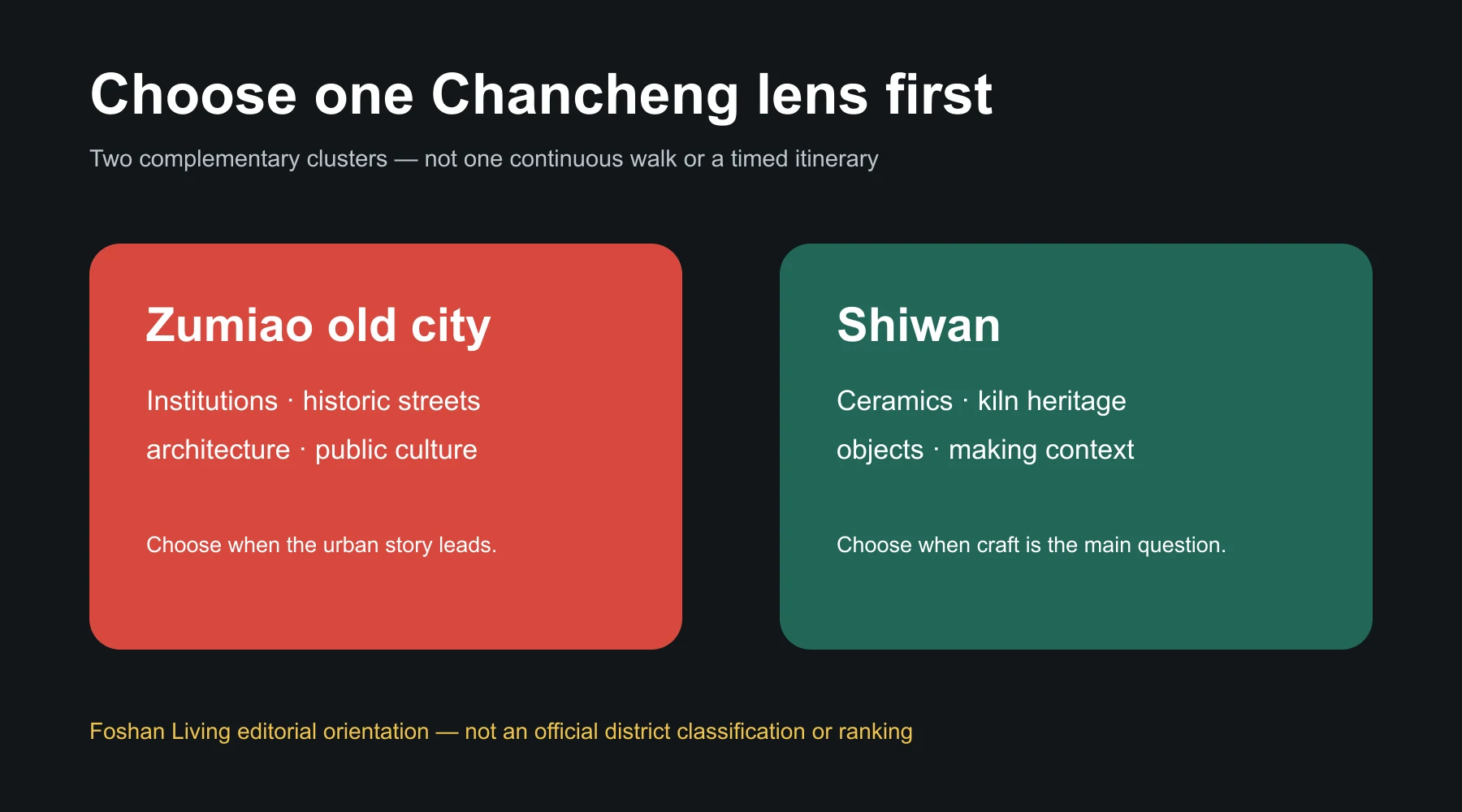
Zumiao Old City or Shiwan: How to Choose Your Chancheng Day
Compare Zumiao old city and Shiwan, choose one main Chancheng cluster, and add the other only after checking the complete route and current access.
 Explore Foshan
Chancheng: Foshan’s Historic Urban Core
Understand Chancheng through the Zumiao old city and Shiwan’s ceramic heritage, with guidance on walking scale, transport checks and where to base.
Plan your visitFirst Time in Foshan
Build a first trip around districts, transport, food and one deeper cultural interest.