Things to do
Things to Do in Foshan: The Main Experience Types
Start with the kind of experience you want—understanding, walking, making, watching or joining a seasonal tradition—then stay focused in one area.

On this page
- Why a ranked list is the wrong starting point
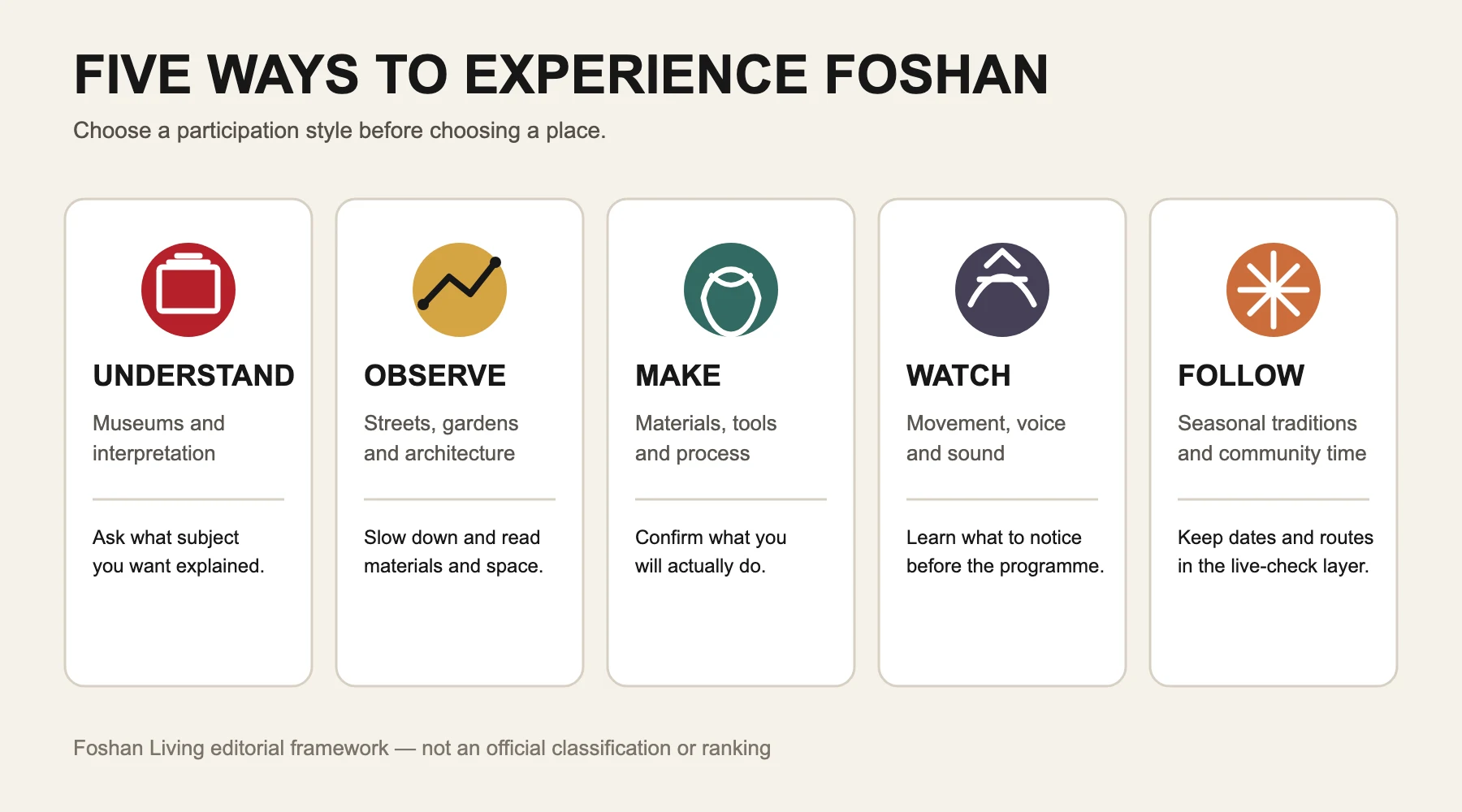
- Choose from five Foshan experience types
- Understand the city through museums
- Observe streets, gardens and architecture
- Move from looking to making
- Watch bodies and voices tell stories
- Follow a seasonal tradition
- Choose by how you want to participate
- Adapt the experience to your group
- For families
- For lower-energy or access-conscious days
- For rain or uncertain conditions
- Stay within one area before crossing Foshan
- Check eight details before you go
- Build a simple first-day plan
- Continue exploring Foshan
- About the author
The most useful way to choose what to do in Foshan is not to begin with a “top attractions” list. Begin with the kind of experience you want: understand the city, observe its spaces, make something, watch bodies and voices tell stories, or follow a seasonal tradition.
Those five types are a Foshan Living editorial framework, not an official classification. They help you turn broad names such as pottery, kung fu or Cantonese opera into a focused first visit. Pick one main experience, add one nearby supporting activity, and leave current opening, tickets, performances and transport to a final live check.
Why a ranked list is the wrong starting point
Foshan is a multi-centre city. A museum, pottery area, historic street, garden and performance venue may belong to different districts or local centres. Putting them in one list can make distant places look interchangeable.
Rankings create another problem: they mix stable cultural subjects with changing operations. A heritage tradition may be centuries old, while a workshop, performance or exhibition may last only a season. Popularity scores also tell you little about whether an activity suits a child, a person who needs frequent rests or a visitor who does not understand Cantonese.
Start with a reader task instead:
- Do you want context before seeing individual places?
- Do you learn best by walking and looking?
- Is making something more important than collecting landmarks?
- Do movement, music and theatre interest you?
- Are you planning around a traditional calendar rather than a fixed weekend?
The answer narrows the field without claiming that one experience is universally better.
Choose from five Foshan experience types
Understand the city through museums
Choose a museum first when you need a vocabulary for Foshan. Official museum sources provide different entry points: city history, district history, ceramics, archaeology, architecture, martial-arts figures, opera objects or local natural history.
Do not ask only which museum is “the main one.” Ask what you want to understand. A city museum can supply an overview. A district museum can explain a more local landscape. A specialist museum can slow the visit down around ceramics, theatre or another subject.
Use three questions:
- What is the museum’s long-term subject?
- Which permanent or current displays are actually open?
- What nearby place will make that context visible afterwards?
Use the museum’s current channel for open displays, then connect the visit to one nearby place.
.jpg)
Observe streets, gardens and architecture
Choose walking and observation when buildings, materials and street life matter more than formal interpretation. Foshan’s official heritage-planning sources recognise historic urban areas, traditional streets and the continuing use of historic buildings. That does not create one continuous heritage walk across the city.
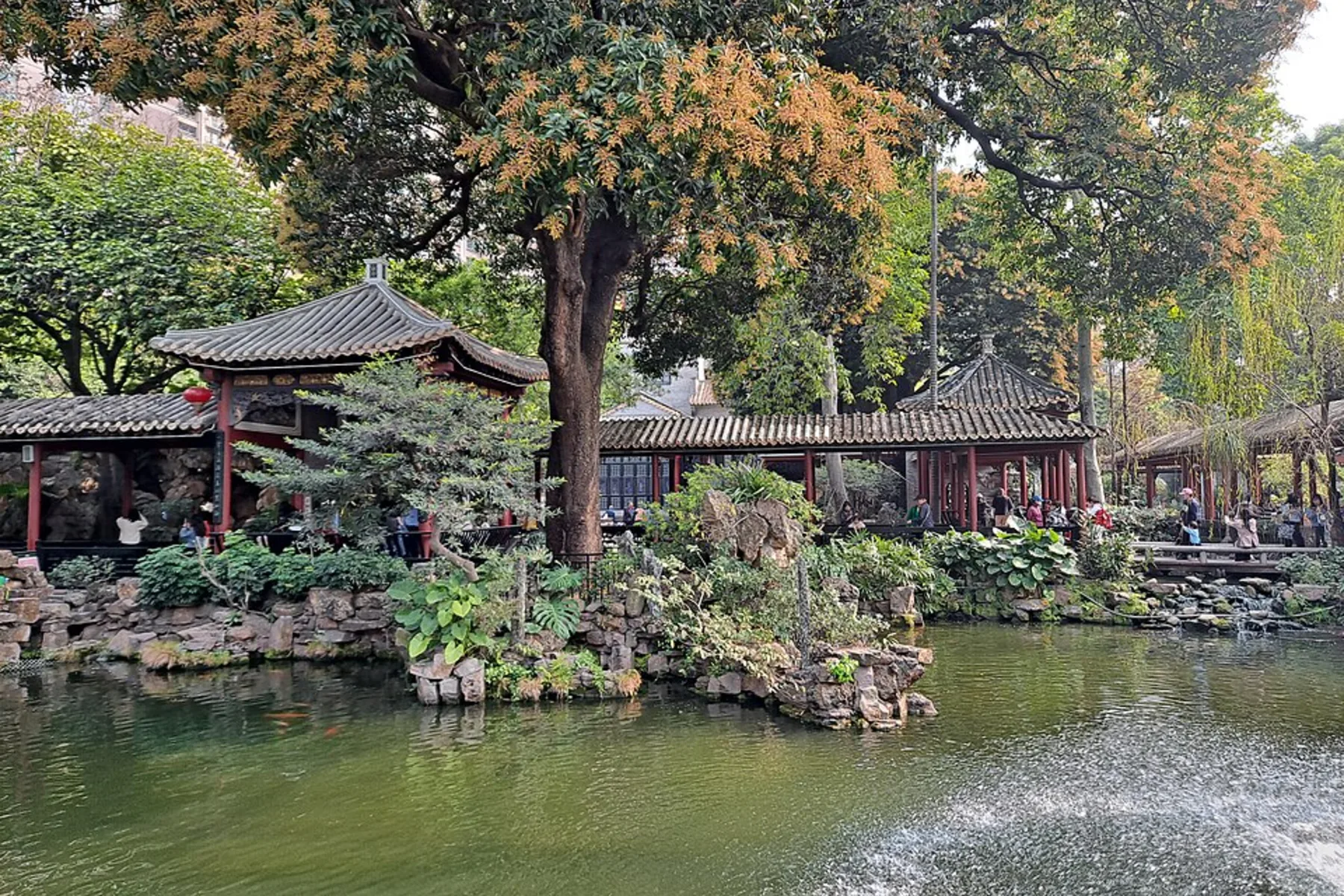
Pick one area and look closely. Notice brick, rooflines, courtyards, doorways and the boundary between public and private space. Ask how an old structure has been repaired or adapted. In a Lingnan garden, notice how rooms, corridors, water, framed views and shade organise movement.
Observation is not permission to enter. A historic building may be a residence, workplace or restricted space, so respect signs and thresholds.

For a fuller low-schedule approach, use the same method: choose one coherent street, market or outdoor area and verify current access separately.
Move from looking to making
Choose a hands-on experience when contact with material and process is the point. Shiwan pottery is a strong starting example because Chinese national and provincial cultural sources describe its heritage identity, making stages and relationship with local ceramic culture.
“Pottery experience” is still too vague. It might mean observing a maker, watching a demonstration, decorating a prepared form, shaping clay during a short session or following a longer learning sequence. These are different levels of participation, and the four-level distinction is an editorial planning tool rather than an official certification.
Before booking, ask which stages you will perform, what staff prepare in advance, whether firing is included and how finished work is collected. Confirm materials, tools, supervision, language, age conditions and photography. A kiln-site or museum name does not prove that a public workshop is running today.


For any hands-on activity, use the participation and booking questions above rather than assuming that a heritage site automatically runs a workshop.
Watch bodies and voices tell stories
Foshan’s martial arts, lion dance, Cantonese opera and Cantonese narrative singing are related cultural subjects, but they are not the same experience.
A martial-arts display may highlight stance, sequence, control and lineage. Lion dance combines trained movement with percussion, costume and spatial awareness. Cantonese opera brings together singing, speech, movement, music, costume and stage convention. Cantonese narrative singing has its own performance identity and should not be treated as a shorter name for a full opera production.
For a first encounter, learn what to watch or listen for before searching for a date. Then check the venue or organiser for the current programme, language support, seat conditions, photography rules and accessibility. A museum display can explain instruments or costumes, but it is not a promise of a live performance.
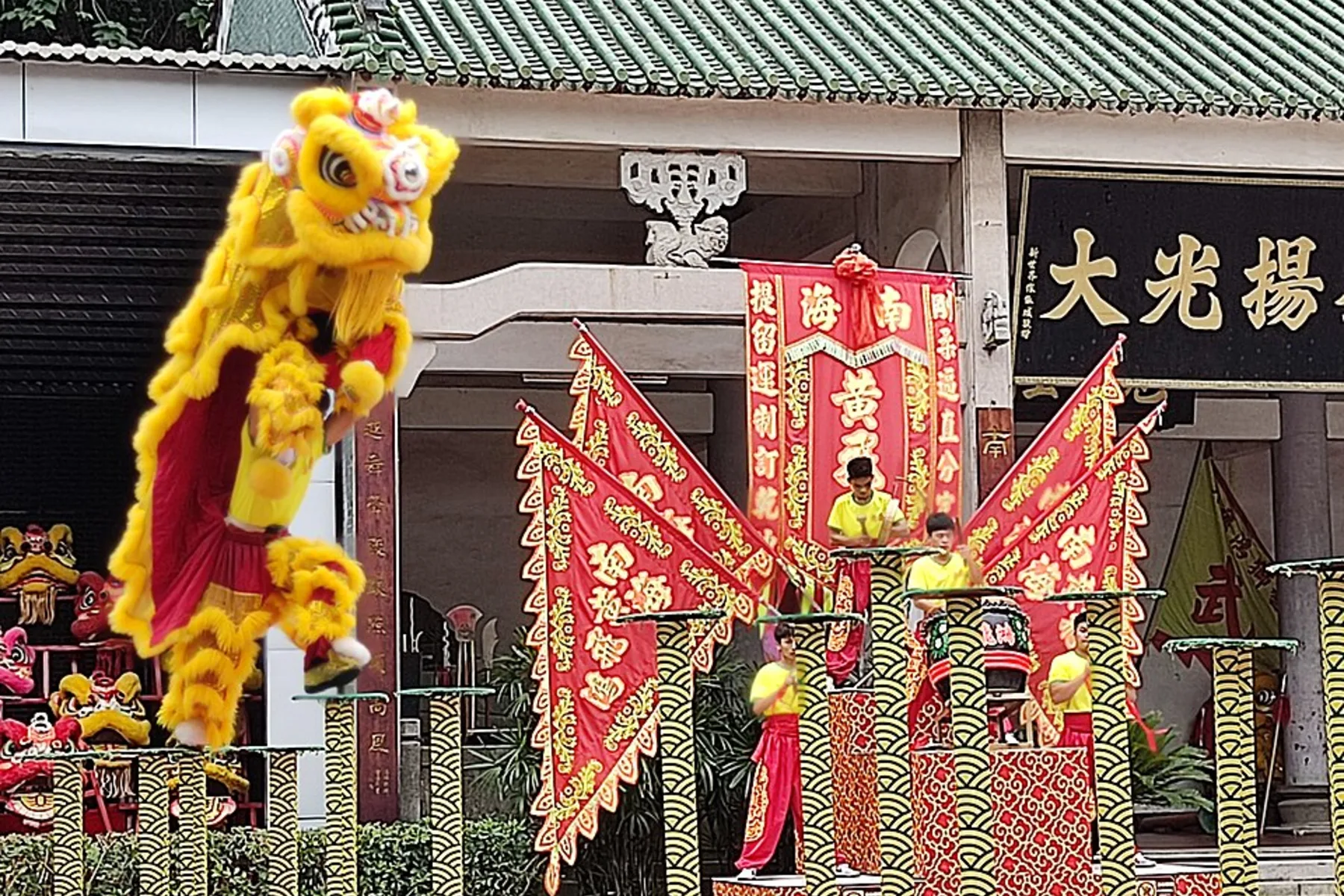

Read Foshan Kung Fu for the boundary between history, transmission stories and film. For Cantonese opera, prepare for stage language and conventions before checking a current programme.
Follow a seasonal tradition
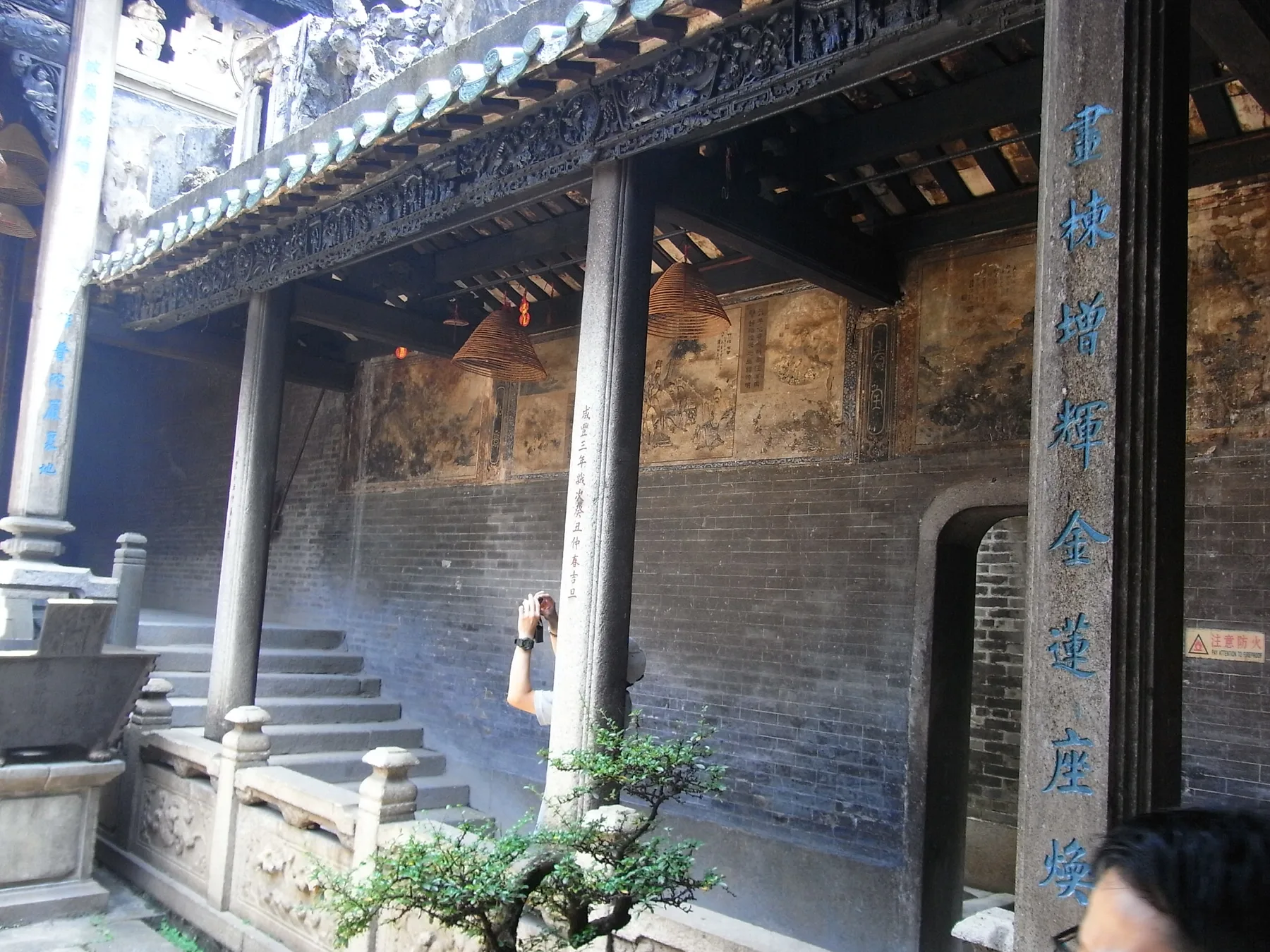
Seasonal traditions belong in a long-term plan, but not in a permanent events calendar. National and provincial heritage sources document the cultural background of traditions such as Foshan Autumn festivities and temple fairs associated with local belief and community practice.
Their yearly dates, routes, programmes and access arrangements can change. Some may pause, move or take a different form. The evergreen choice is therefore the type of participation: observe processions and making, listen to ritual or performance sound, understand community belief, or study how temporary public space changes.
Keep the cultural background in the guide and place current details in a dated events layer. Never book travel from a previous year’s poster.

Choose by how you want to participate
The same subject can support several participation styles:
- Look: museum displays, objects, architecture and public-space observation.
- Walk: one coherent street, garden, kiln area or neighbourhood.
- Make: a transparent session with clear material, supervision and aftercare.
- Listen and watch: performance, demonstration or interpretation.
- Join respectfully: a public tradition where organisers welcome participation.
Decide how active you want to be. Walking, making, watching and seasonal participation create different physical, sensory and language demands.
Do not infer conditions from the category. Confirm the specific place and format.
Adapt the experience to your group
For families
An activity is not suitable for every child merely because it is advertised as interactive. Check minimum age, guardian participation, session length, tools, handwashing, toilets, rest opportunities and whether a child can step out.
A museum can work well when the family chooses one question rather than trying to cover every gallery. A making session can work when the task, supervision and finished-object process are clear. A performance can work when duration, sound level and language support fit the child.
Use the same screening method for every family activity; current age, supervision and facility details must come from the operator.
For lower-energy or access-conscious days
Choose one place with a clear service entrance, seating and facilities rather than assuming that an old street or garden is effortless. “Short distance” does not prove step-free access, and a building described as accessible may still require checking the complete route from transport to entrance, toilet and exit.
Ask the operator about lifts, ramps, resting places, accessible toilets, sensory conditions and assistance. Keep a simpler alternative in the same area.
For rain or uncertain conditions
An indoor venue may be a useful direction, but “indoors” does not guarantee normal operation. Museums can close galleries, require reservations or change entry procedures. Covered garden corridors and workshop spaces still have site-specific conditions.
Use weather and operational information only at planning time. The evergreen decision is to keep one indoor-led alternative and avoid a route that depends on several distant reservations.
Stay within one area before crossing Foshan
The five experience types describe interests, not a route. After choosing one, resolve it to a district and a specific local area.
A useful first day usually has one main experience and one supporting layer nearby. A museum can lead to a short neighbourhood observation. A pottery introduction can lead to a ceramic public-space walk. A theatre subject can pair with an exhibition that explains costume or music. The connection should be thematic and geographic.
Do not combine places merely because they all appear under “Foshan.” Old Foshan, Shiwan, Daliang, Guicheng and Xiqiao are different planning contexts. Check the complete transfer and return before adding a second area.
This one-area rule is editorial advice, not a ban on crossing districts. It protects time for looking, resting and understanding.
Check eight details before you go
Use an official operator, venue or government channel to confirm:
- the operating organisation, exact address and correct entrance;
- opening status and last entry for your date;
- reservation, identification and participation requirements;
- whether the format is observation, demonstration, short session or fuller course;
- current total cost, including materials, firing, delivery or other extras;
- age, supervision, language, physical and accessibility conditions;
- photography, privacy, storage, food and pet rules;
- cancellation, temporary closure and return options.
Save the confirmation when money, a fixed performance or a workshop is involved. A travel platform can suggest a place, but it should not replace the organisation responsible for today’s operation.
Build a simple first-day plan
For a first visit, use this sequence:
- Pick one of the five experience types.
- Choose one area rather than the whole city.
- Select one main experience with a first-party information source.
- Add one nearby, low-commitment observation.
- Check the eight dynamic details.
- Keep enough time for the return.
This produces a day with a clear subject. It also makes later visits easier: the category you did not choose becomes the starting point for the next trip.
Continue exploring Foshan
Use Foshan’s five districts to choose an area, then review the first-time visitor guide for arrival planning. If martial arts is your main subject, continue with Foshan Kung Fu.
About the author
Mei-lin Cheung is Foshan Living’s Things to Do editor. She turns local cultural and public-space research into practical, low-hype experience guides, with particular attention to participation boundaries, family needs and the details visitors must verify directly. See all articles by Mei-lin Cheung.
Image credits and disclosures
- hero.webp Qinghui Garden offers one real Foshan setting for observing how rooms, corridors, water and shade organise movement. It does not represent every experience in the city or confirm current opening. EditQ · CC BY-SA 4.0; cropped and resized derivative · CC BY-SA 4.0
- body-01-museum.webp A museum display in Shunde shows how objects and interpretation can provide context before a visitor explores the city. It does not confirm the display's current availability. Pauloleong2002 · CC BY-SA 4.0; resized derivative · CC BY-SA 4.0
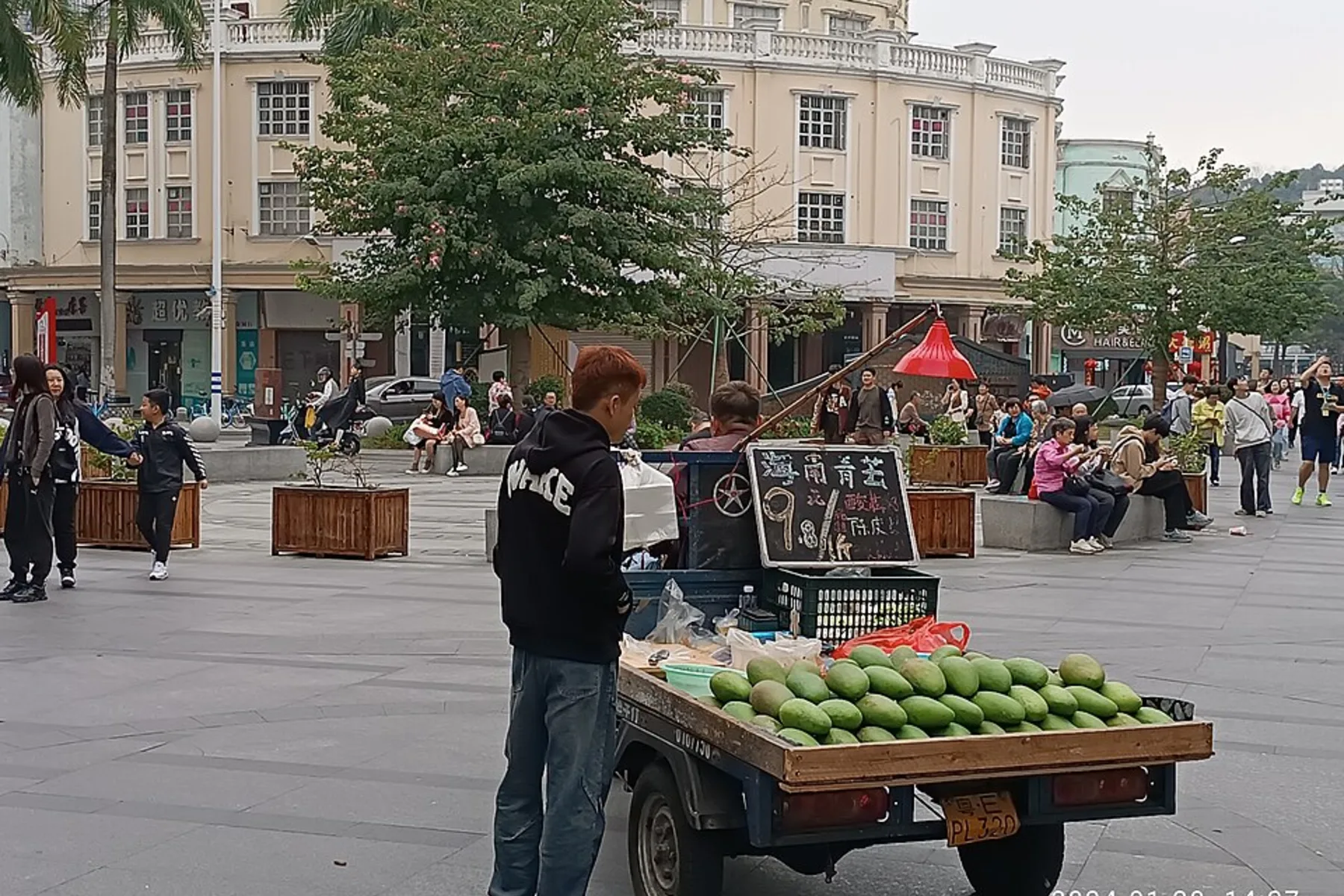
- body-02-street.webp Huagai Road provides one real Shunde street context for observing scale, movement and everyday use. It is not a stall recommendation or a statement of current trading conditions. Lau Hau Yatyue Tiger · CC0; cropped and resized derivative · CC0
- body-03-shiwan-object.webp This finished Shiwan ware object helps a visitor look at surface, form and detail. It was photographed in the Guangdong Museum and is not evidence of a Foshan workshop, making process or bookable session. Augustohai · CC BY-SA 4.0; resized derivative · CC BY-SA 4.0
- body-04-performance.webp A documented lion-dance performance in Xiqiao provides one real example of trained movement, costume and spatial awareness. It does not confirm a current programme or show time. Lukwo RuoShuma Simonz · CC BY-SA 4.0; cropped and resized derivative · CC BY-SA 4.0
- body-05-temple.webp The interior of Lubao Ancestral Temple provides one real Sanshui setting connected with community belief and tradition. The photograph does not confirm a current event, route, programme or opening condition. ITammyT16 · CC BY-SA 3.0; resized derivative · CC BY-SA 3.0
- body-06-framework.webp Foshan Living's five-type editorial framework helps readers choose a participation style before choosing a place. It is not an official classification or ranking. Mei-lin Cheung / Foshan Living · Original editorial infographic created for this article


Keep exploring
Related Foshan guides
 Explore Foshan
Chancheng or Shunde: Where Should You Start in Foshan?
Choosing between Chancheng and Shunde for a first Foshan trip? Compare heritage, food, neighbourhood pace, transport planning and where to stay.
 Explore Foshan
Understanding Foshan: A City of Five Districts
Learn how Foshan’s five districts differ, which areas suit culture, food, urban life or nature, and why every short trip needs a specific local base.
 Explore Foshan
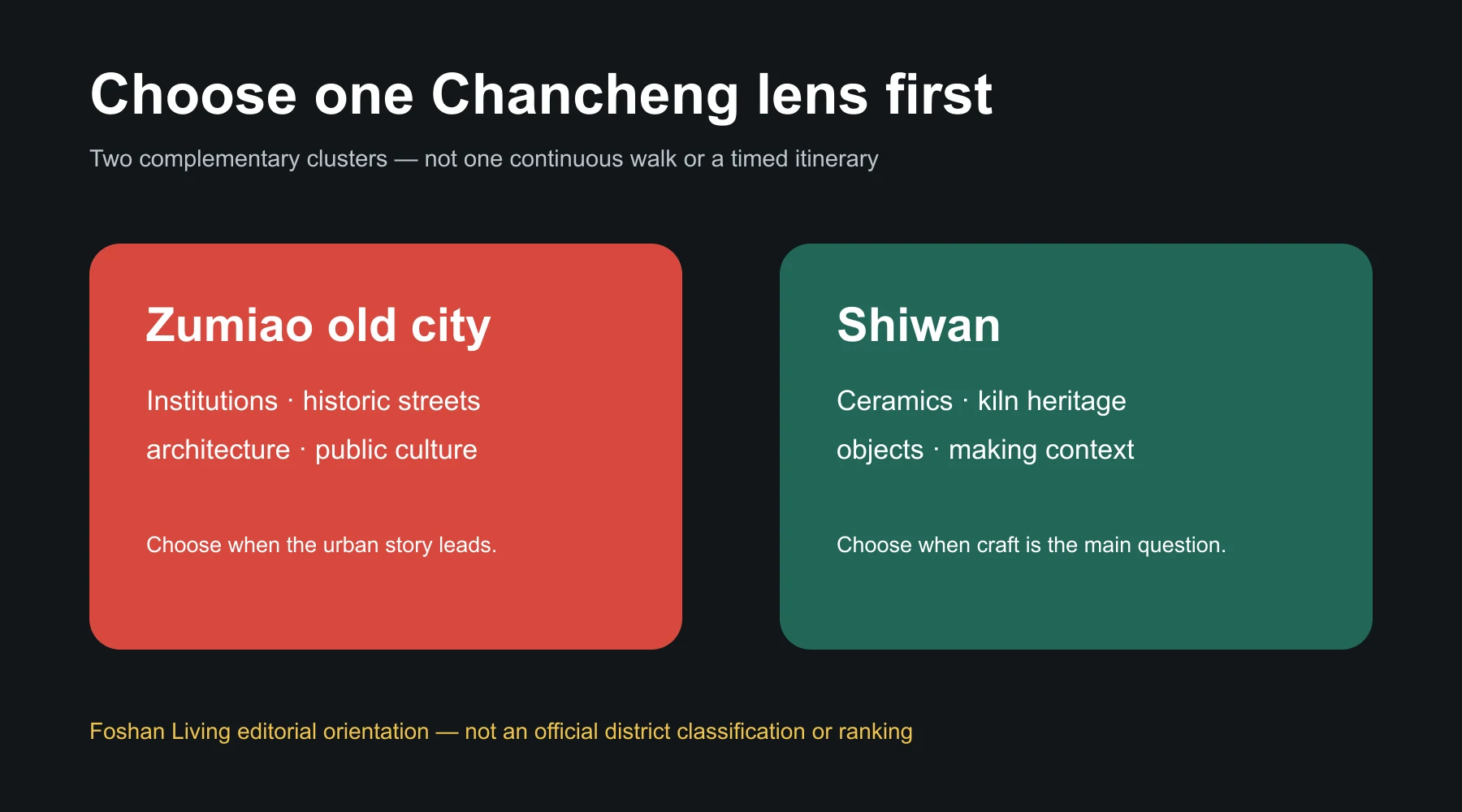
Zumiao Old City or Shiwan: How to Choose Your Chancheng Day
Compare Zumiao old city and Shiwan, choose one main Chancheng cluster, and add the other only after checking the complete route and current access.
 Explore Foshan
Chancheng: Foshan’s Historic Urban Core
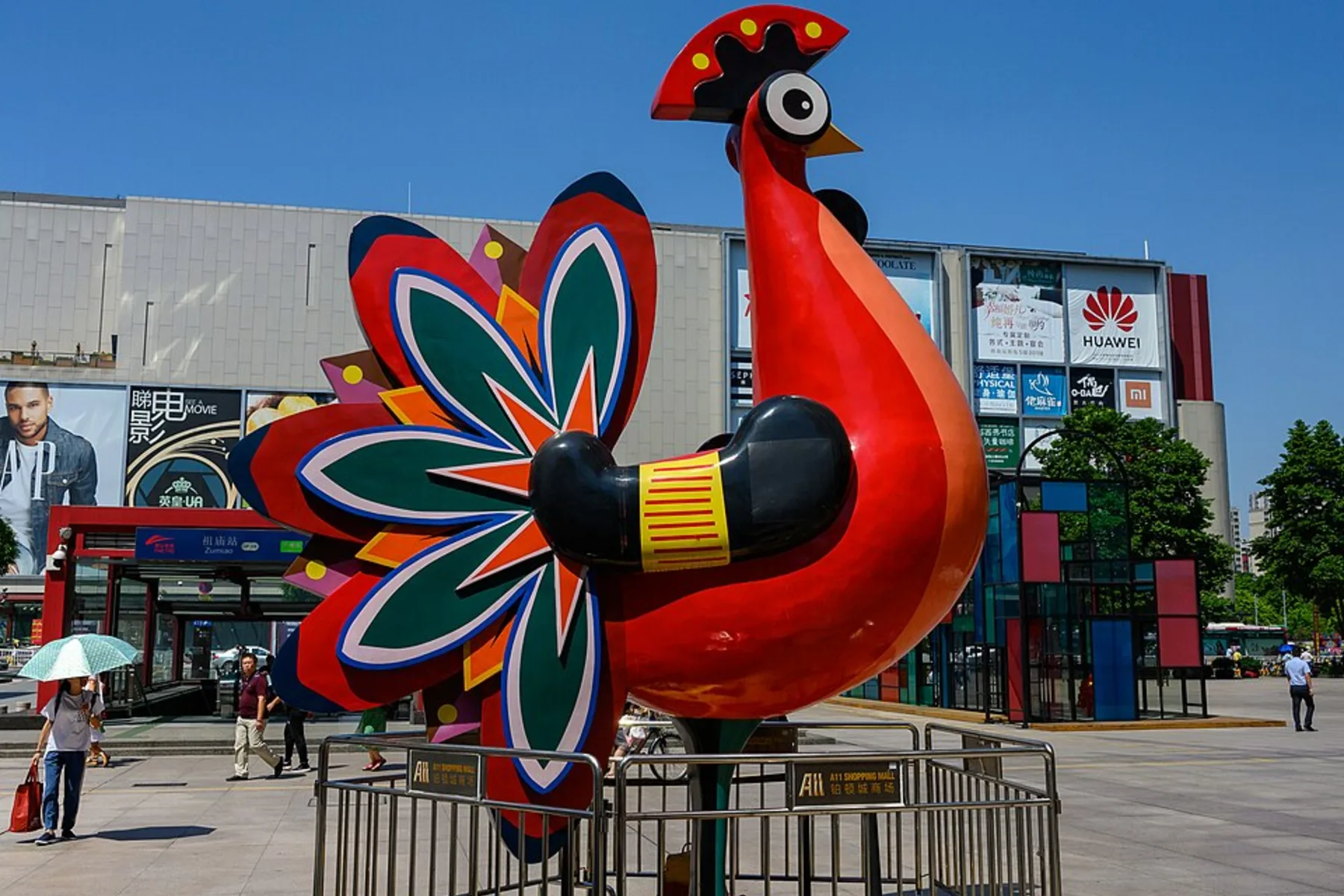
Understand Chancheng through the Zumiao old city and Shiwan’s ceramic heritage, with guidance on walking scale, transport checks and where to base.
Plan your visitFirst Time in Foshan
Build a first trip around districts, transport, food and one deeper cultural interest.