Food & drink
Understanding Foshan and Shunde Food
A practical orientation to place, ingredients, technique and shared-table culture before choosing meals in Foshan.

On this page
- Begin with the geography
- Choose the town before choosing the meal
- Do not use Shunde as a synonym for Foshan
- Place Shunde within the wider Cantonese table
- “Shunde cuisine” is useful but not a fixed canon
- Food culture includes relationships
- Read food through place, ingredient, technique and table
- Place
- Ingredient
- Technique
- Table
- Use town names as clues, not borders
- Why exclusivity fails
- Plan one local cluster
- Recognise the main food families
- Fish and freshwater ingredients
- Milk cookery
- Rice foods and cakes
- Roast and banquet dishes
- Town-linked seasonal ingredients
- Understand why the shared table matters
- Build contrast before quantity
- Clarify the unit
- Question heritage, tradition and authenticity labels
- Build a first Foshan food experience
- Choose one area
- Choose one learning goal
- Order for contrast
- Keep safety separate from prestige
- Verify dynamic details
- Continue through the Foshan Living food guides
- About Daniel Osei
Foshan food is broader than Shunde food, while Shunde is one of the clearest places to begin understanding the city’s culinary culture. Shunde is a district of Foshan, not a separate compact food town. Its ten town-level areas, waterways, markets and household traditions support a wide vocabulary of fish preparations, milk cookery, rice foods, roast meats, snacks and banquet dishes.
The useful first question is not “Which single dish represents Foshan?” Ask how place, ingredient, technique and the shared table fit together. That framework makes menus easier to read without reducing a living food culture to a restaurant ranking or compulsory checklist.
Begin with the geography
Foshan is a city made up of several districts. Shunde is one of them. When a visitor says, “I am going to Shunde for food,” the actual destination may be Daliang, Ronggui, Lunjiao, Chencun, Beijiao, Lecong, Leliu, Longjiang, Xingtan or Jun’an.
Those names are not interchangeable neighbourhood labels. They refer to distinct town-level areas within a large district. A restaurant, hotel and station can all include “Shunde” in an English description while belonging to different practical travel chains.
Choose the town before choosing the meal
A food plan needs a full address. Identify the meal’s town or subdistrict, then compare it with the rest of the day. Do not collect dishes from several town lists and assume they form one walking route.
This does not mean every visit requires specialist geographic knowledge. It means “Shunde” is the first layer of the address, not the last.
Do not use Shunde as a synonym for Foshan
Shunde’s food culture has strong public visibility, supported by local cultural sources and national television documentaries. That visibility should not erase food traditions in Chancheng, Nanhai, Gaoming or Sanshui. This guide uses Shunde as an accessible learning case within Foshan, not as a claim that one district contains the city’s entire cuisine.

Place Shunde within the wider Cantonese table
Shunde food belongs to a wider Cantonese culinary world. A visitor will encounter familiar Cantonese habits: attention to ingredient condition, texture and heat; shared dishes in the centre; and menus that can include fish, meat, vegetables, soup, rice or noodles, tea and sweets.
Shunde becomes especially legible when you watch what technique does to an ingredient. Fish can remain whole, be carefully deboned, cut into slices, minced or worked into a light fish product. Milk can become an individual dessert or part of a savoury shared dish. Rice can appear as noodles, cakes and snacks rather than only plain steamed rice.
“Shunde cuisine” is useful but not a fixed canon
English readers need a workable term, and “Shunde cuisine” serves that purpose. It should not imply that every household, town or restaurant follows one official menu.
The Shunde Library’s public-cultural overview names double-skin milk, Lunjiao cake, Chencun rice noodles, fish products, fried milk and Jun’an steamed pork among its examples. Together they show range. They do not establish a mandatory list, a single correct recipe or permanent availability.
Food culture includes relationships
CCTV documentary coverage connects Shunde cooking with households, work, local ingredients and social relationships. That is valuable cultural background, but it is not a current restaurant directory or a standardised cooking manual.
The lesson is durable: food is more than a finished plate. It also records who prepares it, how knowledge is transmitted, where ingredients come from and how people share a meal.
Read food through place, ingredient, technique and table
These four lenses are a Foshan Living editorial method, not an official culinary classification.
Place
Ask which district, town, village, market or household context is being named. Place can explain cultural association, but a town name on a menu does not prove exclusive origin or current sourcing.
Ingredient
Identify the central material: freshwater fish, milk, rice, meat, vegetables or a combination. The ingredient often explains why a texture or preparation matters.
Technique
Look beyond “fried” or “steamed.” Ask what happened before heat: cutting, bone removal, mincing, pounding, forming, setting or marinating. Then notice the heat method and the intended texture.
China’s national intangible-cultural-heritage material on Chinese cooking treats ingredient preparation, knife work, heat control and eating customs as parts of a wider culinary process. It is a national framework, not proof of one Shunde recipe, but it supports reading technique as more than the final cooking verb.
Table
Ask whether the dish is an individual snack, shared main, staple, dessert or banquet centrepiece. A dish can be culturally important and still be unsuitable for a two-person lunch because of its size or role.
Together, the lenses prevent common mistakes. You are less likely to order several near-identical textures, chase town names across the district or mistake a large celebration dish for an everyday portion.
Use town names as clues, not borders
Local media connects foods with Shunde’s ten town-level areas. Examples include Daliang and milk dishes, Lunjiao and rice cake, Chencun and rice noodles, Lecong and fish curd, and Jun’an and steamed pork.
These associations help readers remember geography. They should be phrased as “linked with,” “associated with” or “a useful clue,” not “only authentic in.”
Why exclusivity fails
A dish can travel through families, cooks and businesses. Ingredients and methods can also change. The same name may appear in several towns, while a food associated with one place may not be available every day or season.
Town labels therefore answer, “Where should I begin learning?” They do not automatically answer:
- who invented the dish;
- which current business makes the best version;
- whether the ingredient was sourced locally;
- whether one recipe is the only traditional form;
- whether the dish is available when you visit.
Plan one local cluster
If Lunjiao cake is the subject, build a Lunjiao research plan rather than treating the food as a reason to add another distant stop to a full Daliang day. If the meal is in Ronggui, choose nearby activities and accommodation from the exact address.
Food geography should simplify the day, not turn it into a collection race.
Recognise the main food families
For orientation, five broad families make Shunde menus easier to approach. They are editorial lenses and overlap.
Fish and freshwater ingredients
This family includes much more than raw fish: whole cooked fish, deboned preparations, fish cakes, fish curd, broth and hotpot forms. Compare cutting, structure, heat and texture.
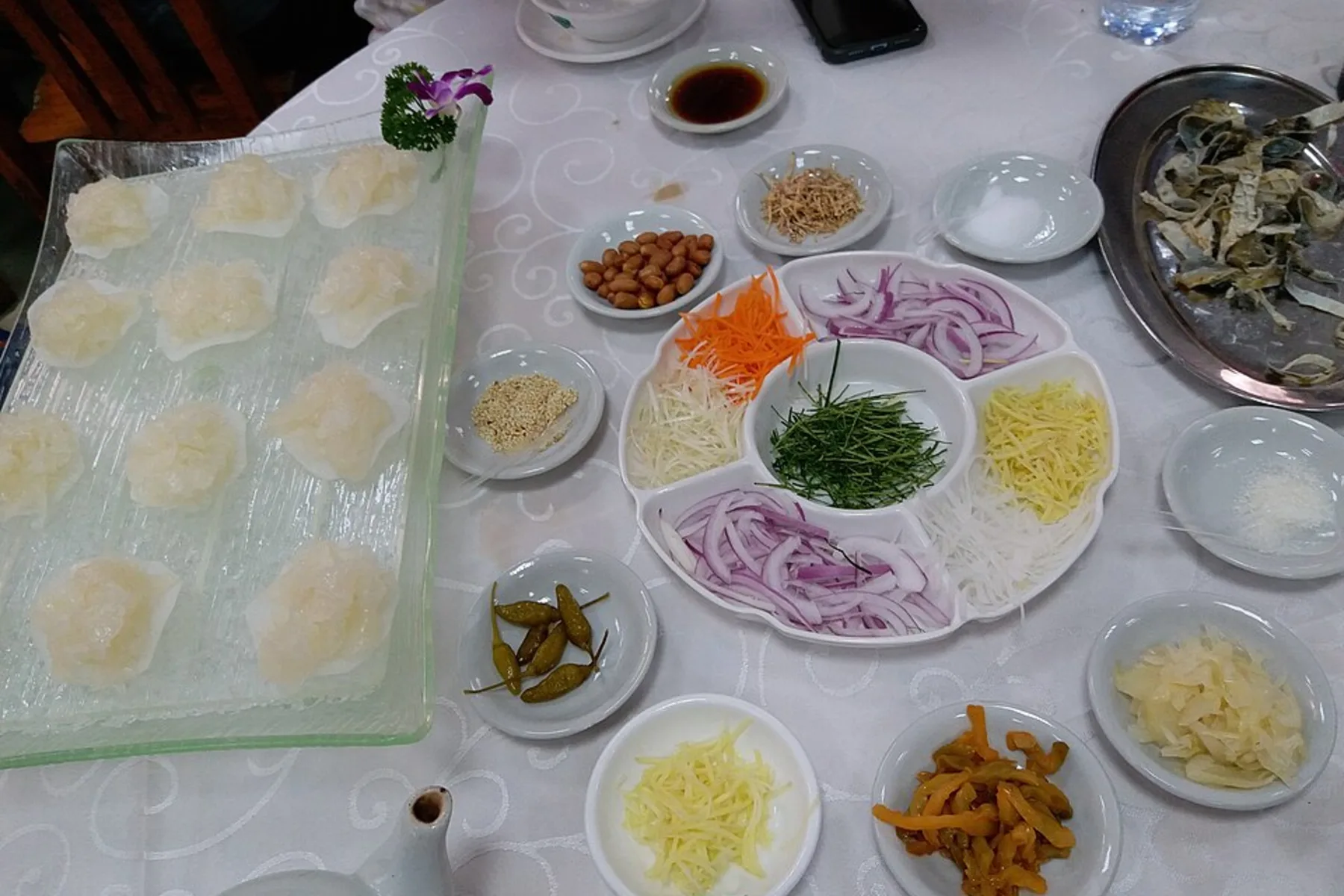
Raw or undercooked freshwater fish carries a specific parasite risk addressed by Guangdong public-health guidance. Fully cooked preparations are the lower-risk starting point; condiments and alcohol do not replace thorough cooking.
.jpg)
Milk cookery
Double-skin milk is a familiar dessert, but milk also appears in fried or savoury preparations. Determine whether the dish is an individual sweet, snack or shared course before ordering several milk-based items.
Rice foods and cakes
Lunjiao cake and Chencun rice noodles show how place names and rice processing meet. Rice foods can serve as breakfast, snack, staple or gift, depending on preparation and portion.
Roast and banquet dishes
Roast meats and large steamed dishes often make sense for groups. Ask for the smallest portion, how it is priced and how many diners it is intended to serve.
Town-linked seasonal ingredients
Some local identities centre on a vegetable, freshwater ingredient or agricultural product. Treat availability and sourcing as current questions, not permanent facts.
The separate food-categories guide develops this menu framework after its own publication review.
Understand why the shared table matters
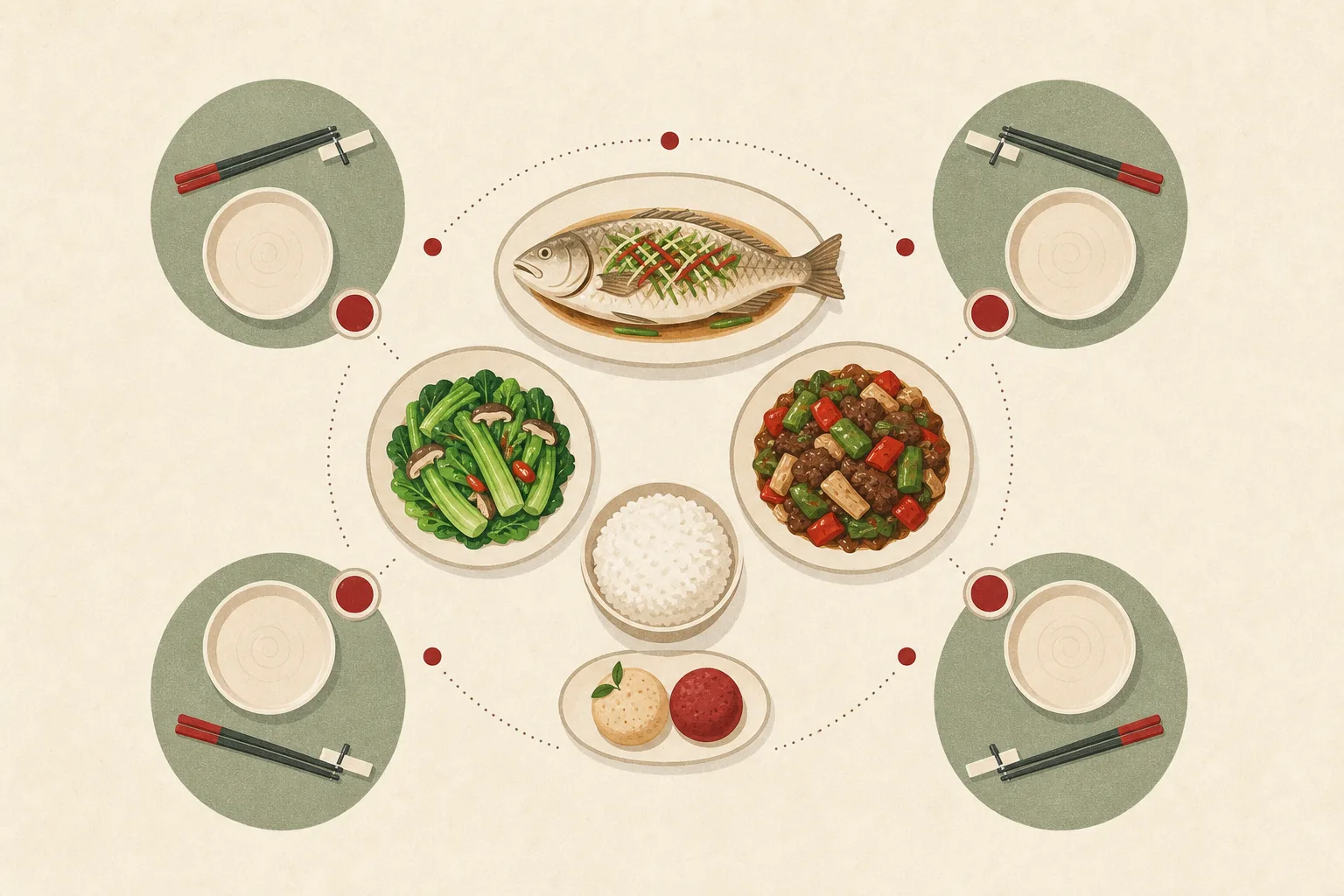
A Cantonese meal often uses several dishes in the centre rather than one separate main course per person. That changes how visitors should order.
The exact dish count is not a cultural law. Appetite, restaurant format and portion size differ. Foshan Living’s group-size examples are planning tools, not official rules.
Build contrast before quantity
For two people, begin conservatively: one substantial fully cooked dish, one smaller contrasting dish, vegetables and a staple may be enough. Four people can add another technique or category. Ask before ordering a banquet-sized item.
Contrast teaches more than fame. One cooked fish, one vegetable, one meat or tofu dish and one rice food or dessert can reveal more than three fish dishes with similar textures.
Clarify the unit
Before confirming the order, ask:
- Is the price for one portion, one item or by weight?
- What is the smallest portion?
- Is tea, soup or another table item automatic or optional?
- Does anything require advance ordering?
- Is the dish meant for an individual or the centre of the table?
These are consumer questions, not claims about every Foshan restaurant. The actual menu and staff answer control the decision.

The separate shared-meal guide develops the complete table-planning method after its own publication review.
Question heritage, tradition and authenticity labels
“Traditional,” “old brand,” “heritage” and “authentic” can refer to different things. A technique may have cultural recognition. A business may claim a long history. A dish may be strongly associated with a town. None of those statements automatically proves current quality, safety or suitability for your group.
Ask four questions:
- Who documented or granted the recognition?
- Does it apply to a technique, product, business, person or place?
- Is the claim historical, or does it describe present service?
- Can the venue explain ingredients, preparation and portion clearly?
The same caution applies to “famous.” Media visibility can explain why a visitor recognises a dish. It cannot guarantee the current restaurant experience.
Build a first Foshan food experience
Choose one area
Pick the town or neighbourhood from the exact meal address. Avoid a district-wide food crawl unless every transfer has been checked and the travel itself is part of the plan.
Choose one learning goal
Decide whether the meal is about fish technique, milk cookery, rice foods, a shared Cantonese table or town-linked ingredients. One clear goal prevents a menu from becoming a checklist.
Order for contrast
Combine different ingredients, heat methods and table roles. Ask about portion and pricing unit before finalising the order.
Keep safety separate from prestige
Choose fully cooked freshwater fish for the lower-risk option. Do not infer allergen control, parasite safety or kitchen practice from fame, price or appearance.
Verify dynamic details
Opening, booking, live price, sold-out dishes and queues belong to the current venue. Check them close to the meal rather than preserving them in an evergreen guide.
Continue through the Foshan Living food guides
- Shunde Food for First-Timers turns the framework into a first ordering plan.
- First Time in Foshan keeps the meal inside a realistic first-visit plan.
- All articles by Daniel Osei collects his published food guides.
The categories, shared-meal, cooking-technique and food-safety guides remain in the editorial pipeline. They should be linked here only after their own publication gates pass. The five-district guide should also be linked here only after its production release. You do not need to complete a famous-dish list to understand Foshan food.
About Daniel Osei
Daniel Osei is Foshan Living’s Food & Drink correspondent. He explains local meals through place, ingredient, technique and shared-table logic, while keeping public-health evidence, restaurant operations and cultural claims in their proper lanes. Visit his author page to see all of his Foshan Living articles.
Image credits and disclosures
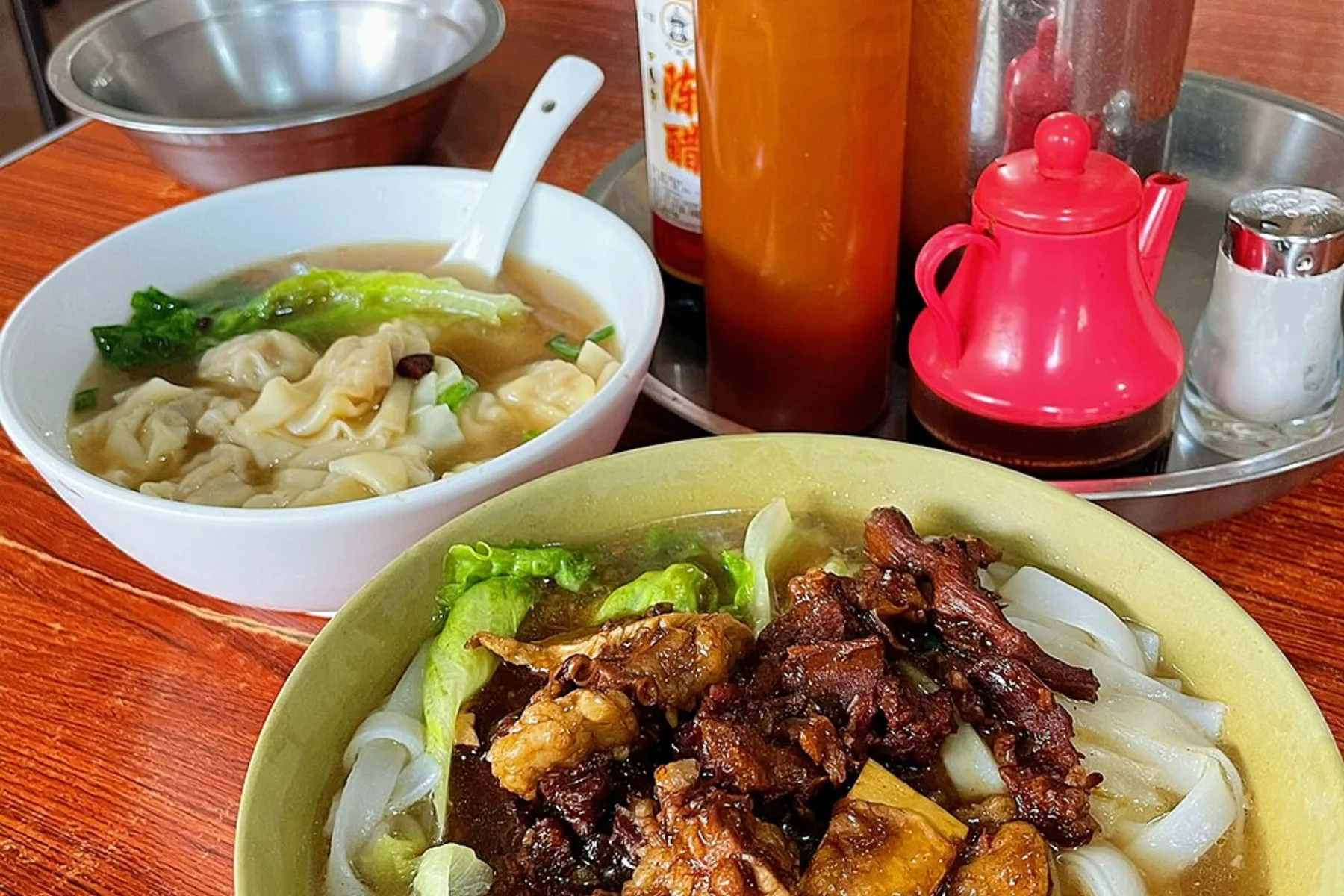
- hero.webp A real breakfast photographed in Shunde illustrates one everyday meal, not a required order, a complete cuisine or a restaurant recommendation. Fumikas Sagisavas · CC0; cropped and resized for web · CC0
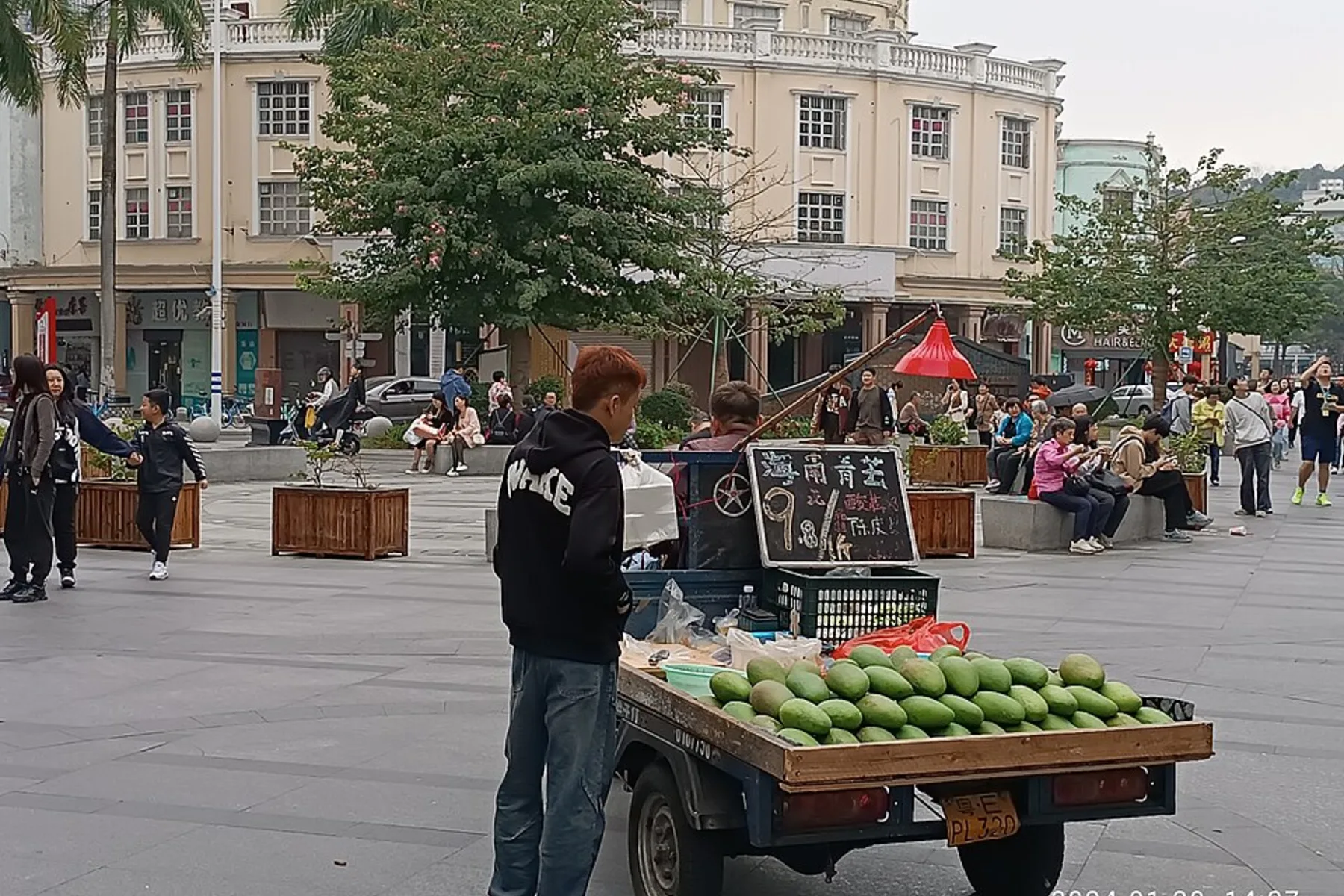
- body-01-huagai.webp Huagai Road provides one real Shunde street-food context. The photograph does not recommend a stall or confirm current trading conditions. Lau Hau Yatyue Tiger · CC0; cropped and resized for web · CC0
- body-02-yusheng.webp Yusheng photographed in Shunde documents local food context; it is not a recommendation to eat raw freshwater fish. Follow the adjacent public-health warning. Pauloleong2002 · CC BY-SA 4.0; cropped and resized derivative · CC BY-SA 4.0
- body-03-shared-table.webp AI-generated editorial diagram showing a balanced shared-table structure. It is not a prescribed menu and does not depict identified Shunde dishes or a real restaurant. OpenAI image generation tool for Foshan Living / Daniel Osei · Generated for Foshan Living; reused from the accepted Shunde first-timer package · AI-generated illustration
- body-04-market-price.webp AI-generated editorial checklist. It contains no real menu, price, receipt or restaurant information. OpenAI image generation tool for Foshan Living / Daniel Osei · Generated for Foshan Living; reused from the accepted Shunde first-timer package · AI-generated illustration

Keep exploring
Related Foshan guides
 Explore Foshan
Chancheng or Shunde: Where Should You Start in Foshan?
Choosing between Chancheng and Shunde for a first Foshan trip? Compare heritage, food, neighbourhood pace, transport planning and where to stay.
 Explore Foshan
Understanding Foshan: A City of Five Districts
Learn how Foshan’s five districts differ, which areas suit culture, food, urban life or nature, and why every short trip needs a specific local base.
 Explore Foshan
Zumiao Old City or Shiwan: How to Choose Your Chancheng Day
Compare Zumiao old city and Shiwan, choose one main Chancheng cluster, and add the other only after checking the complete route and current access.
 Explore Foshan
Chancheng: Foshan’s Historic Urban Core
Understand Chancheng through the Zumiao old city and Shiwan’s ceramic heritage, with guidance on walking scale, transport checks and where to base.
Plan your visitFirst Time in Foshan
Build a first trip around districts, transport, food and one deeper cultural interest.