Food & drink
How a Shared Cantonese Meal Works
A flexible way to build a balanced shared meal, ask about portions and leave room to actually taste each dish.

On this page
- Treat the table as one order
- Choose roles before famous dish names
- Plan a flexible meal for two
- Plan a flexible meal for four or more
- Read the menu for size, unit and preparation
- Ask about size
- Confirm the pricing unit
- Identify the cooking method
- Build contrast without turning dinner into a checklist
- Treat tea, soup, rice and dessert as choices
- Ask about allergens and choose safer fish preparations
- Use a simple ordering sequence
- Continue exploring Foshan food
- About Daniel Osei
Ordering a shared Cantonese meal becomes easier when you plan for the whole table rather than asking each person to choose a separate main course. Start with one substantial cooked dish, add contrast through another preparation or ingredient, include a vegetable, and decide whether the table actually needs rice, noodles, soup or dessert. Then confirm portion sizes before ordering more.
That is an editorial method, not a rule followed by every Foshan household or restaurant. The two-person and four-person formulas are flexible Foshan Living tools, not official customs, fixed banquet sequences or restaurant promises.
What you will get from this guide: a practical way to assign roles to dishes, adaptable starting points for two and four diners, useful menu questions, and clear boundaries around allergens and raw freshwater fish.
Treat the table as one order
In a shared meal, dishes make more sense in relation to one another. A delicate steamed preparation feels different beside something roasted or crisp. A rich dish may benefit from a plain vegetable. A staple may be useful when several dishes have sauce, but unnecessary when noodles or rice are already built into the order.
China’s national intangible-cultural-heritage entry for Chinese cooking techniques and food customs describes a broad chain that includes ingredient preparation, cooking and eating customs. It also recognises knife work, heat control and multiple cooking methods as parts of the wider culinary system. This provides a useful framework for reading a meal, but it does not prescribe what a Foshan table must contain.
The School of Culinary Arts at Shunde Polytechnic University treats cooking, pastry, food safety, meal planning and banquet design as separate capabilities. That supports thinking about a meal as a designed whole, not a fixed local formula.
The practical lesson is simple: ask what the table already has, what it lacks and how much the group can comfortably finish.

Choose roles before famous dish names
A first-time visitor may arrive with a list of well-known Shunde foods. That list is useful for research, but it is a poor ordering plan if every item is large, rich or based on the same ingredient.
Instead, give possible dishes a role:
- A substantial cooked dish: fish, seafood, meat, poultry, tofu or egg.
- A contrasting dish: a different ingredient, texture or cooking method.
- A vegetable: something that gives the table freshness and relief.
- A staple: rice, noodles or another grain-based food, if the rest of the order needs it.
- An optional finish: soup, tea or dessert, depending on appetite and the restaurant’s format.
These categories overlap. A claypot rice dish can be both the substantial item and the staple. A large soup may be a centrepiece rather than a small accompaniment. The Shunde Library overview of local food offers examples of local foods, but it does not define one universal order or meal sequence.
This role-based approach also prevents fame from becoming a quota. You do not need fish, roast meat, savoury milk cookery, noodles and multiple desserts at the same sitting merely because each appears in a guide.
Plan a flexible meal for two
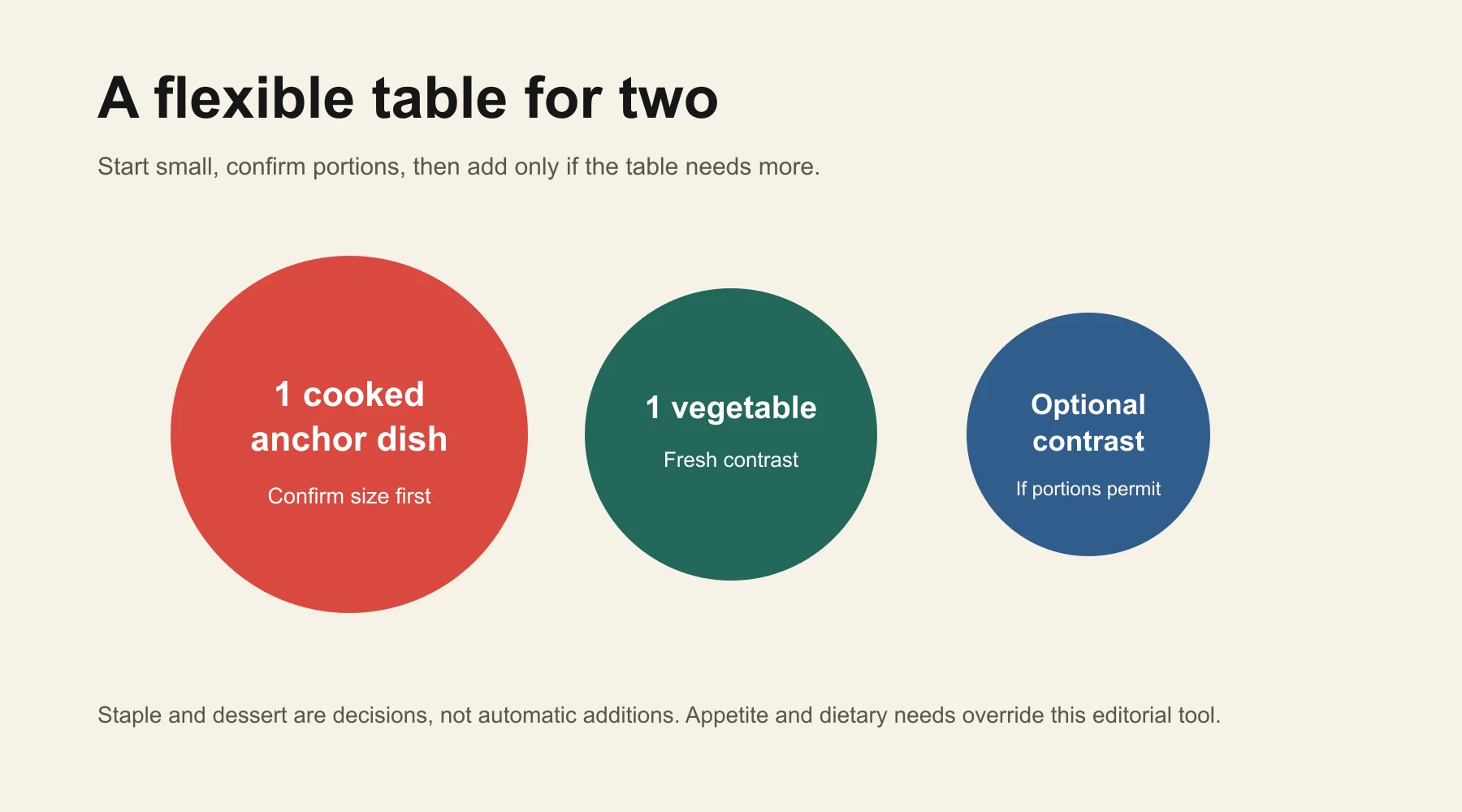
Two diners have little room for large ordering errors. Begin conservatively:
- Choose one substantial, fully cooked dish.
- Add one smaller contrasting dish if the portions permit.
- Include a vegetable.
- Add a staple only if it is not already part of the meal.
- Decide on dessert after eating the savoury dishes.
For example, a cooked fish preparation, a small tofu or roast dish and a vegetable can reveal more contrast than two large fish dishes. A whole fish or large platter may already occupy most of the table’s appetite.
Ask whether a small, half or sample portion exists, but do not assume that these labels have a standard size. “Is this suitable for two people?” is a helpful start. “What is the approximate weight?” and “What is the smallest serving?” produce more concrete information.
The formula is a Foshan Living planning tool. A light lunch, tasting menu, hotpot or set meal may work differently. Appetite, dietary needs and restaurant format should override it.
Plan a flexible meal for four or more
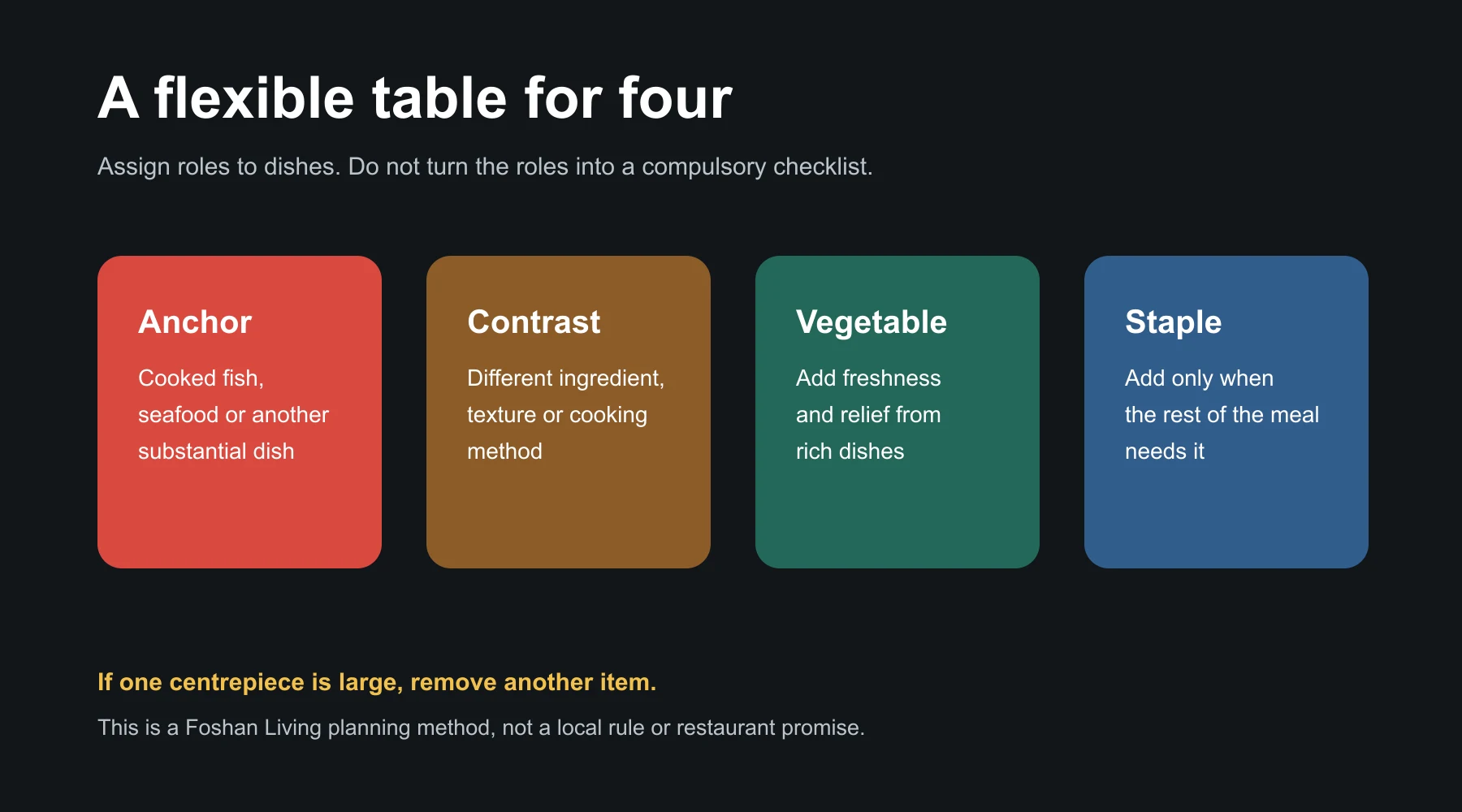
Four diners can compare more ingredients and techniques, but the extra seats are not permission to order every saved dish. A useful starting structure is:
- one cooked fish, seafood or other substantial dish;
- one meat, poultry, tofu or egg dish;
- one technique-led or texture-led dish;
- one vegetable;
- one staple, if needed;
- dessert after the group judges its appetite.
If one centrepiece is especially large, remove another item rather than treating the list as a quota. If several diners want to compare sweets, share them at the end instead of reserving a full dessert for every person in advance.
For six or more, larger shared dishes may become practical. Confirm advance-order requirements, pricing units and whether the kitchen can divide the dish safely.
No group-size formula is a local law. CCTV’s food documentaries provide cultural observation, not a current restaurant policy, required sequence or portion guarantee. Use the formulas to begin a conversation with the server.
Read the menu for size, unit and preparation
A translated dish name rarely tells you everything. Before approving a large or market-priced item, clarify three things.
Ask about size
Does the menu offer small, regular, large, half, whole or per-person servings? How many diners should it serve? “Portion” can mean different things at different businesses.
Confirm the pricing unit
Is the amount shown per dish, per person, per 500 grams, by actual weight or by the whole ingredient? If the price depends on weight, ask for the approximate weight and expected total before cooking. Also ask whether preparation, tea or service charges are separate when that matters to your decision.
Prices and policies change, so preserve the questions rather than a number:
- What is the smallest portion?
- About how many people does it serve?
- Is the price per dish, per person or by weight?
- What is the approximate total for this item?
- Are there separate preparation or service charges?
Identify the cooking method
Ask whether the dish is steamed, braised, pan-fried, deep-fried, roasted, served in broth or served raw. Preparation changes texture, richness and food-safety considerations. It also helps you avoid ordering several dishes that produce the same experience.
If a translation remains unclear, point to the item and ask about its ingredient, method and portion.
Build contrast without turning dinner into a checklist
Contrast makes a shared order easier to eat and more informative. Pairing a gently cooked dish with something browned or crisp lets the group compare methods. Adding a vegetable breaks up several rich dishes. Leaving sweets until the end prevents a savoury meal and a dessert plan from competing for the same appetite.
Contrast can involve:
- soft and crisp textures;
- light and rich preparations;
- steamed, braised, roasted or fried methods;
- fish, meat, tofu, egg and vegetables;
- individual portions and centre-of-table dishes.
For a wider orientation to ingredients, techniques and place, read Understanding Foshan and Shunde Food.
Treat tea, soup, rice and dessert as choices
Restaurants handle tea, soup, rice, condiments and small plates differently. Some are ordered, some arrive by default, and some may be charged per person or serving. Do not assume an item is complimentary because it appears before the main dishes.
At the beginning of the meal, check:
- whether tea is automatically served and charged;
- whether rice needs a separate order;
- whether soup is an accompaniment or a full shared dish;
- whether small plates or condiments carry a charge;
- whether desserts are individual or large enough to share.
This is neutral expectation-setting, not a claim that hidden charges are common.
Make dessert a late decision. If the savoury dishes were large, share one sweet; if there is room, compare two smaller portions.
Ask about allergens and choose safer fish preparations
Shared dishes require extra planning for allergies or strict dietary needs. A simple-looking preparation may contain fish paste, shellfish, egg, milk, peanuts, wheat-based sauce or stock. Shared equipment can create cross-contact.
If exposure could cause a serious reaction:
- State the allergen clearly before ordering.
- Ask about sauces, stock, fillings and garnishes, not only the named ingredient.
- Ask whether equipment or cooking oil is shared.
- Choose a simpler dish only if staff can explain its ingredients and handling.
- Do not treat visual cleanliness as proof of allergen control.
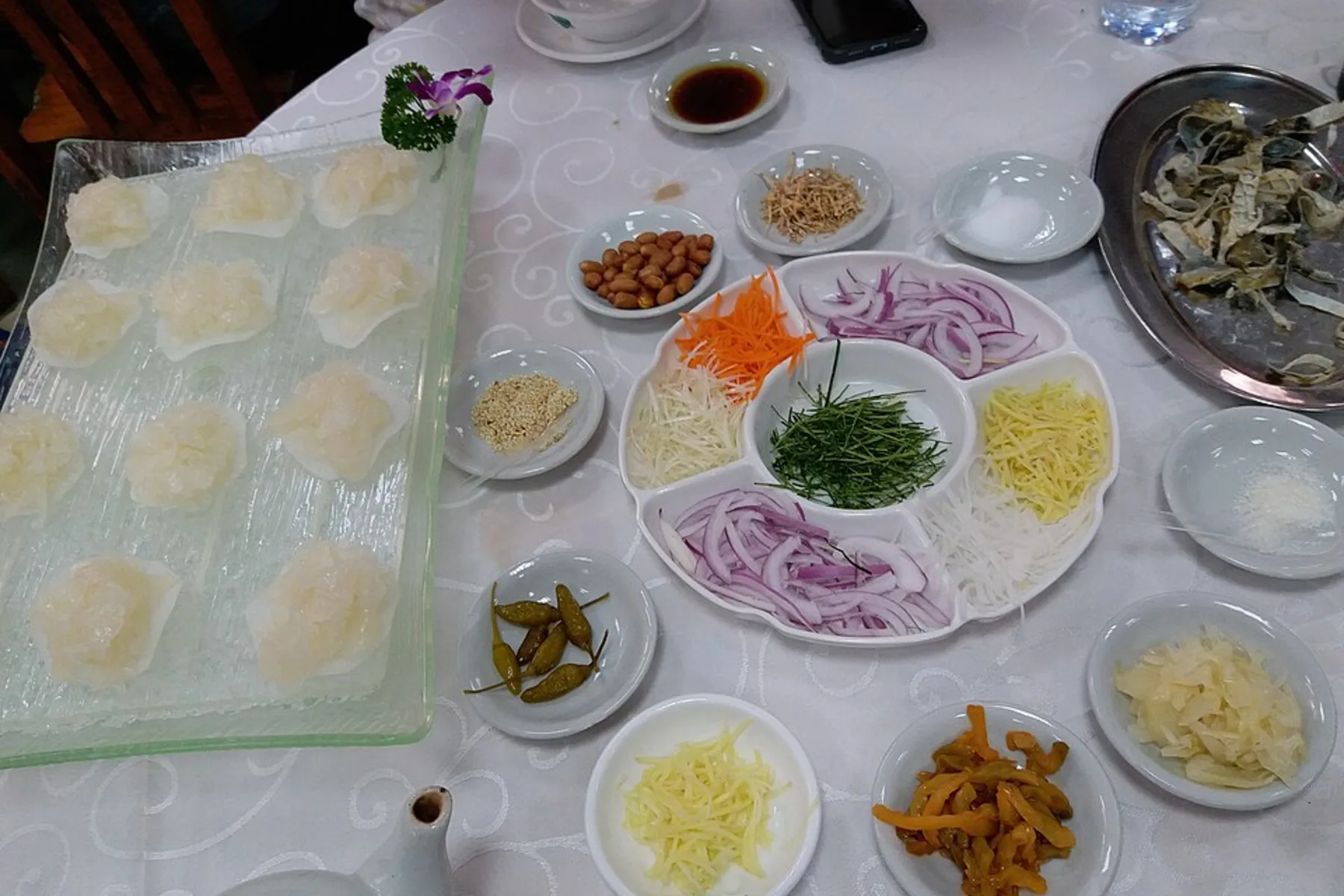
Raw or undercooked freshwater fish carries a separate parasite risk. Guangdong CDC guidance on fish parasites states that salt, vinegar, alcohol, soy sauce, wasabi and mustard cannot rapidly kill parasites in raw fish. For freshwater fish, choose thorough cooking.
.jpg)
This guide helps with ordering; it does not replace medical advice.
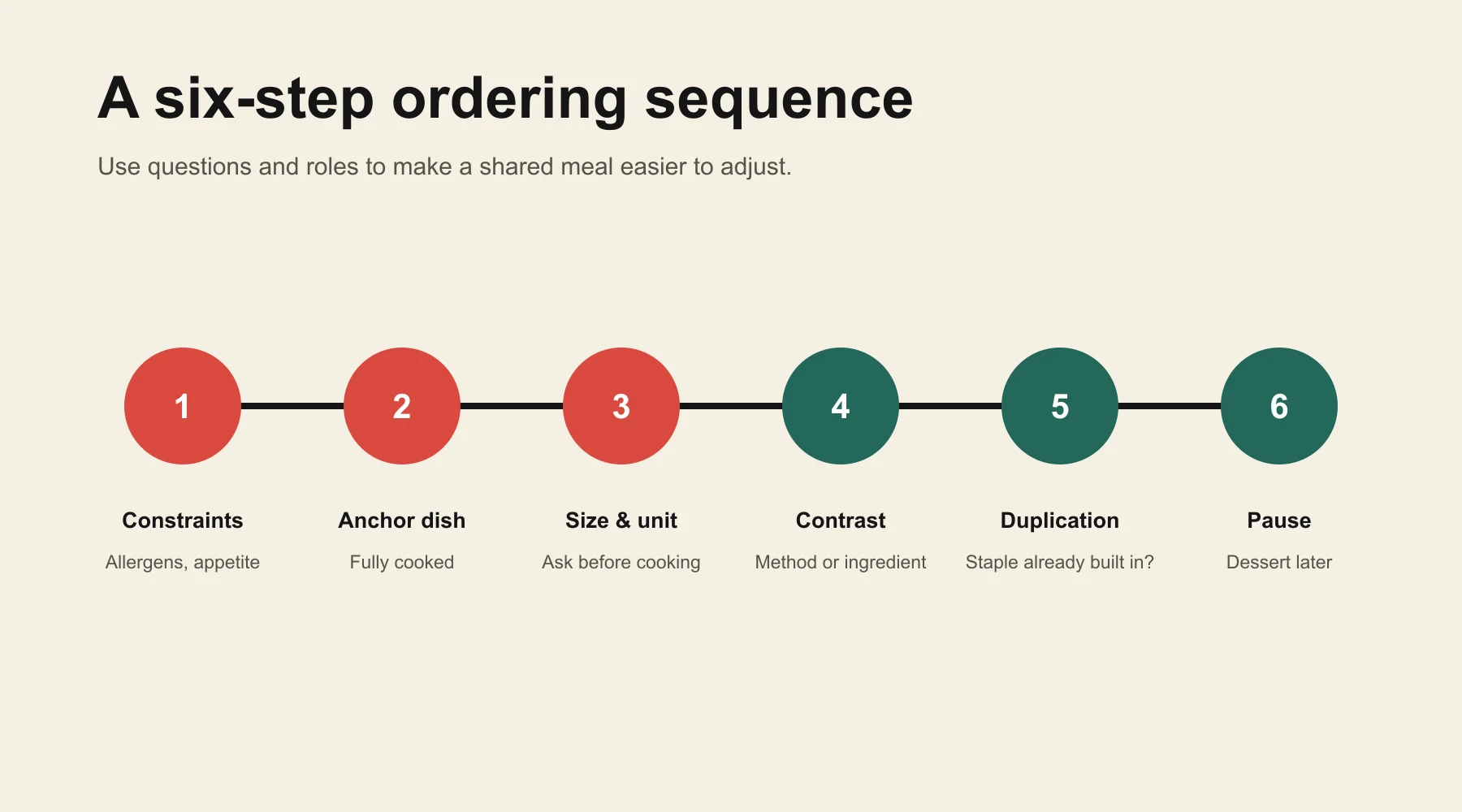
Use a simple ordering sequence
When the menu feels overwhelming, follow this sequence:
- Ask about constraints: allergies, dietary needs, appetite and budget.
- Choose one anchor dish: fully cooked and suitable for the group.
- Confirm its size and unit: especially for whole or market-priced items.
- Add contrast: another ingredient or method, then a vegetable.
- Check for duplication: identify whether a staple, soup or large dish is already built in.
- Pause before dessert: add more only after seeing the actual portions.
Starting with fewer dishes is easier to correct than beginning with an oversized order. If the kitchen accepts additions, expand after the first dishes arrive.
A shared Cantonese meal works when the dishes relate to one another and to the people eating them. The measure of success is not how many famous names appeared. It is whether size, method, texture, safety and appetite made sense together.
Continue exploring Foshan food
If this is your first local meal, begin with Shunde Food for First-Timers or use Understanding Foshan and Shunde Food to decide what you want to understand next rather than building a compulsory checklist.
Before visiting, verify current prices, availability, reservation requirements and restaurant policies directly with the business. Those details are deliberately kept outside this evergreen guide.
About Daniel Osei
Daniel Osei is Foshan Living’s Food & Drink correspondent. He writes practical, source-led guides that help first-time diners understand Shunde and Foshan food without relying on restaurant rankings or short-lived trends. See all articles by Daniel Osei.
Image credits and disclosures
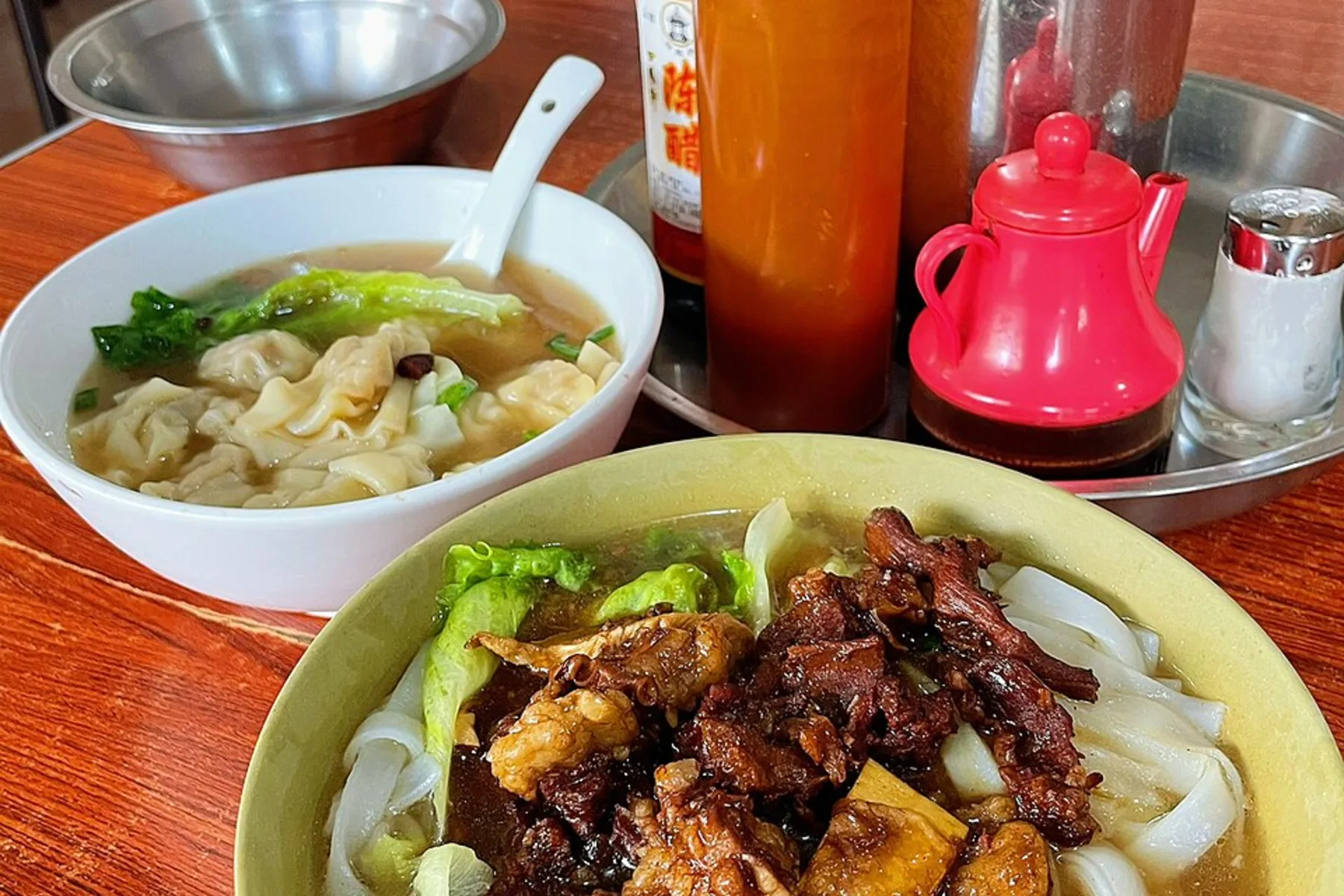
- hero.webp A real breakfast photographed in Shunde shows several foods sharing one table. It illustrates an everyday meal, not a required order, complete cuisine or restaurant recommendation. Fumikas Sagisavas · CC0; cropped and resized for web · CC0
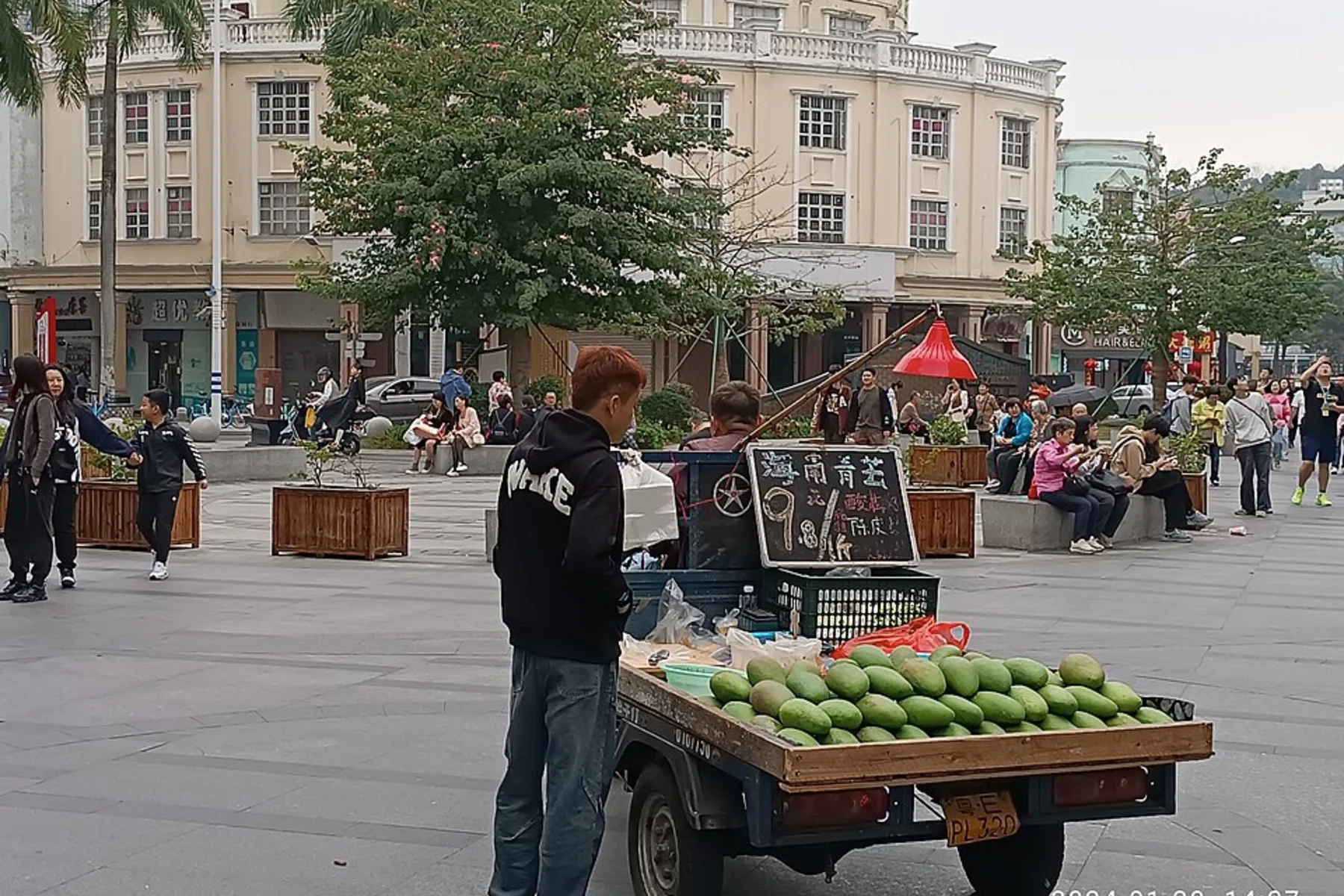
- body-01-huagai.webp Huagai Road provides one real Shunde food context, but a street stall is not the same service format as a shared restaurant meal. The photograph does not recommend a stall or confirm current trading conditions. Lau Hau Yatyue Tiger · CC0; cropped and resized for web · CC0
- body-02-two-person.webp Foshan Living’s flexible two-person starting point: one cooked anchor, one vegetable and an optional contrast if portions permit. It is an editorial planning tool, not a local rule, restaurant promise or nutrition prescription. Daniel Osei / Foshan Living · Original editorial infographic created for this article
- body-03-four-person.webp A flexible four-person table can assign roles to an anchor, contrast, vegetable and optional staple. The roles are not a compulsory dish count or inherited Cantonese sequence. Daniel Osei / Foshan Living · Original editorial infographic created for this article
- body-04-yusheng.webp Yusheng photographed in Shunde documents a local food context; it is not a recommendation to eat raw freshwater fish. Strong condiments are not evidence of parasite control; for freshwater fish, choose thorough cooking. Pauloleong2002 · CC BY-SA 4.0; cropped and resized derivative · CC BY-SA 4.0
- body-05-ordering-sequence.webp The Foshan Living sequence moves from constraints and one cooked anchor to size, contrast, duplication and a final pause. It is a decision aid, not a restaurant service standard. Daniel Osei / Foshan Living · Original editorial infographic created for this article


Keep exploring
Related Foshan guides
 Explore Foshan
Chancheng or Shunde: Where Should You Start in Foshan?
Choosing between Chancheng and Shunde for a first Foshan trip? Compare heritage, food, neighbourhood pace, transport planning and where to stay.
 Explore Foshan
Understanding Foshan: A City of Five Districts
Learn how Foshan’s five districts differ, which areas suit culture, food, urban life or nature, and why every short trip needs a specific local base.
 Explore Foshan
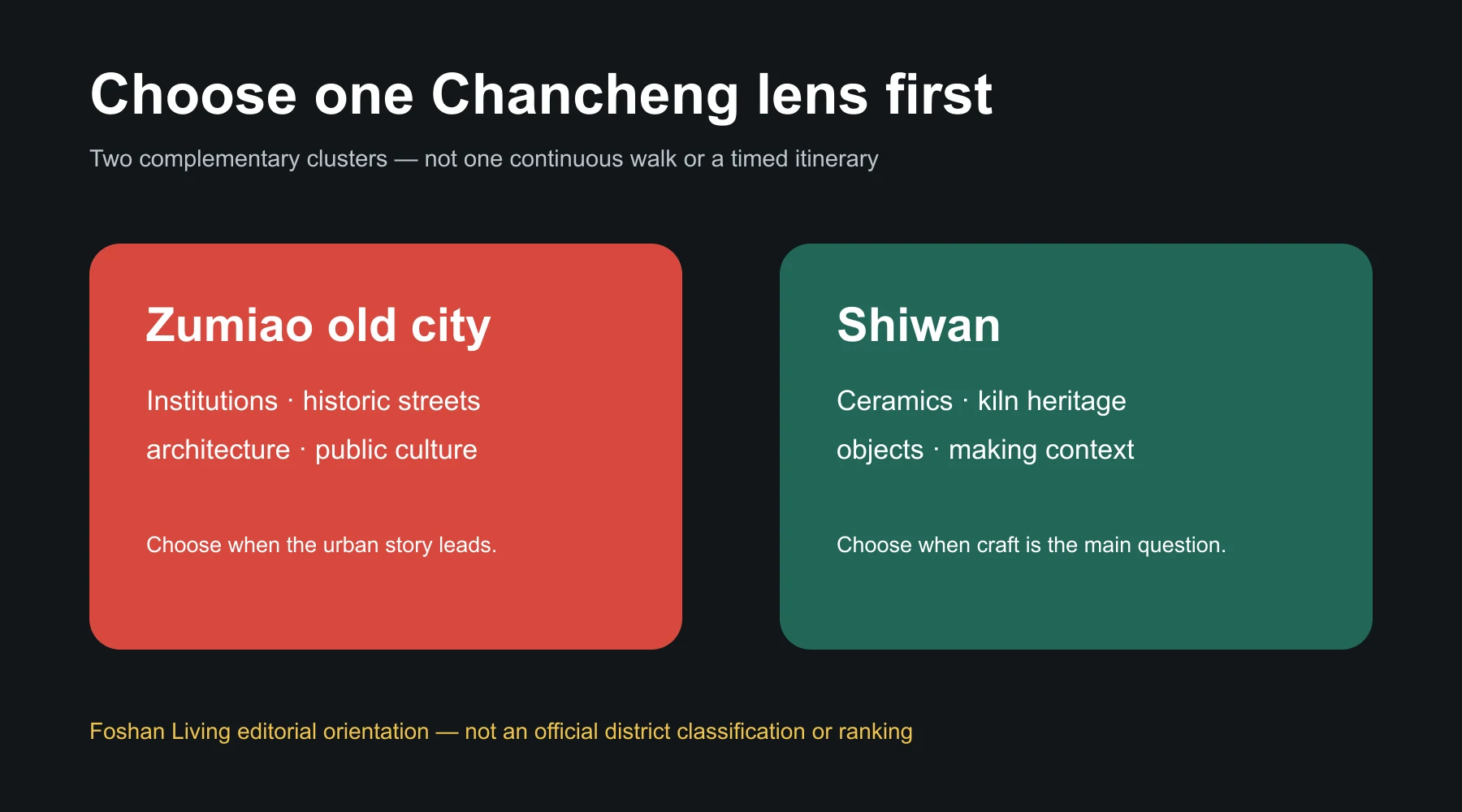
Zumiao Old City or Shiwan: How to Choose Your Chancheng Day
Compare Zumiao old city and Shiwan, choose one main Chancheng cluster, and add the other only after checking the complete route and current access.
 Explore Foshan
Chancheng: Foshan’s Historic Urban Core
Understand Chancheng through the Zumiao old city and Shiwan’s ceramic heritage, with guidance on walking scale, transport checks and where to base.
Plan your visitFirst Time in Foshan
Build a first trip around districts, transport, food and one deeper cultural interest.