Furniture & design
Shiwan Ceramics and Contemporary Design
Shiwan offers more than a decorative style. Read its ceramics through use, form, surface, process and setting while keeping heritage identity separate from commercial claims.
On this page
- Begin with use, not a single visual style
- Read five documented object types
- Human and animal figures
- Vessels
- Miniature sculpture
- Roof-ridge ceramic sculpture
- Follow six documented making stages
- Concept and clay preparation
- Forming and decoration
- Glazing and firing
- Compare four kinds of Shiwan setting
- Read ceramics at architectural scale
- Apply a five-part contemporary design lens
- Keep observation separate from technical evidence
- Plan a responsible Shiwan study visit
- Keep Ana’s design scope clear
- Continue exploring Foshan design
- About Ana Ribeiro
Shiwan is useful to a contemporary design reader because it makes relationships visible. Clay becomes form through a sequence of decisions; an object gains meaning through use; and a surface behaves differently when it moves from a hand-held vessel to a garden or building.
This is not a complete history of Shiwan pottery, an artist ranking or a shopping guide. It is a method for looking at material, making and setting without turning heritage status into a commercial endorsement.
The facts come from Chinese heritage, museum and public-cultural sources. The five-part contemporary design lens—use, form, surface, process and setting—is Ana Ribeiro’s editorial method.
Begin with use, not a single visual style
“Shiwan ceramics” should not be reduced to one colour, figure type or souvenir form. The national intangible-cultural-heritage record for Shiwan ceramic sculpture documents several physical categories and a multi-stage making process. The Guangdong Shiwan Ceramics Museum also provides official entry points for artistic, everyday, garden and architectural ceramics.
Those sources support diversity of object and use. They do not support the claim that every object sold in Shiwan belongs to the recognised heritage project or that every contemporary maker follows one style.
For a design reader, the first question is not “Does this look traditional?” It is “What is this object intended to do, and where is it meant to be encountered?”
Use changes interpretation. A hand-held vessel, a figure on a shelf and a ceramic element high on a roof require different viewing distances. A museum label may document date, maker or collection history; a shop display may communicate a commercial story. The same motif can work differently when scale and setting change.
Read five documented object types
The national heritage source groups “Shiwan figurines” into five physical forms: human figures, animal figures, vessels, miniature sculpture and ceramic sculpture for roof ridges. This list is a factual category from the source, not Ana’s invention.
The categories are useful because they prevent one famous form from representing the whole practice.
Human and animal figures
Observe posture, gesture, expression, weight distribution and the relationship between modelled volume and glazed surface. Look at how a hand, garment fold or animal body is simplified or emphasised.
Do not infer the identity, age, authorship or cultural story of a figure from appearance alone. Record the label or accountable source separately from your interpretation. “The expression appears restrained” is an observation; “this figure represents a named historical person” requires evidence.
Vessels
Look at the relationship among opening, body, base and hand. Ask whether the source describes the object as functional, ceremonial, decorative or mixed-use. An object that resembles a vessel is not necessarily documented for food or liquid.
Handling, watertightness, food contact and thermal behaviour are technical questions. A museum case or visual inspection cannot answer them for a current commercial product.
Miniature sculpture
Scale changes both making and viewing. A photograph can enlarge a miniature until its true size disappears. Record dimensions when available and include a contextual view if photography is permitted.
Ask what detail survives at normal viewing distance. Contemporary digital presentation often privileges close-ups, but design judgement should not forget how the object occupies real space.
Roof-ridge ceramic sculpture
Roof-ridge work belongs to architecture. It is read against the roofline, sky, weather and distance from the street. A close photograph can reveal figures and surface, but it cannot explain where the work sits or how it contributes to the building’s silhouette.
Take a contextual view before a detail view. Do not identify symbolism, structural function or date unless an architectural or heritage source supports it.
The national list contains five types even though this guide groups human and animal forms in one reading section. That editorial grouping does not change the official count.

Follow six documented making stages
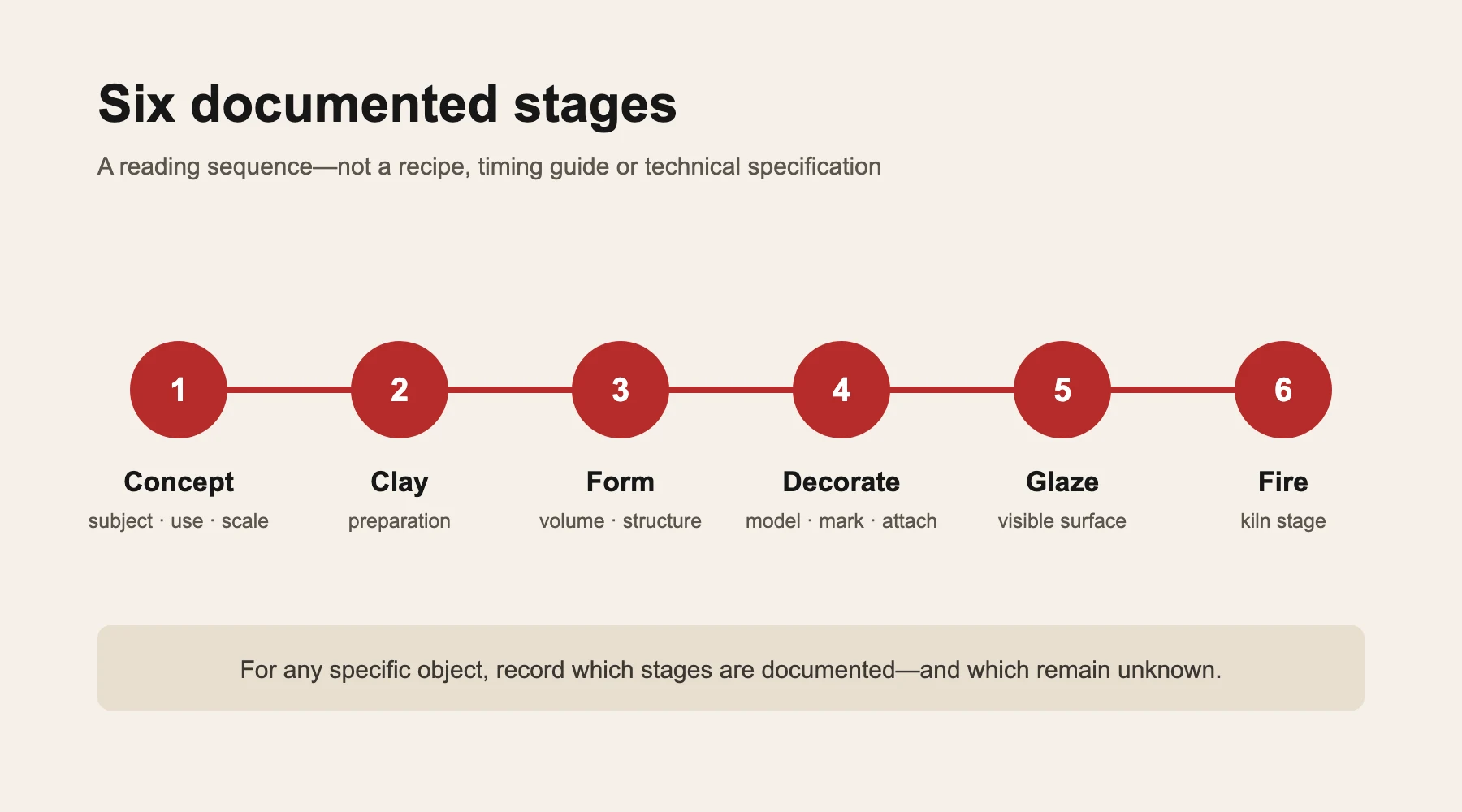
The national heritage source summarises six stages: concept creation, clay preparation, forming, decoration, glazing and kiln firing. The sequence is valuable because it stops the visible surface from becoming the entire story.
Concept and clay preparation
The intended subject, use, scale and viewpoint influence later decisions. Clay preparation belongs to the process even when it is invisible in the finished work.
For a visitor, the responsible question is “Which early decisions are documented?” Do not claim a clay body, source location or recipe from colour alone. Those facts require a maker, institution or technical record.
Forming and decoration
Form establishes volume and physical organisation. Decoration can model, mark, attach to or organise the visible surface. The two can work together but should not be collapsed into one operation.
Observe edges, transitions, repeated marks and areas where the hand or tool appears to have changed direction. Use language such as “visible modelling” or “the label describes” rather than guessing the exact tool or technique.
Glazing and firing
Glaze and firing affect the final appearance, but a viewer cannot reliably identify formula, firing temperature, atmosphere, safety or performance from a finished surface.
Colour variation, gloss and pooling can generate useful questions. They are not laboratory results. If a contemporary product makes a claim about food safety, outdoor durability or maintenance, it needs product-specific documentation.
This is where Shiwan becomes especially useful to a design reader: the process sequence teaches evidence discipline. A result can suggest how to investigate, but it cannot answer every technical question.
Compare four kinds of Shiwan setting
The museum, kiln heritage, public street and commercial studio or shop are not interchangeable.
Museum: A museum can establish collection categories, labels and curatorial relationships. Read the label with the object and distinguish collection facts from personal visual response. Current galleries, temporary exhibitions and photography rules remain live checks.
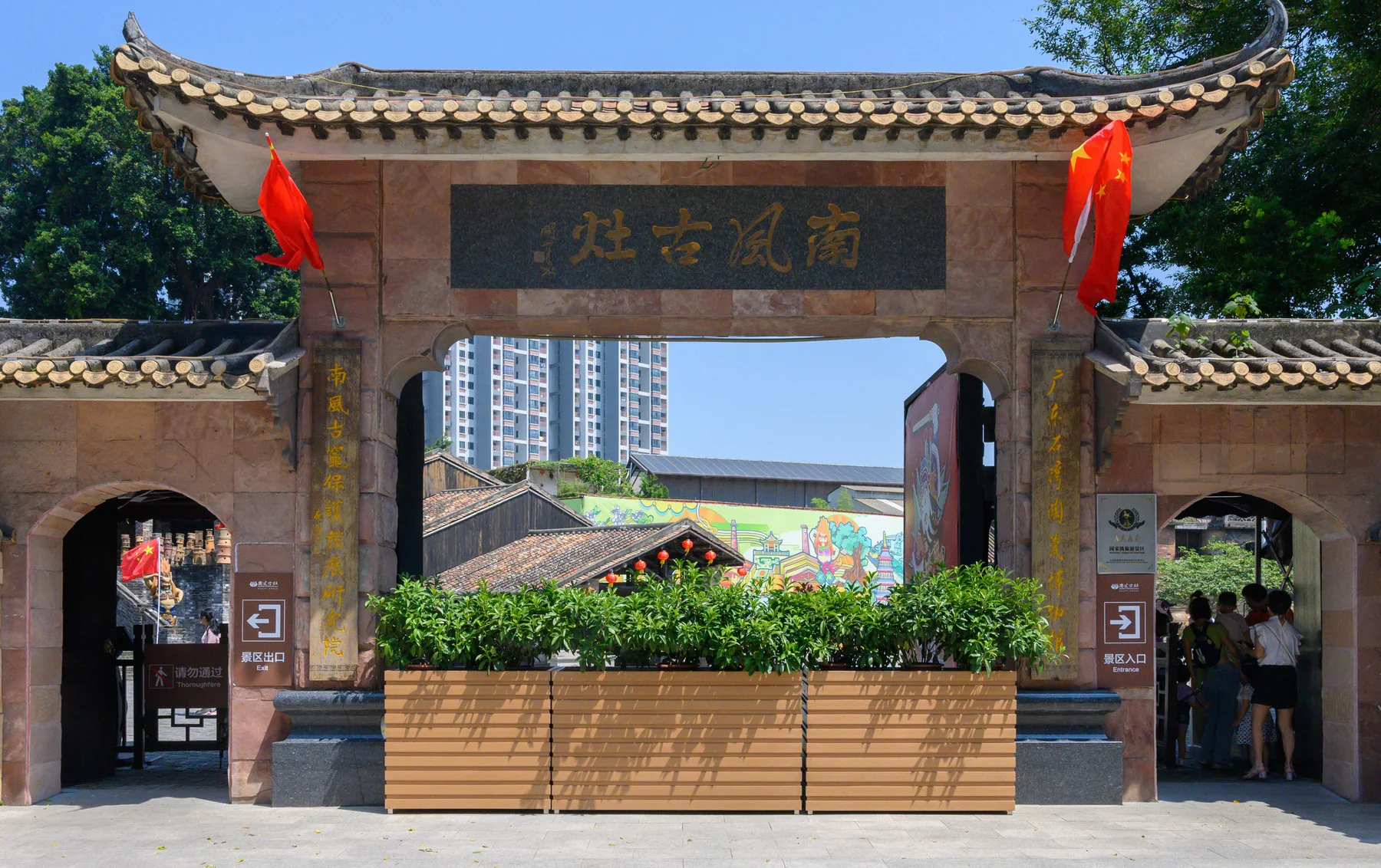
Kiln heritage: A historic kiln is production infrastructure and cultural heritage, not simply a picturesque background. The Nanfeng Ancient Kiln operator is the current entry point for its map and visitor information. Firing demonstrations, experiences and access cannot be assumed from old publicity.
.jpg)
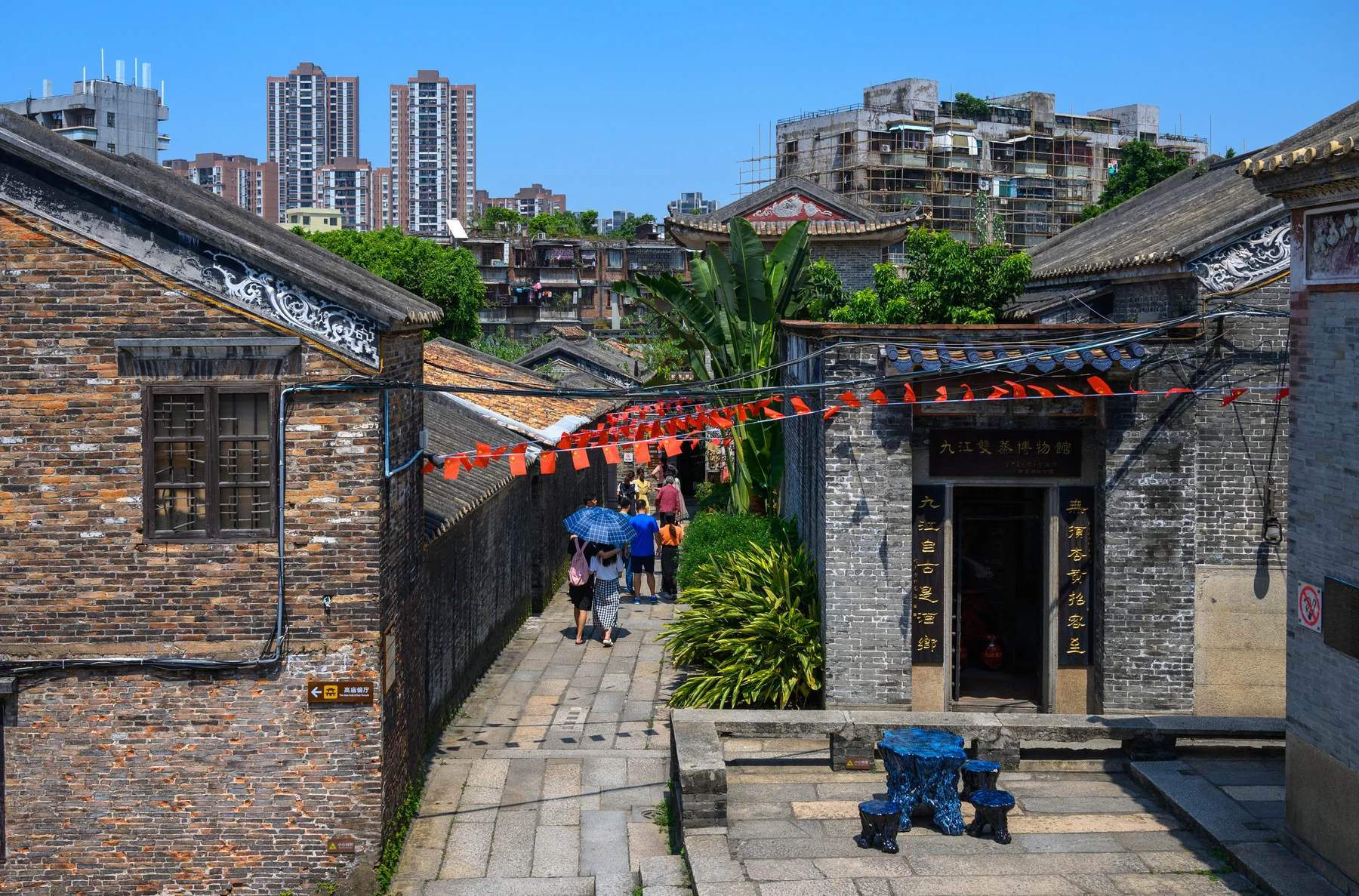
Street or public architecture: Public settings show how ceramic work participates in place. Record the building, position, viewing angle and distance before isolating a decorative detail.
Studio or shop: A commercial setting may combine making, teaching, display and sales. Verify the operating entity, maker identity, heritage claim and permission to photograph. A shop using “Shiwan” or “intangible heritage” in its presentation is not automatically endorsed by the national project.
The distinction helps readers understand authority. A museum label, operator notice, maker statement and personal observation answer different questions.
Read ceramics at architectural scale
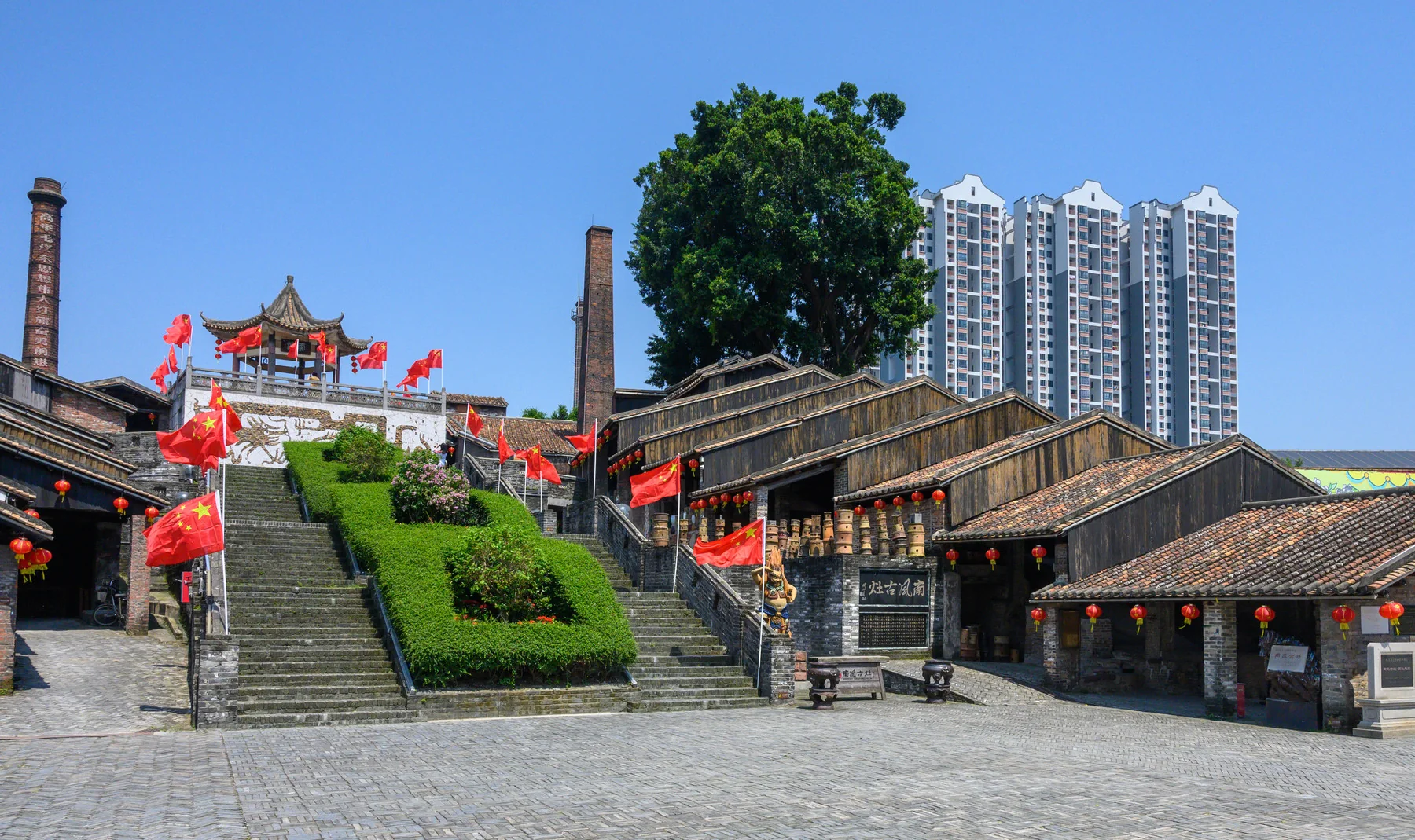
Foshan Living’s architecture research separates material, decoration, placement, scale and viewing distance. That method is especially important for roof-ridge sculpture, garden ceramics and works designed for a building.
Start with three frames:
- the full building or garden context;
- the ceramic element in relation to its architectural position;
- a detail, only if legal access and photography rules allow it.
.jpg)
This sequence prevents the detail from floating free of place. It also reveals how silhouette, repetition and colour behave at a distance.
The Qinghui Garden spatial-design guide applies a related method to movement, framed views and documented change in one named Foshan setting. Neither guide treats every old-looking surface as original or every decorative element as part of the same period.
Apply a five-part contemporary design lens
The following lens is an editorial method for recording what you see.
Use: What does the source say the object is for? If use is not documented, what can be described without guessing?
Form: How are volume, opening, base, balance, profile and gesture organised? Which parts are visible from the intended distance?
Surface: Where do colour, gloss, texture and modelling change? Describe appearance without claiming a formula or performance.
Process: Which of the six stages are documented for this object or practice, and which remain unknown?
Setting: Is the object in a museum, kiln site, street, studio, shop, garden or building? How does that setting frame attention and authority?
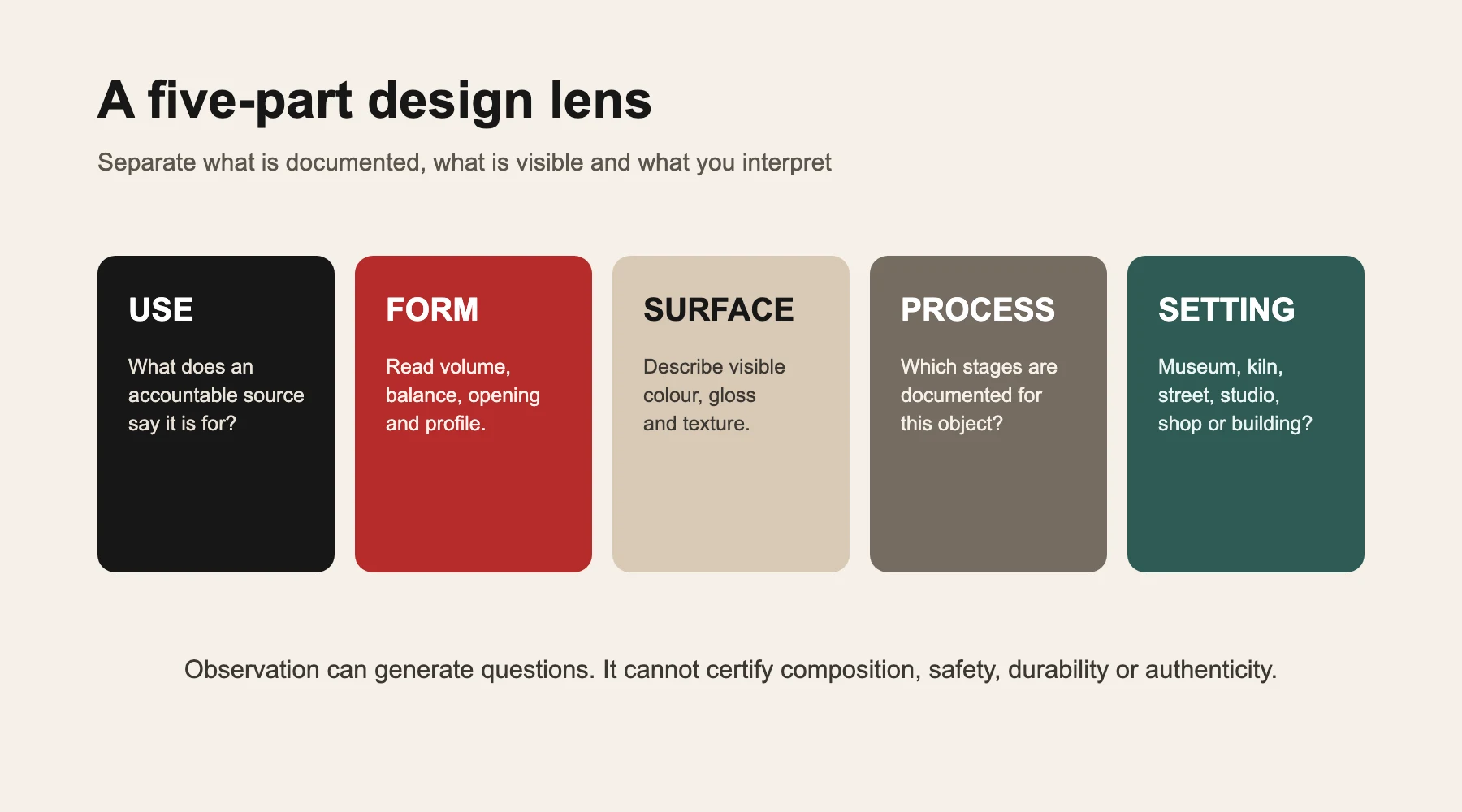
Keep two columns in your notes: observed and documented. Add a third, editorial interpretation, when connecting the object to a contemporary design question. The separation makes creative analysis possible without disguising it as heritage fact.
The same evidence discipline sits within Foshan’s wider furniture and design geography, although ceramic evidence must never be imported as proof about furniture materials.
Keep observation separate from technical evidence
A contemporary design reading can compare proportion, visual rhythm, scale, tactility and setting. It cannot certify composition, strength, toxicity, weather resistance, food safety, authenticity or investment value.
Use precise verbs:
- the source states for a documented fact;
- the label identifies for an institution’s object information;
- the surface appears for direct visual description;
- we interpret for an editorial design connection;
- unknown when evidence is absent.
Do not use “traditional” as a shortcut for safe, durable, handmade or old. Do not use “contemporary” as proof of innovation. Both words require context.
Heritage status belongs to a recognised project and its protection framework. It is not a commercial guarantee for every workshop, course, artist or product.
Plan a responsible Shiwan study visit
Choose one primary question. A first visit might focus on object types at the museum, process and infrastructure at the kiln site, or architectural ceramics in public space. Combining all three is useful only if actual addresses and time make the route coherent.
.jpg)
Before visiting, verify:
- current opening and reservation requirements;
- which entrance or gallery matches the question;
- photography, tripod and publication rules;
- whether a workshop or demonstration is actually operating;
- accessibility, heat and rest needs;
- whether a commercial session includes firing, collection or delivery.
For documentation, record the Chinese object name, label text, institution or maker, dimensions, photography permission and source URL. Never remove a watermark or reuse an official or social image without affirmative permission.
Keep Ana’s design scope clear
Zhang Wei’s Culture & history coverage owns heritage history, biographies, transmission and contested cultural narratives. Ana’s Furniture & design coverage owns material observation, object typology, display and contemporary design interpretation.
Tom Ashworth owns sourcing, supplier verification, quotation, contract, production, inspection, packaging, export and logistics. This article does not recommend a studio, authenticate a work or provide purchasing due diligence.
The boundaries prevent cultural material from becoming a false product claim. They also let contemporary design analysis remain exploratory while factual statements remain traceable.
Continue exploring Foshan design
Place Shiwan within Foshan’s wider furniture and design geography, then compare its object–process relationship with the site’s material-recording method. For broader cultural context, use the Foshan culture framework.
Shiwan does not supply one ready-made contemporary style. It demonstrates why use, form, surface, process and setting should remain connected—and why design writing must preserve the difference between what is seen, documented and still unknown.
About Ana Ribeiro
Ana Ribeiro covers furniture, materials, craft and designed spaces for Foshan Living. She helps readers turn visual impressions into structured observations while keeping heritage identity, technical evidence and commercial claims separate. Visit her author page to see all of her Foshan Living articles.
Image credits and disclosures
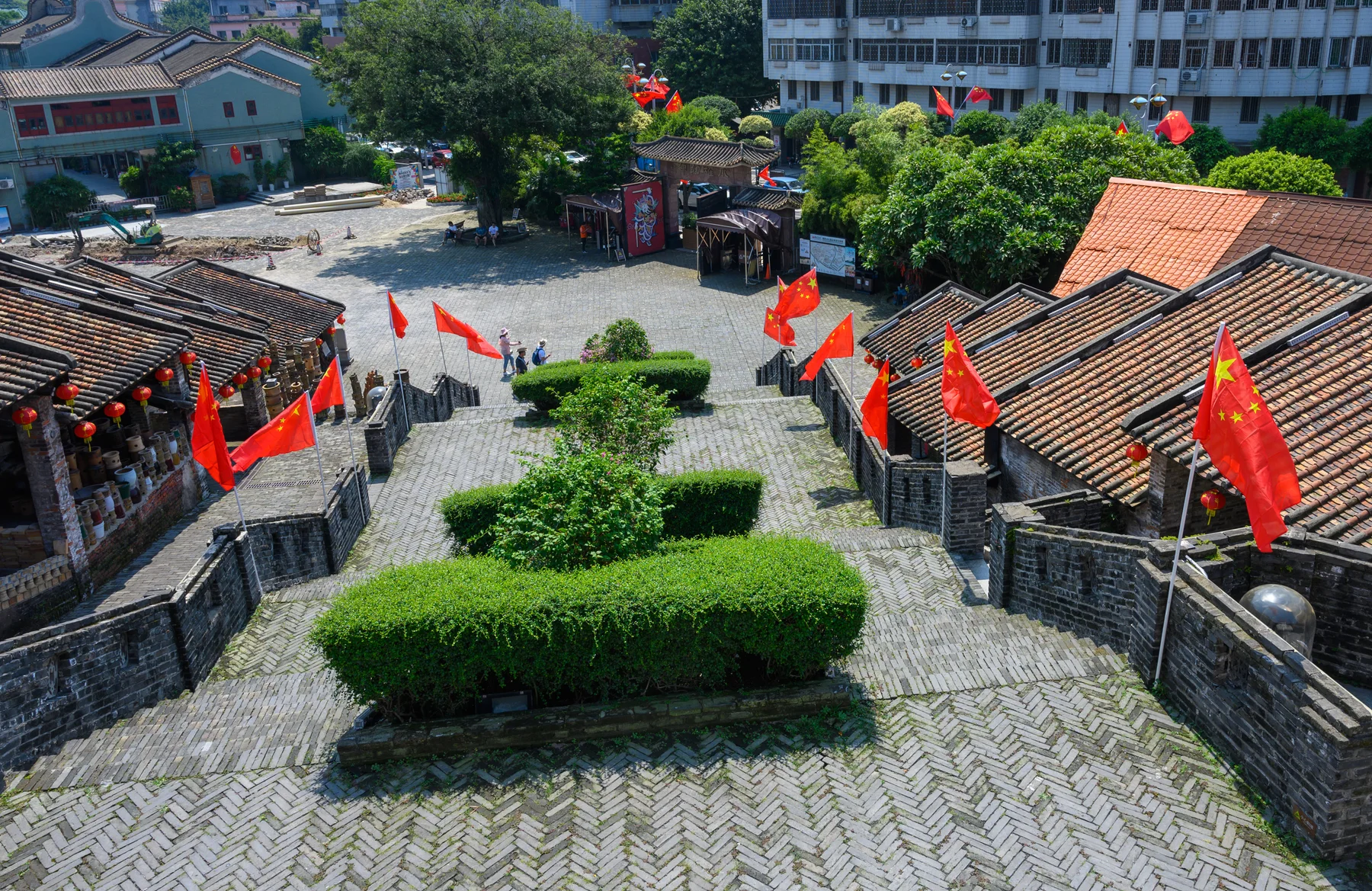
- hero.webp A dated 2019 view across the Nanfeng Kiln site supplies real Shiwan context. It does not confirm current access, firing, ticketing, conservation condition or visitor routes. xiquinhosilva · CC BY 2.0; exact accepted derivative reused with attribution · CC BY 2.0
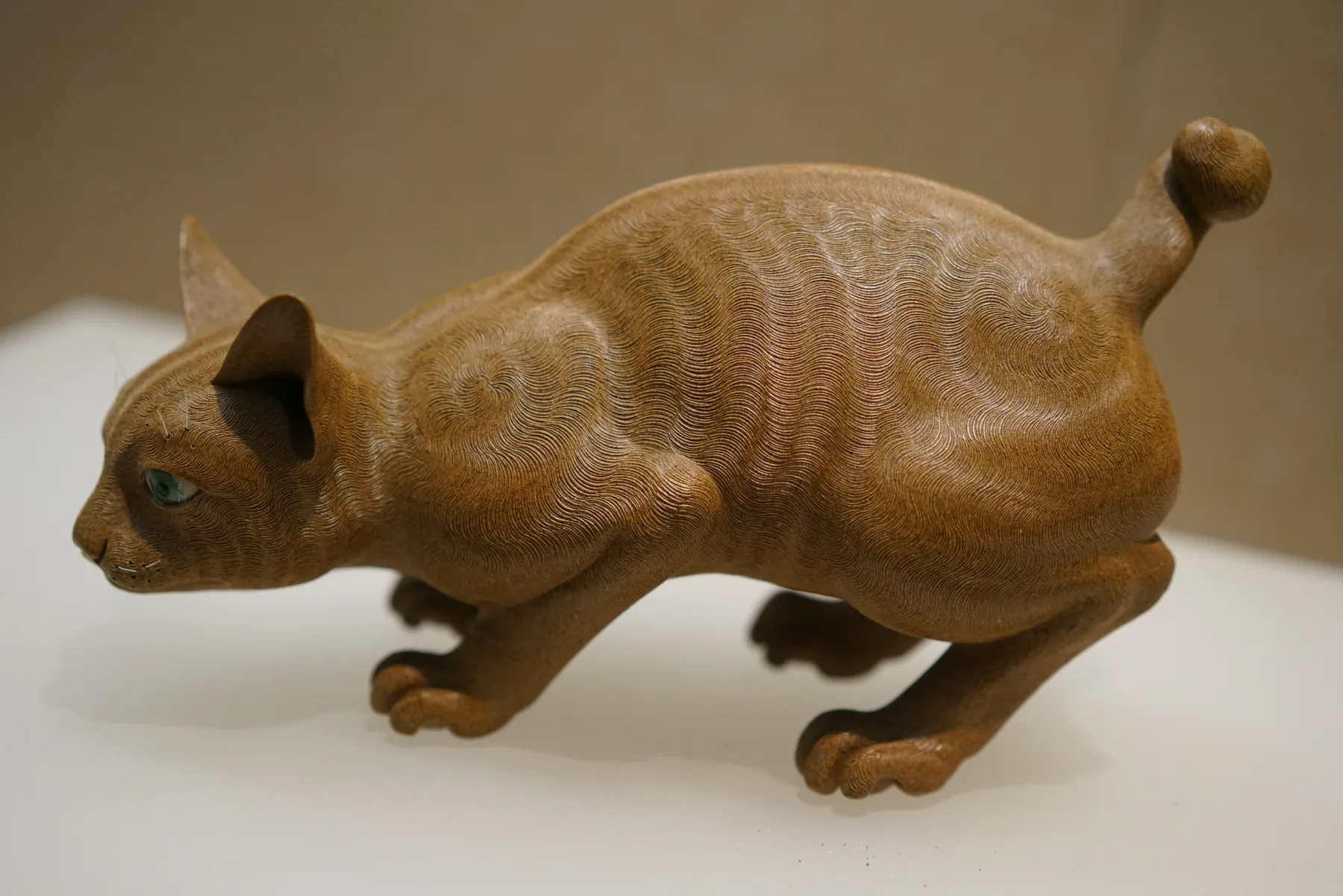
- body-01-shiwan-object.webp A finished Shiwan ware object can prompt questions about form, surface and use. It was photographed at the Guangdong Museum in Guangzhou and is not evidence of a Foshan display, workshop, maker at work or current experience. Augustohai · CC BY-SA 4.0; exact accepted derivative reused with attribution · CC BY-SA 4.0
- body-02-six-stages.webp Foshan Living's diagram restates six stages documented by the national heritage source. It is not a recipe, timing guide, firing specification or claim about every object. Ana Ribeiro / Foshan Living · Project-original editorial infographic; editable SVG retained
- body-03-nanfeng-entrance.webp This 2019 photograph identifies the entrance and immediate built setting. It does not define the protected boundary or confirm current access or the function of every visible structure. xiquinhosilva · CC BY 2.0; exact accepted derivative reused with attribution · CC BY 2.0
- body-04-nanfeng-slope.webp A wide 2019 view records visible level changes and relationships among steps, roofs and surrounding buildings. It is not an engineering diagram and does not establish airflow, firing direction, construction date or current circulation. xiquinhosilva · CC BY 2.0; exact accepted derivative reused with attribution · CC BY 2.0
- body-05-five-part-lens.webp Foshan Living's five-part lens separates documented use, visible form and surface, evidenced process and setting. It cannot certify composition, safety, durability, authenticity or value. Ana Ribeiro / Foshan Living · Project-original editorial infographic; editable SVG retained
- body-06-nanfeng-lane.webp This dated photograph records one lane, adjoining buildings and a courtyard relationship. It does not prove the age, authenticity, function or protected status of every structure or describe current access. xiquinhosilva · CC BY 2.0; exact accepted derivative reused with attribution · CC BY 2.0
.jpg)


Keep exploring
Related Foshan guides
 Explore Foshan
Chancheng or Shunde: Where Should You Start in Foshan?
Choosing between Chancheng and Shunde for a first Foshan trip? Compare heritage, food, neighbourhood pace, transport planning and where to stay.
 Explore Foshan
Understanding Foshan: A City of Five Districts
Learn how Foshan’s five districts differ, which areas suit culture, food, urban life or nature, and why every short trip needs a specific local base.
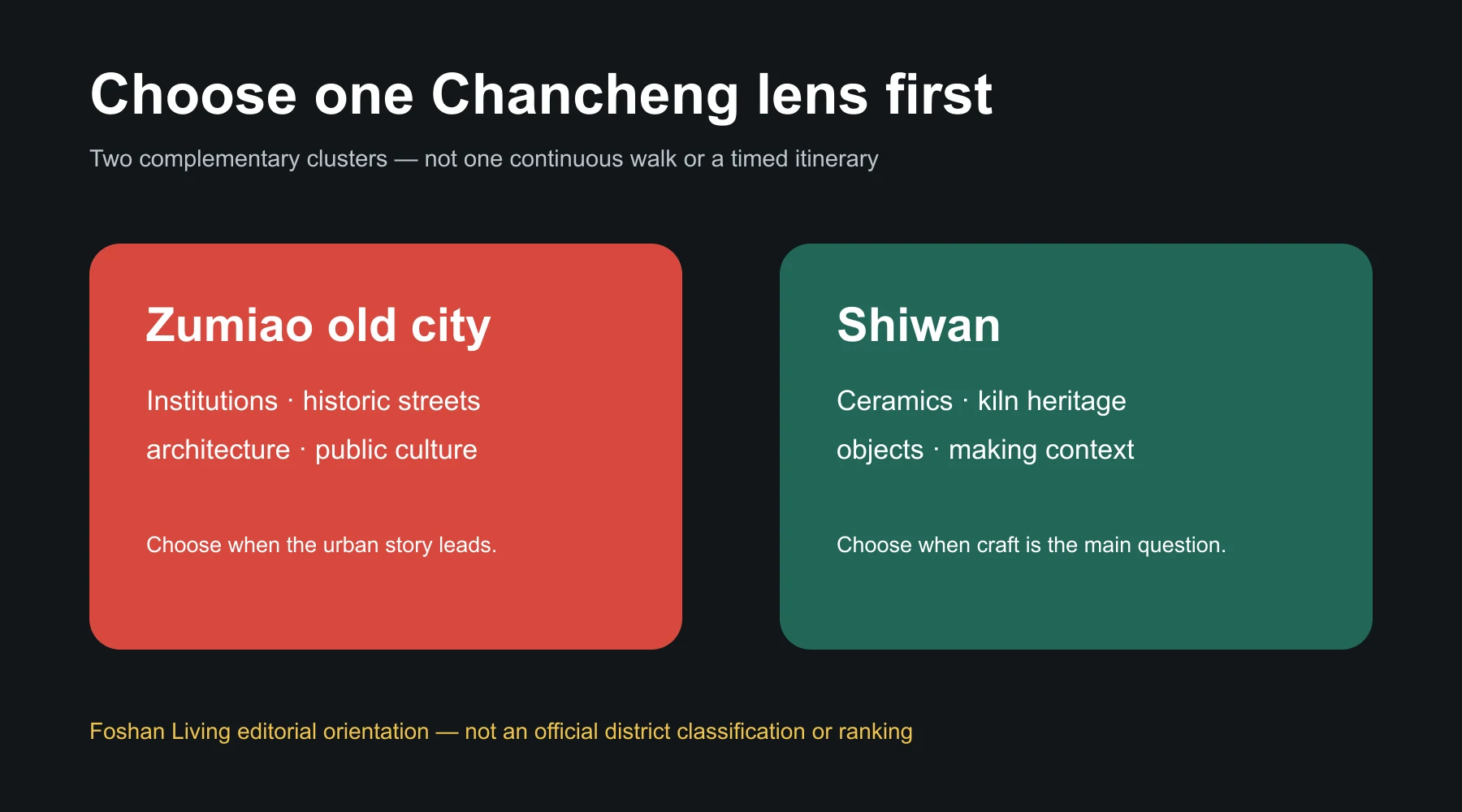 Explore Foshan
Zumiao Old City or Shiwan: How to Choose Your Chancheng Day
Compare Zumiao old city and Shiwan, choose one main Chancheng cluster, and add the other only after checking the complete route and current access.
 Explore Foshan
Chancheng: Foshan’s Historic Urban Core
Understand Chancheng through the Zumiao old city and Shiwan’s ceramic heritage, with guidance on walking scale, transport checks and where to base.
Plan your visitFirst Time in Foshan
Build a first trip around districts, transport, food and one deeper cultural interest.