Living & business
Why Foshan Is a Manufacturing and Business City
A source-led explanation of how specialised places, production and trade networks shape Foshan as a city.

On this page
- Start with the city-wide economic structure
- Read Foshan as a network of specialised places
- Use familiar industries as orientation points
- Furniture
- Home appliances
- Ceramics and building materials
- Metal products and connected manufacturing
- Follow the chain from production to business services
- Plan business travel by task, not by city label
- Separate evergreen structure from dated evidence
- Check an industrial claim before using it
- What this structure means for living in Foshan
- Continue exploring Foshan’s business landscape
- About Tom Ashworth
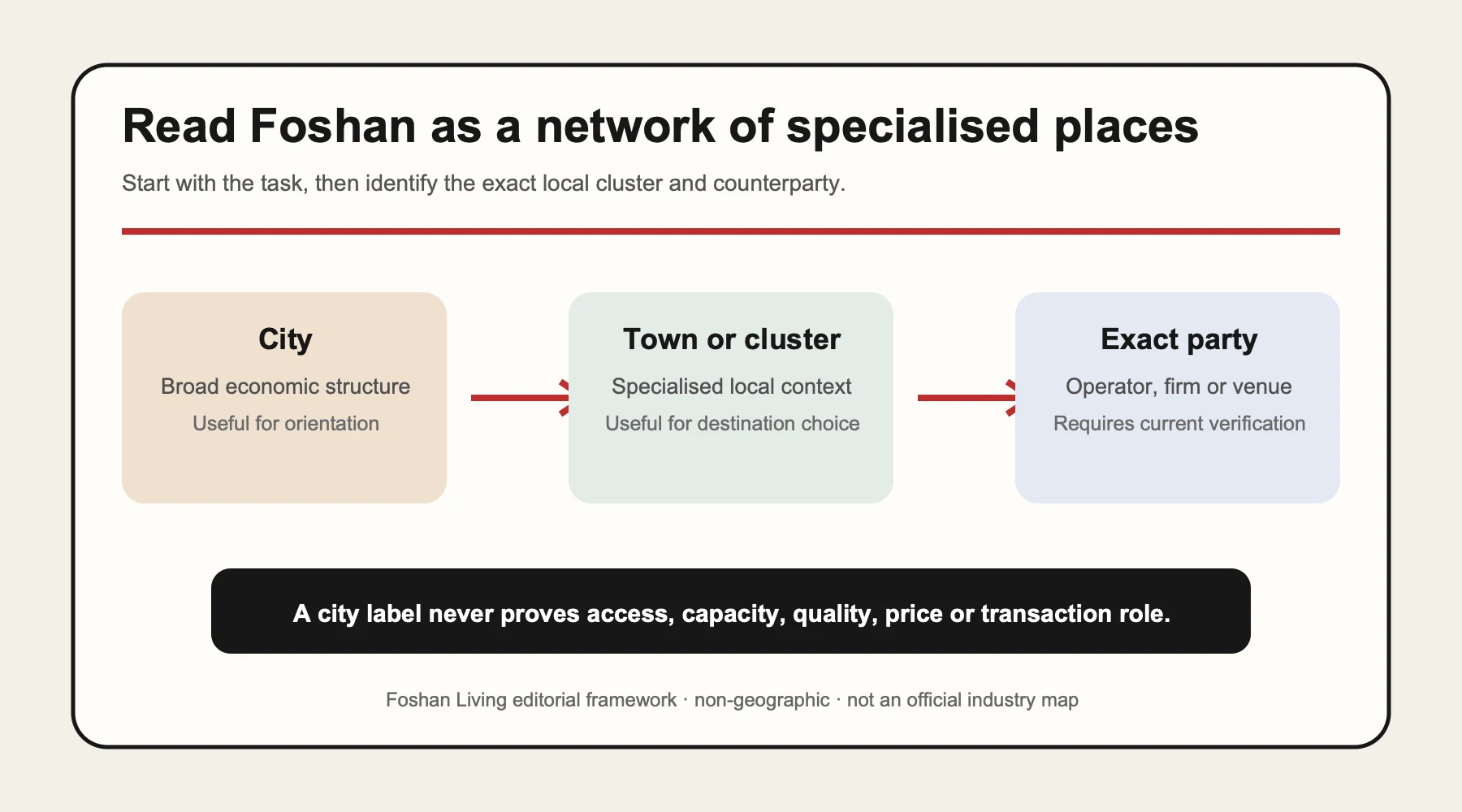
Foshan makes more sense when you stop looking for one central business district and start looking for productive places at several geographic levels. The city’s 2024 statistical bulletin documents a manufacturing-heavy economic structure, while a Foshan High-tech Zone work summary supplies one bounded example of differentiated parks and industry clusters. Together, those sources support a method for reading the city without pretending to provide a complete current industrial map.
This guide gives first-time residents and business visitors a durable way to read that structure. It does not rank factories, recommend suppliers or treat a single year’s output as a permanent truth. Instead, it explains which parts of Foshan’s manufacturing identity are structural, which claims require dated evidence and what to verify before planning a visit.
Start with the city-wide economic structure
Manufacturing is not merely a visitor theme or a collection of famous products in Foshan. It is a major part of the city’s economic structure. For planning purposes, Foshan Living treats production and the business activities around it—such as materials, components, equipment, design, testing, trade, logistics and after-sales support—as roles to identify separately. This is an editorial framework, not a claim that every Foshan industry contains every role.
A dated official snapshot helps show the scale without turning one year into an eternal statistic. Foshan’s 2024 statistical bulletin recorded the three-sector composition as 1.8:50.3:47.9 and stated that advanced manufacturing accounted for 52.5% of the added value of industrial enterprises above the designated size. The same bulletin listed furniture manufacturing, building materials, metal products and household electrical appliances among the city’s traditional industries.
> 2024 evidence box: These figures describe Foshan in 2024 under the statistical definitions used in that bulletin. They are evidence for manufacturing’s structural importance at that time, not permanent ratios, rankings or forecasts. They should be refreshed when a newer annual bulletin is adopted.
For readers, the lasting lesson is not the decimal point. It is that production and services coexist: Foshan has a large secondary-sector base while its service economy remains substantial. A factory visit, a showroom meeting and a logistics discussion may therefore belong to the same commercial journey, even when they happen in different places and involve different organisations.
Read Foshan as a network of specialised places
Foshan has five districts, but district names alone do not explain its industrial geography. Many activities are associated with towns, subdistricts, industrial parks, professional markets or established supply-chain communities. A useful description must therefore state its geographic level.
An official 2024 work summary from Foshan High-tech Zone provides one bounded example of this geography. It describes a multi-park structure in which different parks are expected to develop in differentiated, clustered ways, and names intelligent equipment, smart home and new materials among the zone’s pillar directions. This does not map the whole city, but it supports a structural observation: one administrative or development-zone label can contain several productive places with different roles.
It does not mean every company in one town makes the same product, that cluster boundaries are fixed, or that every location is open to visitors. A “specialised town” is an orientation concept, not a substitute for checking an address, business licence, access rule or current operating condition.
When reading a location claim, ask which of these it refers to:
- the whole city;
- one district;
- a town or subdistrict;
- an industrial park or professional market;
- one enterprise or showroom.
Moving between these levels without saying so creates misleading claims. One prominent company cannot prove the size of a city-wide industry, and one professional market cannot represent every producer in its category.
Use familiar industries as orientation points
Several product families offer practical ways to understand Foshan, provided they are treated as examples rather than slogans.
Furniture
Furniture connects manufacturing with materials, design, showrooms, professional markets and sourcing services. A visitor may meet a retailer, trading company, brand, factory or logistics provider, and those roles are not interchangeable. Use Why Foshan Matters in Furniture and Design for a published orientation to the product, process, display and place relationship.
Home appliances
Household electrical appliances illustrate the importance of systems around a finished product: components, moulds, machinery, quality processes, branding and distribution can all form part of the business environment. The 2024 bulletin also reported exports of home appliances, but that is a dated trade snapshot. It should never be restated as a timeless growth claim.
Ceramics and building materials
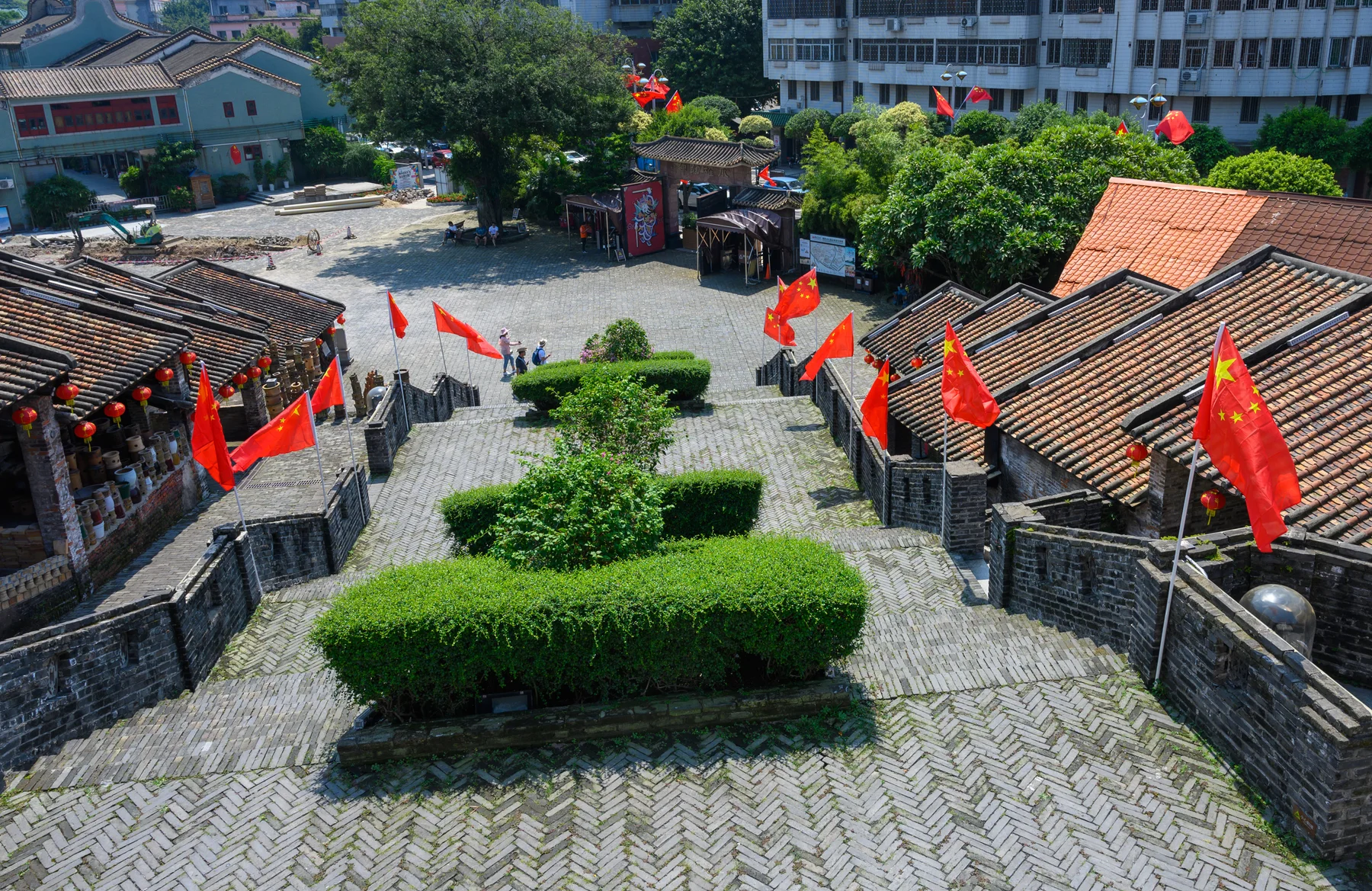
Ceramics can be discussed as craft, design, architecture or industrial production. Those are related but different subjects. A museum can explain historical technique and material culture; it cannot prove current manufacturing output. Likewise, a current industrial statistic does not explain the artistic meaning of Shiwan ceramics. Readers interested in the design perspective should follow the site’s furniture and design coverage rather than treating industrial data as cultural evidence.
.jpg)
Metal products and connected manufacturing
Metal products, machinery, moulds and material supply show why manufacturing is best understood as a network. A finished item may depend on companies that are largely invisible to consumers. For business visitors, the practical question is often not “Where is the industry?” but “Which stage of the production chain do I need to examine?”
Follow the chain from production to business services
A manufacturing city is not one continuous factory zone. Business activity can move through several distinct stages:
- product definition and design;
- material and component sourcing;
- tooling, equipment or production;
- quality checks and documentation;
- display in a showroom or professional market;
- trade, payment and contracting;
- packing, logistics and after-sales support.
These stages may be handled by different legal entities in different locations. A showroom can present products without being the production site. A trading company can coordinate an order without owning a factory. An exhibition can introduce contacts without proving that a supplier is suitable for a contract. The physical journey through Foshan may therefore run in the opposite direction from the commercial chain: a visitor might first see a finished product, then meet the trading team and only later visit the place where production or inspection occurs.
This distinction protects visitors from a common mistake: treating physical proximity as proof of one integrated organisation. Before relying on any relationship, verify company names, roles, addresses and documents independently. Foshan Living explains the structure; it does not certify suppliers or replace professional legal, inspection, customs or financial advice.

Plan business travel by task, not by city label
“Going to Foshan for business” is too broad to produce a useful itinerary. Build the trip around decisions.
First, define the task: market orientation, product comparison, factory assessment, design review, contract discussion, inspection or logistics coordination. Then identify the organisation responsible for that task and confirm the actual meeting address. Finally, group appointments by area rather than assuming that all “Foshan” destinations are close together.
Before leaving, confirm:
- the legal and trading name of the organisation;
- whether the meeting is at a factory, office, showroom, market or venue;
- who has approved entry and photography;
- what product, specification or document will be reviewed;
- whether an interpreter or technical specialist is needed;
- how much transfer time is required between appointments.
Public access should never be assumed. An industrial park visible on a map is not automatically a visitor attraction, and an exterior photograph does not imply permission to enter or photograph internal operations.
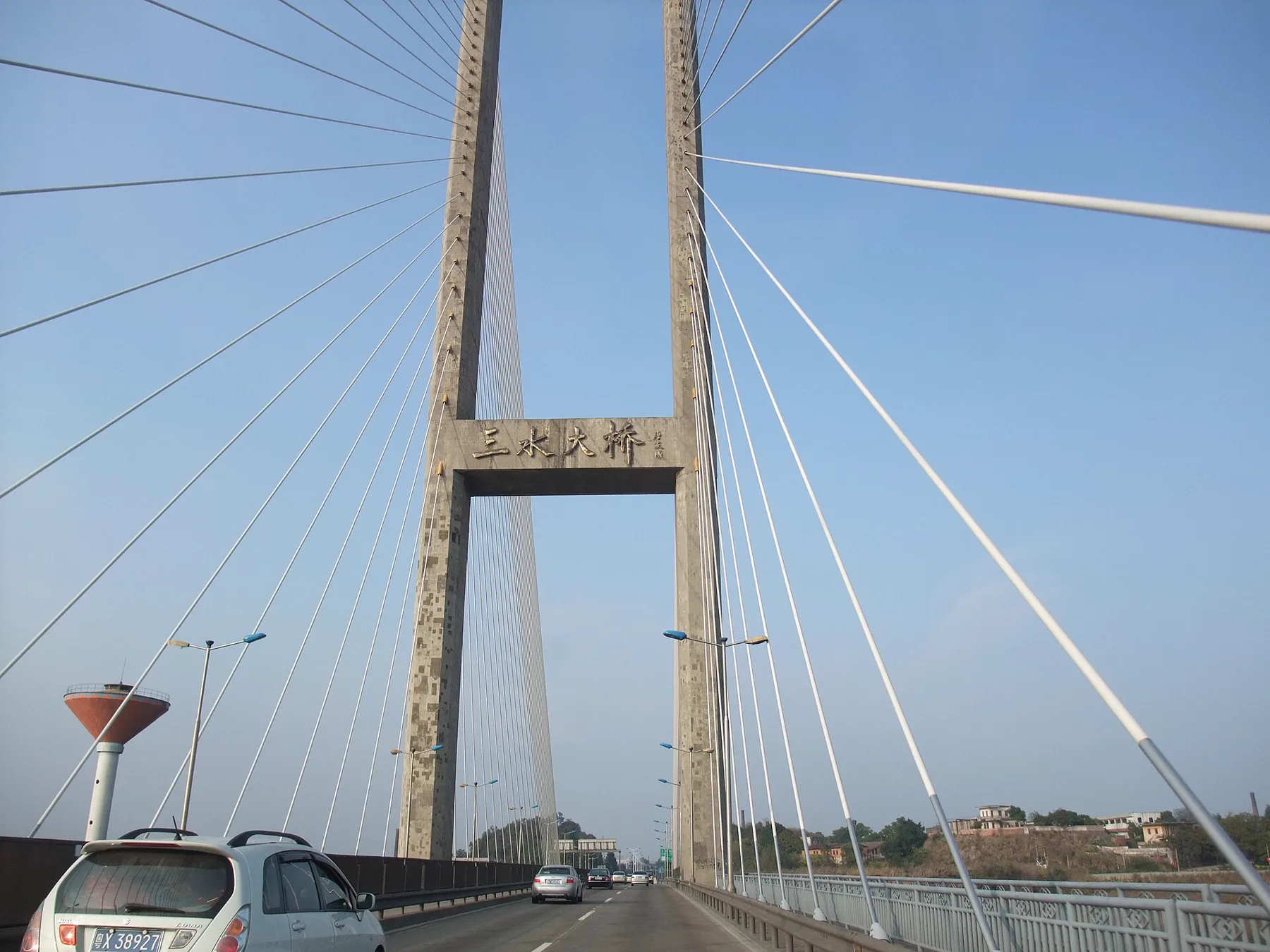

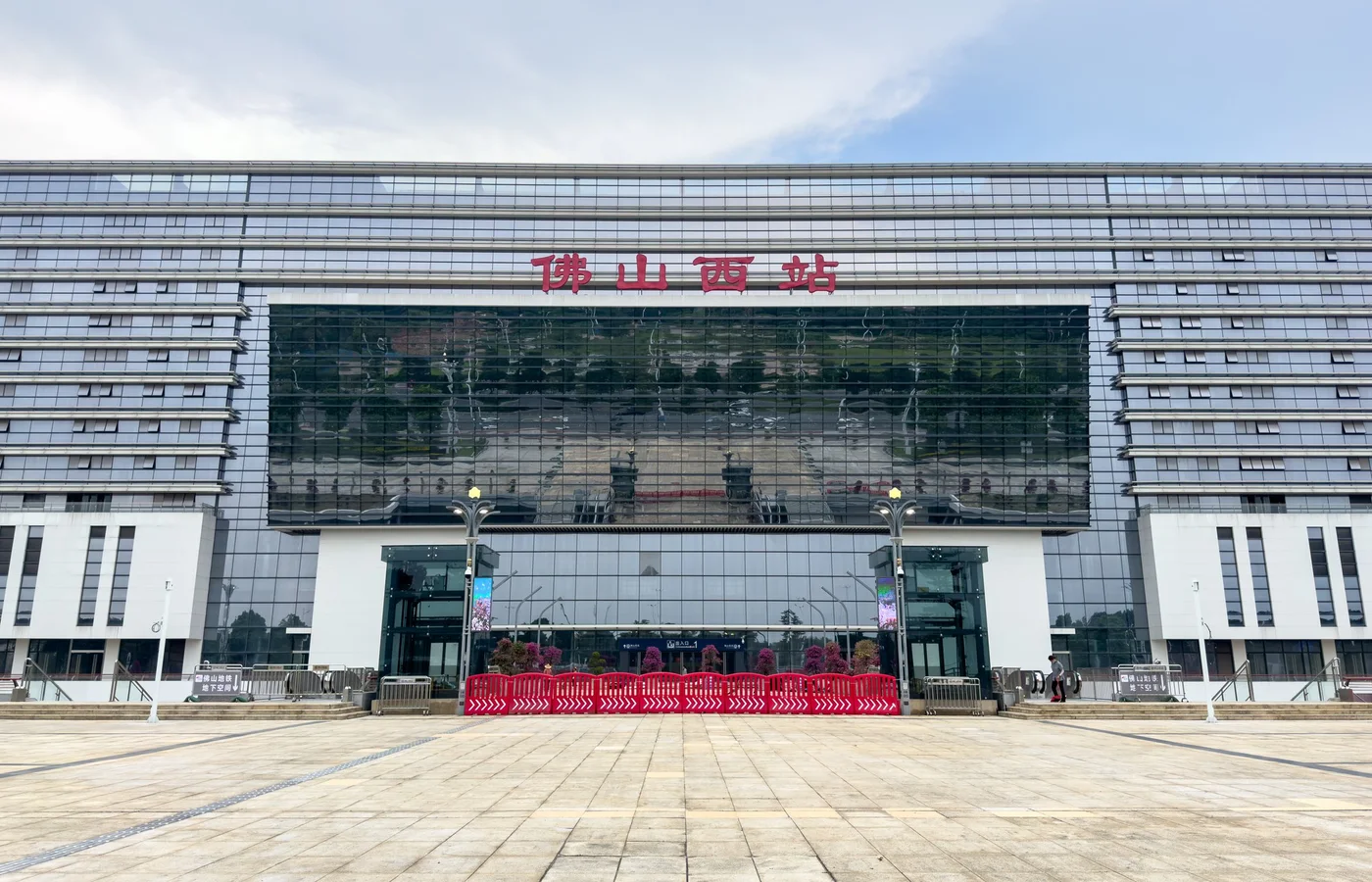
,_Foshanxi_Railway_Station_20240825-A.jpg)
Separate evergreen structure from dated evidence
The durable part of this guide is the method: Foshan’s business geography is distributed; specialised places matter; production, display and trade are different stages; and each claim needs a clear geographic and statistical definition.
The changeable layer includes annual output, sector shares, exports, enterprise counts, current policy programmes, subsidies, exhibition dates and individual supplier conditions. These belong in dated evidence boxes, regularly maintained listings or direct verification—not in sentences that pretend they will remain true forever.
The 2024 statistical bulletin, for example, listed household appliances and furniture in its export data. That helps document what appeared in Foshan’s trade profile during that reporting year. It does not prove current demand, future growth, market leadership or the suitability of any company.
The same rule applies to plans and work summaries. A government document can show how a zone described its parks and cluster directions when it was issued. Targets, project stages and implementation conditions can change. This guide uses the high-tech-zone source only as a dated, geographically limited example of multi-park industrial organisation.
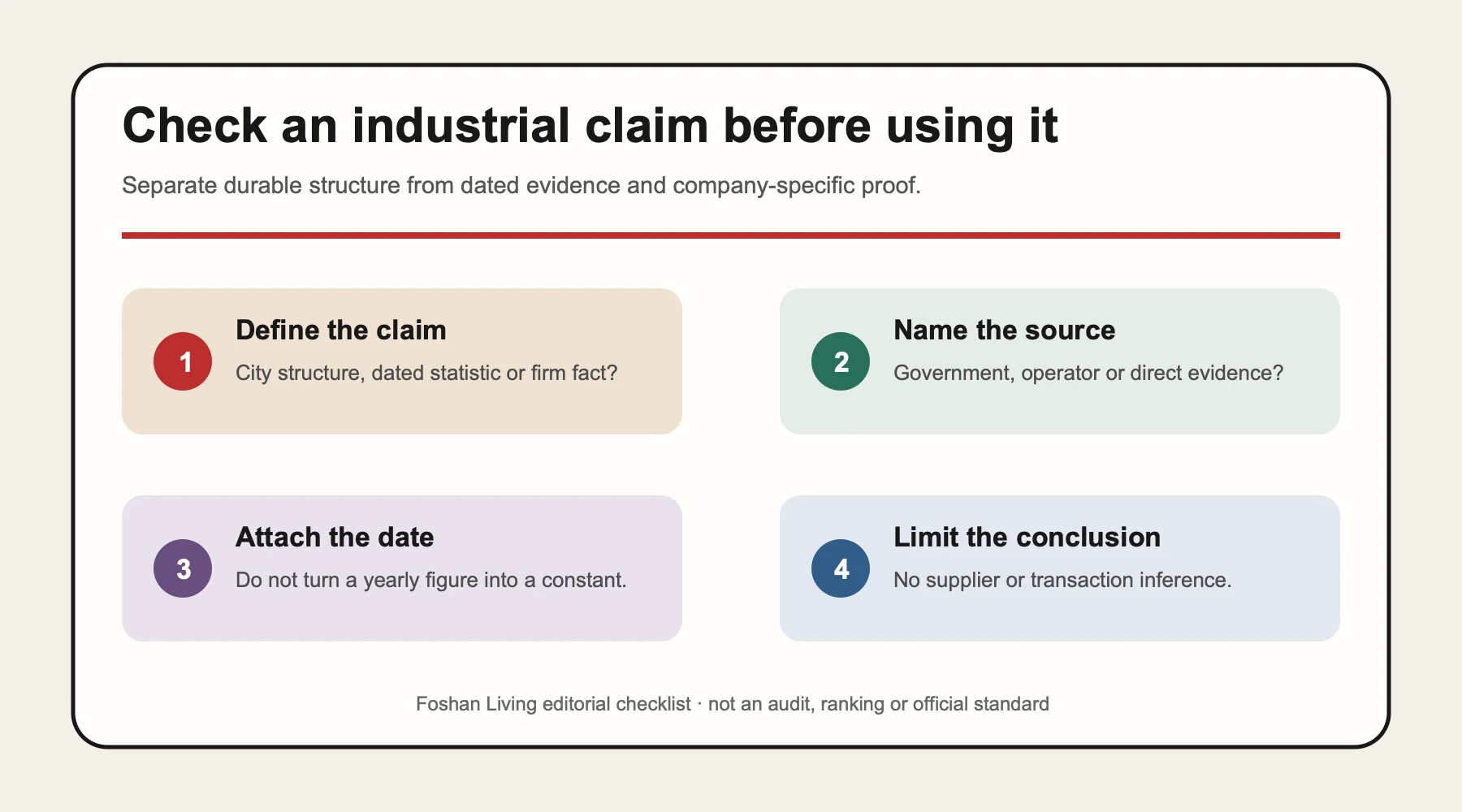
Check an industrial claim before using it
When a brochure, news article or sales presentation makes an industrial claim, run a simple five-part check:
- Year: When was the underlying information measured?
- Geography: Does it describe Foshan, a district, a town, a park or one business?
- Definition: Does “industry” mean output, revenue, exports, employment or number of companies?
- Publisher: Is the source a statistical authority, government department, operator, company or media outlet?
- Comparison: If it uses “largest,” “leading” or “number one,” what places, period and metric were compared?
If any part is missing, reduce the claim. “Foshan has an established furniture business ecosystem” may be supportable where “the world’s largest furniture centre” is not. Careful wording is not weakness; it makes the information reusable.
What this structure means for living in Foshan
Manufacturing also shapes ordinary decisions. Workplaces and business destinations may be distributed, so a home that looks central on a city map may not be convenient for a specific job. Professional markets and exhibition venues can create distinctive local rhythms. Roads, freight activity and mixed commercial environments can affect how an area feels at different times.
Residents should therefore compare neighbourhoods against their actual weekly destinations, not a generic idea of “downtown.” Our guide to Foshan’s city structure provides the broader framework. Use the Foshan metro, intercity and rail guide to identify the transport system, then check current official route information; an industrial identity does not guarantee a direct public-transport connection.
For business visitors, the same principle becomes an itinerary rule: organise by task and location, allow for cross-city movement and verify every access condition.
Continue exploring Foshan’s business landscape
Use this article as a map of relationships, then move to the guide that matches your next decision:
- understand Foshan’s city structure;
- understand why furniture and design matter in Foshan;
- understand Foshan’s metro, intercity and rail systems, then verify the current route;
- explore a future guide to ceramics sourcing when that evidence package is complete.
Annual figures and policy conditions should always be checked at their original Chinese sources before they enter a report, investment decision or travel plan.
About Tom Ashworth
Tom Ashworth covers living, business travel and the practical systems behind Foshan’s commercial landscape. He focuses on helping international readers distinguish durable city structure from statistics, policies and operating conditions that require current verification. Visit his author page to see all of his Foshan Living articles.
Image credits and disclosures
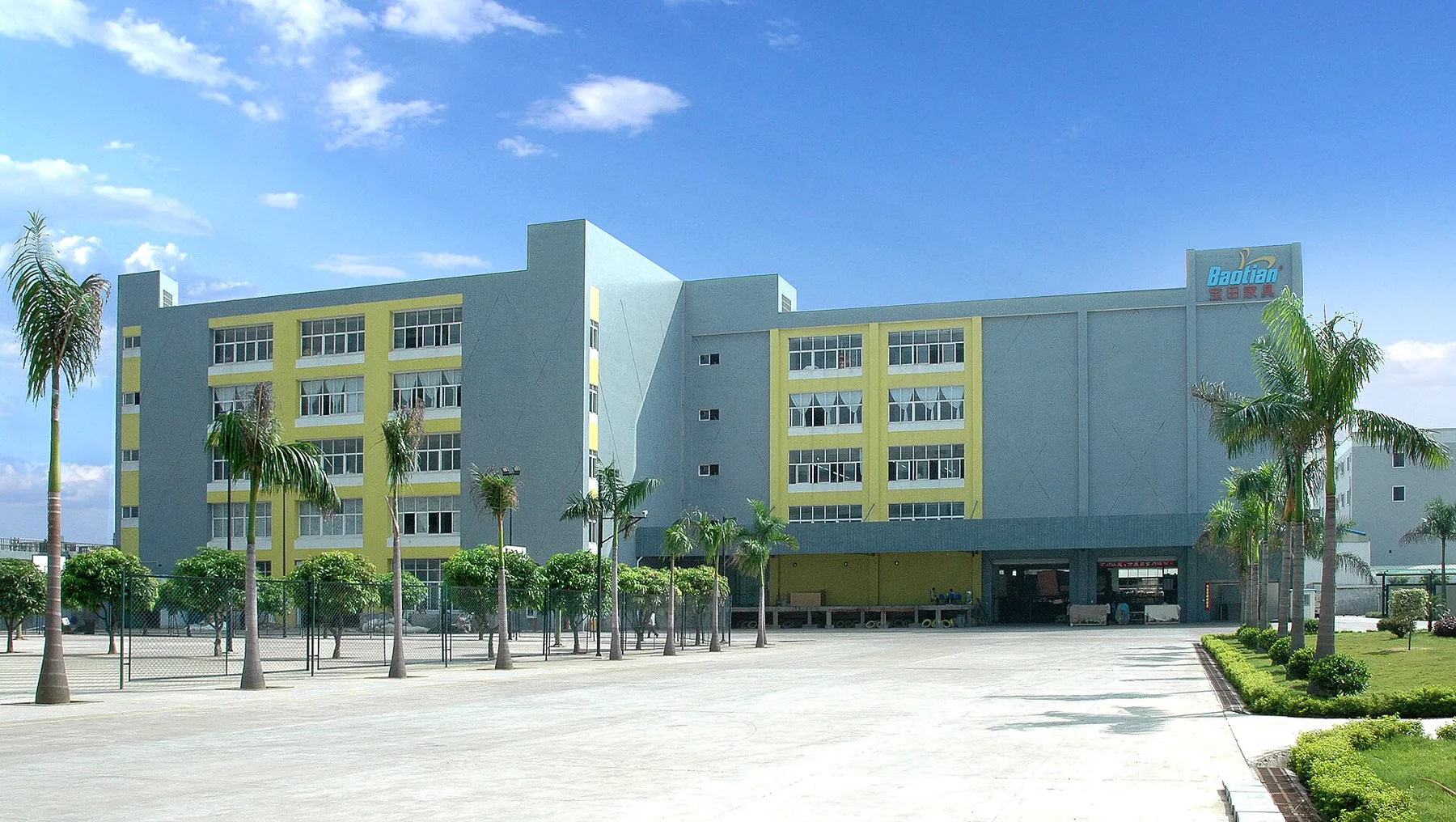
- hero.webp This Shunde factory exterior documents one real production setting. It does not endorse the company or support claims about current access, output, product quality, employment or manufacturing ownership. Baotianliao · CC BY-SA 4.0; cropped and resized derivative reused from an accepted Foshan Living package · CC BY-SA 4.0
- body-01-shiwan-kiln.webp Nanfeng Kiln documents one real Shiwan setting where architecture and ceramic-production history meet. The dated image does not prove current industrial output, firing, access, ticketing or visitor conditions. xiquinhosilva · CC BY 2.0; resized and converted to WebP; derivative reused from an accepted Foshan Living package · CC BY 2.0
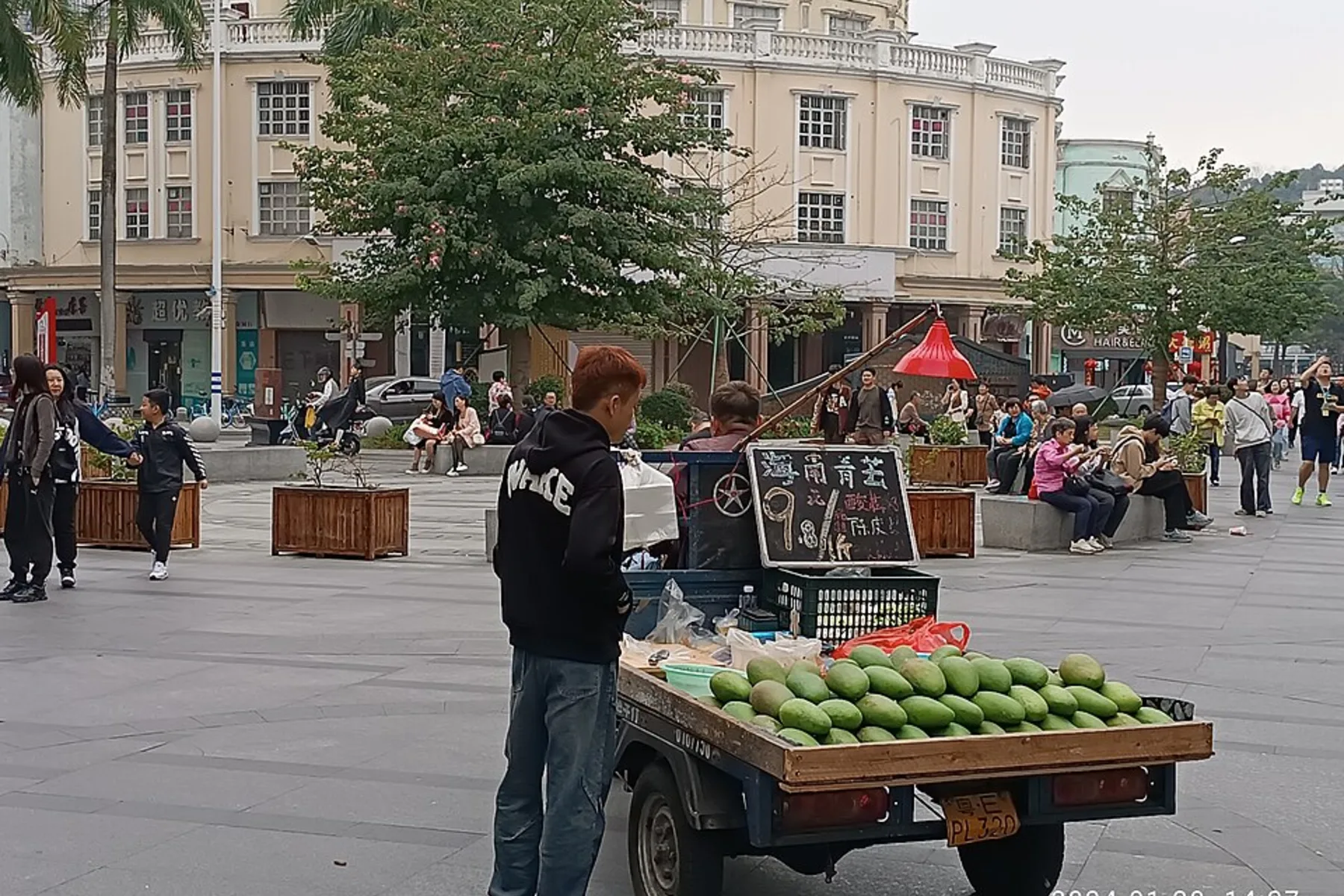
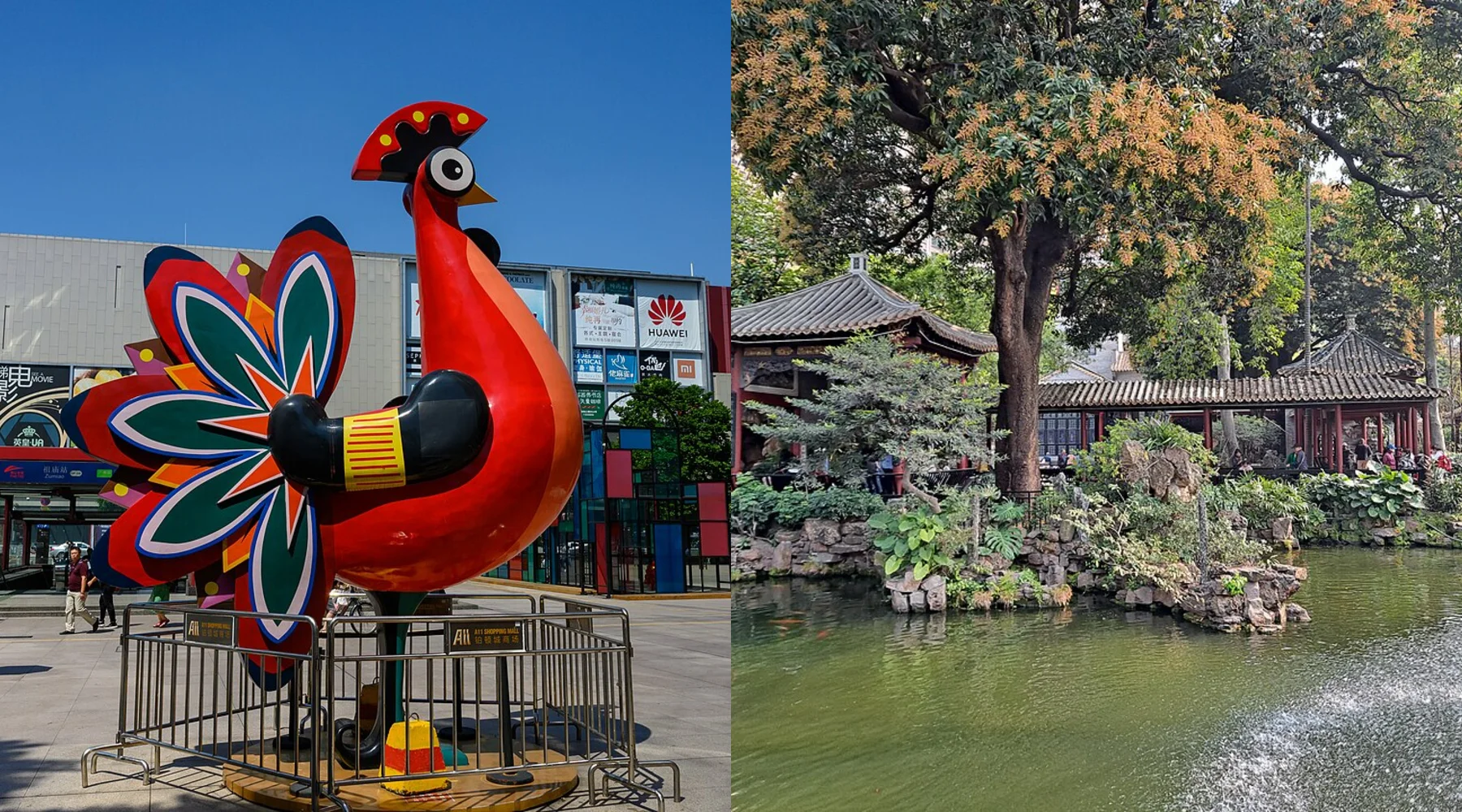
- body-02-commercial-street.webp Huagai Road records one lived public-commercial environment in Daliang. It illustrates the service layer around a manufacturing city without ranking a neighbourhood, recommending a business or confirming current trading conditions. Lau Hau Yatyue Tiger · CC0; cropped and resized derivative reused from an accepted Foshan Living package; voluntary credit retained · CC0 1.0 Universal
- body-03-sanshui-bridge.webp Sanshui Bridge records one part of Foshan’s physical transport infrastructure. It does not establish a business route, current traffic, freight suitability, access or journey time. 海中梁伟汉 · CC BY 3.0; cropped and resized derivative reused from an accepted Foshan Living package · CC BY 3.0
- body-04-foshan-west.webp The south exterior of Foshan West Railway Station, photographed on 25 August 2024, records one dated regional arrival context. It does not identify a current entrance, train, timetable, ticketing arrangement or interchange route. Tim Wu · CC BY-SA 4.0; cropped, resized and converted to WebP; derivative reused from an accepted Foshan Living package · CC BY-SA 4.0
- body-05-specialised-network.webp Foshan Living’s editorial framework separates city-wide structure, town or cluster context and the exact organisation that requires current verification. It is non-geographic and not an official industry map. Tom Ashworth / Foshan Living · Original vector infographic created for this article; editable SVG retained
- body-06-claim-check.webp Foshan Living’s checklist separates claim type, source, date and conclusion limits. It is not an audit, ranking, legal opinion or official statistical standard. Tom Ashworth / Foshan Living · Original vector infographic created for this article; editable SVG retained


Keep exploring
Related Foshan guides
 Explore Foshan
Chancheng or Shunde: Where Should You Start in Foshan?
Choosing between Chancheng and Shunde for a first Foshan trip? Compare heritage, food, neighbourhood pace, transport planning and where to stay.
 Explore Foshan
Understanding Foshan: A City of Five Districts
Learn how Foshan’s five districts differ, which areas suit culture, food, urban life or nature, and why every short trip needs a specific local base.
 Explore Foshan
Zumiao Old City or Shiwan: How to Choose Your Chancheng Day
Compare Zumiao old city and Shiwan, choose one main Chancheng cluster, and add the other only after checking the complete route and current access.
 Explore Foshan
Chancheng: Foshan’s Historic Urban Core
Understand Chancheng through the Zumiao old city and Shiwan’s ceramic heritage, with guidance on walking scale, transport checks and where to base.
Plan your visitFirst Time in Foshan
Build a first trip around districts, transport, food and one deeper cultural interest.