Food & drink
The Main Food Categories of Shunde Cuisine
Five practical editorial lenses for reading a Shunde menu without turning local food into a rigid checklist.

On this page
- Use the categories as lenses, not rules
- What a category can tell you
- What it cannot tell you
- Fish and freshwater ingredients
- Begin with structure
- Fish curd as a category example
- Cooked fish is not the lesser experience
- Milk cookery
- Table role matters
- Stir-fried milk as a technique clue
- Rice foods and cakes
- A place name is a clue
- Ask how the rice food functions
- Texture is often the learning goal
- Roast and banquet dishes
- Ask the portion questions first
- Jun’an steamed pork as a large-dish clue
- Roast does not mean one technique
- Town-linked seasonal ingredients
- Use the category as a question set
- Do not freeze a season
- Understand how the categories overlap
- What is it made from?
- What was done to it?
- What role does it play?
- What claim is being made?
- Use the lenses to build a shared meal
- A small table
- A larger table
- Keep current menus and safety claims separate
- Continue reading Shunde food
- About Daniel Osei
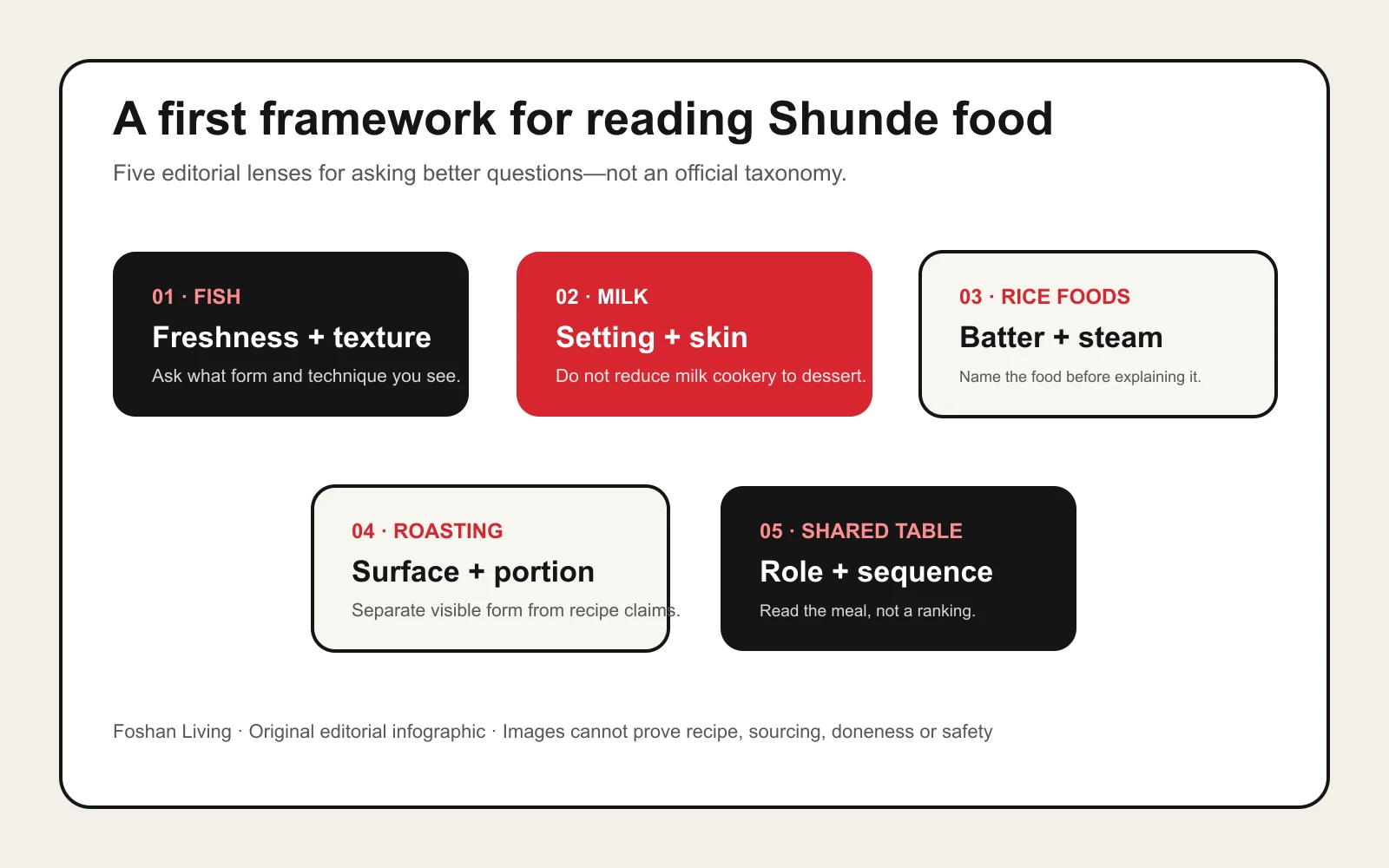
Shunde food is easier to understand through ingredient and table-role families than through a list of famous dishes. Five lenses are especially useful for a first-time diner: fish and freshwater ingredients, milk cookery, rice foods and cakes, roast and banquet dishes, and town-linked seasonal ingredients.
These are Foshan Living editorial categories. They are not an official culinary classification, they overlap, and they do not cover every Shunde food. Their purpose is to help you compare dishes, build a shared meal and ask better questions.
Use the categories as lenses, not rules
The Shunde Library’s public-cultural food overview names dishes and products that span fish, milk, rice, roast and large shared preparations. Local-media coverage connects other foods with Shunde’s ten town-level areas. These sources demonstrate variety; none publishes the five-part system used on this page.
Foshan Living created the categories for a specific reader task: looking at an unfamiliar menu and deciding what kinds of food are already represented.
What a category can tell you
A category can suggest:
- the main ingredient or material;
- likely preparation questions;
- whether the dish may be individual or shared;
- whether a town or season is part of the name;
- which specialist guide should answer the next question.
What it cannot tell you
A category cannot prove quality, authenticity, portion, price, availability or food safety. It also cannot define one correct recipe. Two dishes in the same family may have very different textures and table roles.
Use the categories to notice contrast. Do not treat them as five boxes that must all be completed in one meal.
Fish and freshwater ingredients
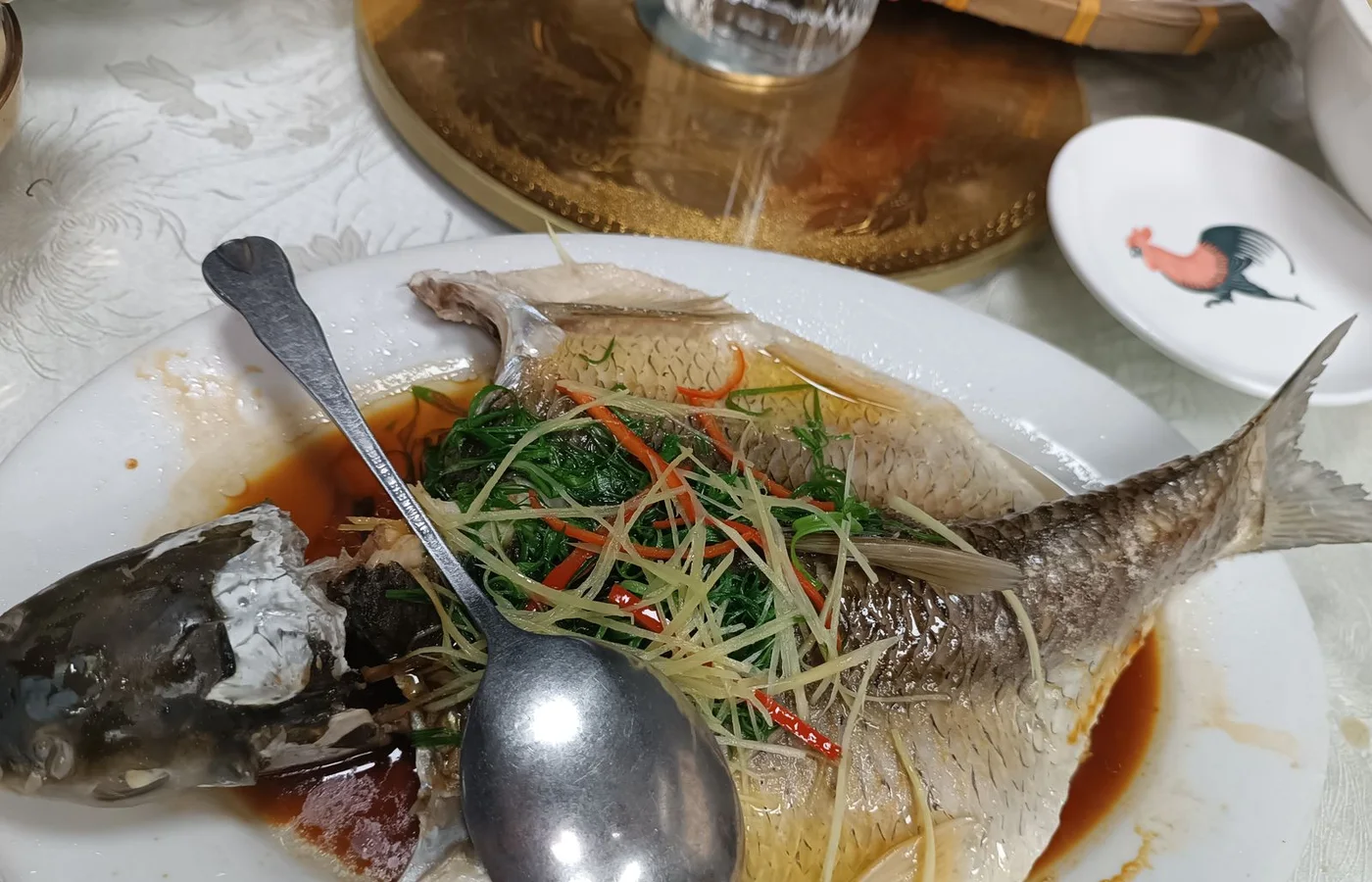
Fish is central to many descriptions of Shunde food, but “fish culture” should not be reduced to raw fish. Cooked preparations reveal a wide range of cutting, heat and texture choices.

Begin with structure
Ask whether the fish appears:
- whole or in large pieces;
- carefully deboned or sliced;
- minced, pounded or formed;
- in broth or hotpot;
- steamed, pan-fried, deep-fried or braised.
The answer changes what you should notice. Whole cooked fish invites attention to doneness and the relationship between flesh, skin and sauce. A deboned preparation directs attention to knife work. A formed fish product highlights texture rather than the original shape.
Fish curd as a category example
The Shunde Library identifies Lecong fish curd as a dace-based local food and records its district-level intangible-cultural-heritage context. That supports its identity as a useful example of fish being transformed for texture.
It does not establish one standard recipe for every kitchen. The library page should not be used to infer exact proportions, restaurant quality or permanent availability.
Cooked fish is not the lesser experience
Guangdong public-health guidance warns that raw or undercooked freshwater fish and shrimp can transmit liver fluke. Alcohol and strong condiments do not replace thorough cooking.
Choosing fully cooked fish is the lower-risk starting point and still allows a visitor to study bone removal, steaming, frying, broth, fish paste and other techniques. Raw fish is not a required step in understanding Shunde cuisine.
Foshan Living’s source-led food-safety guide will carry the narrow freshwater-fish warning after that page passes publication review. Until then, use the cited public-health source rather than an unpublished internal link.
Milk cookery
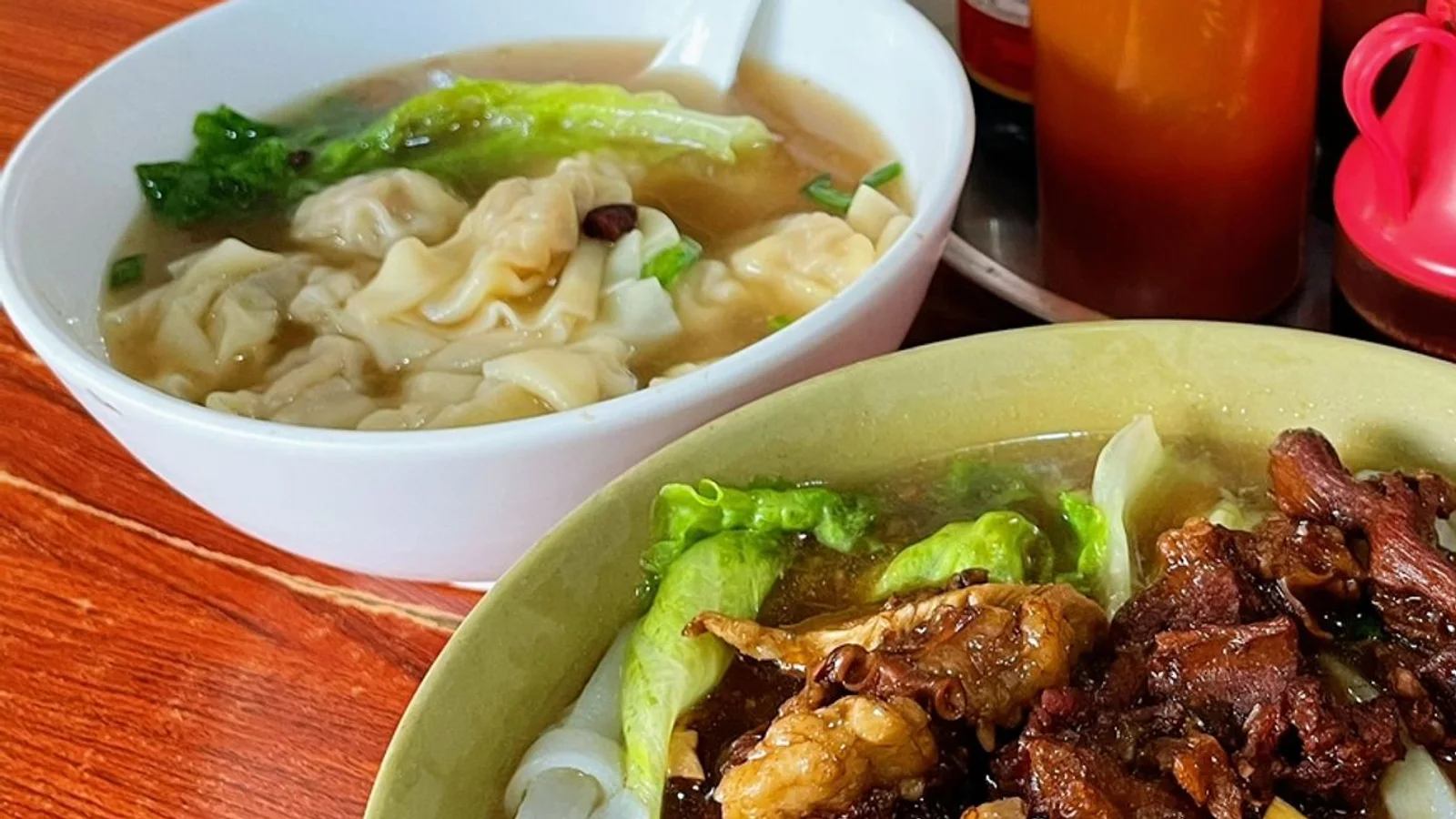
Many visitors first recognise Shunde milk culture through double-skin milk. That dessert is useful, but it represents only one role milk can play.


Milk may appear as:
- a set or steamed dessert;
- a sweet snack;
- a fried preparation;
- a savoury shared dish;
- a component whose main interest is texture and heat control.
Table role matters
A bowl of double-skin milk is often understood as an individual sweet. A fried or stir-fried milk preparation can belong in the centre of a shared meal. Similar ingredients do not make the dishes interchangeable.
Before ordering several milk dishes, ask what role each one plays. Two names may produce different techniques but still create a repetitive table if both are rich or sweet.
Stir-fried milk as a technique clue
The Shunde Library’s public food database identifies stir-fried milk with Shunde and Daliang and describes it through soft stir-frying, coordinated movement and heat control. This makes it a valuable bridge between ingredient category and cooking technique.
The source does not turn a finished dish into a home recipe. It does not support exact temperature, timing or ingredient-ratio claims. A diner can observe smoothness, setting and movement without pretending to reverse-engineer professional parameters.
Foshan Living’s separate cooking-technique guide will carry the preparation, heat and texture method after that page is live.
Rice foods and cakes
Rice appears in many forms beyond plain steamed rice. Lunjiao cake and Chencun rice noodles are especially useful for understanding how processing, table role and place association come together.
A place name is a clue
Lunjiao cake points toward Lunjiao; Chencun rice noodles point toward Chencun. These names help visitors remember Shunde’s food geography.
They do not prove that every current product was made in the named town, follows one recipe or uses one production method. Treat the name as an invitation to investigate, not a certificate printed on the menu.
Ask how the rice food functions
A rice food may serve as:
- breakfast or a light meal;
- a shared staple;
- an afternoon snack;
- a sweet or lightly fermented cake;
- a packaged gift.
The same category can therefore appear at different times and in different portions. Ask whether the item is individual or shared, served plain or with additions, and intended as the meal’s staple or as a separate taste.
Texture is often the learning goal
Instead of collecting names, compare textures: soft, springy, layered, porous, slippery or crisp at the edge. These are diner-facing observations, not standard measurements.
The category becomes useful when it helps you notice how rice changes through grinding, mixing, setting, steaming or other processes—without claiming that every example uses the same technical sequence.
Roast and banquet dishes
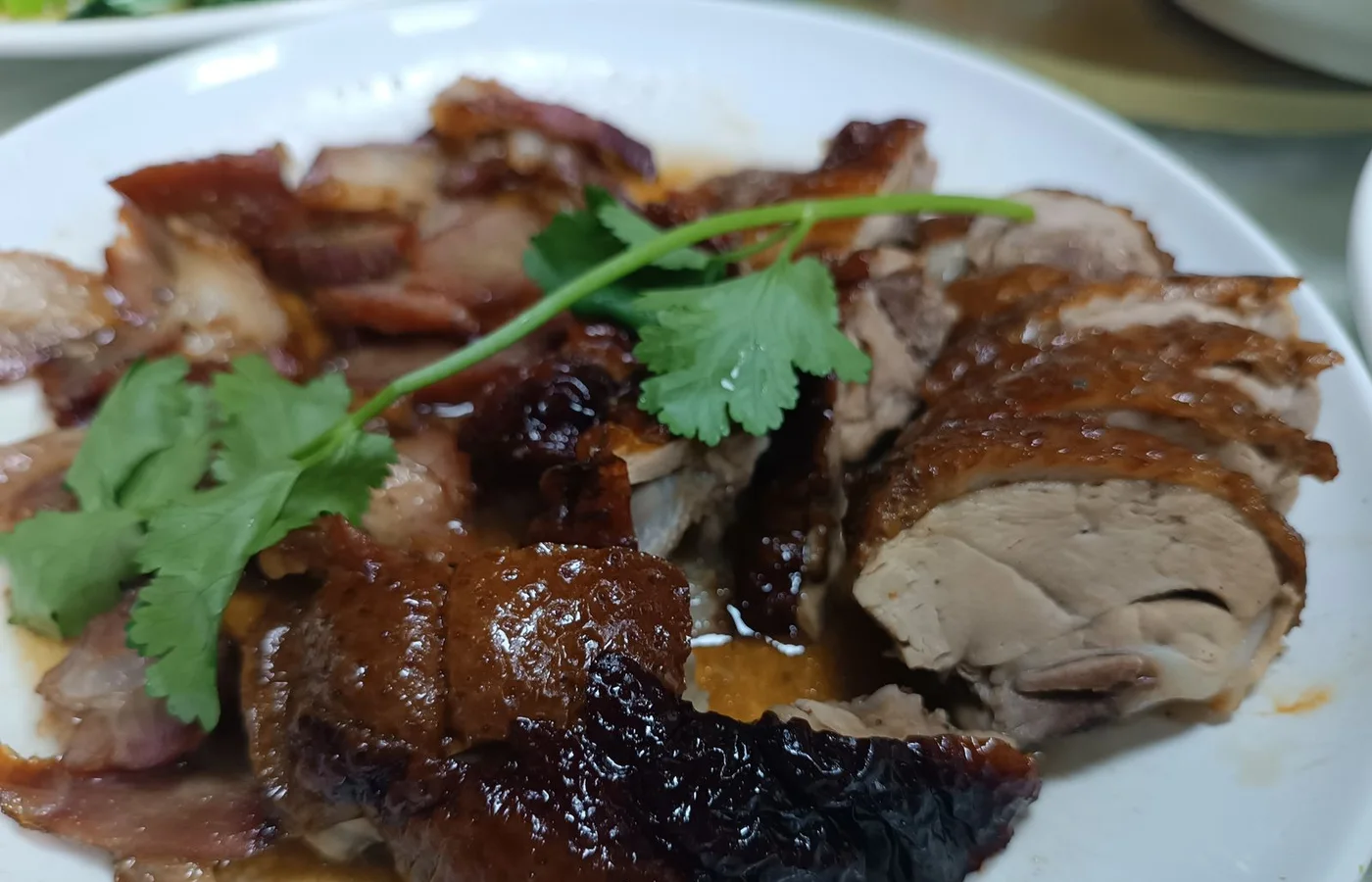
Roast goose, roast pork and large steamed meat dishes raise practical questions about portion and table role. Some examples are substantial shared preparations, but the category alone does not prove that a dish is intended for a banquet or celebration.
The key variable is often not fame but scale.

Ask the portion questions first
Before ordering, ask:
- What is the smallest available portion?
- Is the price per portion, per item or by weight?
- Does the dish require advance ordering?
- Approximately how many diners is it intended to serve?
- Will it dominate the table, or can it sit beside other categories?
These are questions to ask, not claims that every restaurant uses the same units.
Jun’an steamed pork as a large-dish clue
Jun’an steamed pork appears in Shunde’s public-cultural food overview and local-media town lists. It is useful for discussing a large shared preparation associated with a place.
The listing does not prove that the dish is available every day, that every portion has the same size or that one current business defines it. A two-person table should not order a celebration-scale dish merely to complete a famous-food list.
Roast does not mean one technique
The English word “roast” can hide preparation, seasoning, drying, heat and cutting decisions. If technique is your main interest, ask what the menu or staff can explain rather than relying on the broad translation.
Town-linked seasonal ingredients
Some local food identities begin with an ingredient rather than a completed restaurant dish. Vegetables, freshwater products and agricultural goods may be connected with a village, town, season or waterside environment.
This is the hardest category to make evergreen because supply changes.
Use the category as a question set
Ask:
- Is this ingredient in season now?
- Where was it grown or raised?
- Is the dish using the named local variety?
- Is the price for a dish or by weight?
- Is the preparation fixed or chosen at the table?
- What happens when the ingredient is unavailable?
Local coverage may identify a representative connection. It cannot guarantee that every venue using a town name follows the same sourcing or method.
Do not freeze a season
An article can explain that seasonality matters. It should not promise a month, harvest or menu item without a maintained source and verification date.
The evergreen lesson is to ask about current origin and supply. The current answer belongs to the restaurant or producer.
Understand how the categories overlap
A single dish may belong to several families. Fish noodles can combine fish processing with a staple role. A fried milk dish combines ingredient identity with a heat technique. A town-linked roast belongs to both geography and banquet food.
Use four questions to read the overlap.
What is it made from?
Fish, milk, rice, meat, vegetables or a combination.
What was done to it?
Cutting, bone removal, mincing, pounding, setting, steaming, frying, roasting or another documented technique.
What role does it play?
Shared main, vegetable, staple, snack, dessert or banquet centrepiece.
What claim is being made?
A town association, cultural recognition, business history, seasonal source or marketing name.
The first three questions describe food. The fourth describes evidence. Keeping them separate prevents a cultural label from becoming a quality guarantee.
Use the lenses to build a shared meal
You do not need one item from all five categories. Choose two or three with contrasting ingredients, techniques and table roles.
A small table
For two diners, a fully cooked fish or other substantial dish, vegetables, a rice food and one dessert may already form a complete meal. Confirm portions before adding a roast or second fish preparation.
A larger table
Four diners can compare more categories: perhaps a cooked fish, a meat or tofu dish, vegetables, a rice food and a milk dessert. A roast or banquet preparation may replace—not simply join—another large dish.
These examples are Foshan Living planning tools. They are not inherited Cantonese rules, fixed dish counts or promises about restaurant portions.
For a complete ordering sequence, read How a Shared Cantonese Meal Works.
Keep current menus and safety claims separate
Categories explain culture and decision-making. They do not establish:
- today’s menu or sold-out status;
- portion, price or weight unit;
- ingredient substitution;
- kitchen separation or allergen control;
- whether a fish preparation is fully cooked;
- restaurant quality or licensing status.
Ask the current venue about the current dish. Use health authorities—not a cultural article, photograph or restaurant reputation—for public-health claims.
Do not infer safety from appearance. Do not assume a town name proves sourcing. Do not preserve a current price in an evergreen paragraph.
Continue reading Shunde food
- Understanding Foshan and Shunde Food gives the city, district and cultural context.
- The planned Shunde cooking-techniques guide explains preparation, heat and texture; its link will be added after publication.
- How a Shared Cantonese Meal Works turns categories into a table.
- The planned Foshan food-safety guide covers the authoritative freshwater-fish warning; its link will be added after publication.
- Shunde Food for First-Timers combines the system into a first visit.
The categories have done their job when you can read a menu without needing a “must-eat” scorecard.
About Daniel Osei
Daniel Osei is Foshan Living’s Food & Drink correspondent. He organises unfamiliar menus into practical, clearly labelled editorial frameworks while separating cultural identity, cooking technique, current restaurant information and public-health evidence. Visit his author page to see all of his Foshan Living articles.
Image credits and disclosures
- hero.webp A breakfast photographed in Shunde in October 2024. The image documents one local meal setting; it does not identify every visible dish or define a representative Shunde breakfast. Fumikas Sagisavas · CC0 1.0; source derivative centre-cropped to 16:9, resized and converted to WebP; voluntary credit and change disclosure retained · CC0 1.0 Universal
- body-01-steamed-fish.webp A fish dish labelled as steamed fish by the Commons creator, photographed in Shunde in January 2024. It illustrates a fish-dish lens, not doneness, a standard recipe, portion or safety assessment. Lau Hau Yatyue Tiger · CC0 1.0; source derivative resized, cropped and converted to WebP; voluntary credit and change disclosure retained · CC0 1.0 Universal
- body-02-double-skin-milk.webp Bowls identified by the Commons creator as double-skin milk, photographed on Huagai Road in Shunde in January 2024. The image shows one serving context, not a recipe, ingredient specification or quality judgement. Lau Hau Yatyue Tiger · CC0 1.0; tight crop excludes receipt and most incidental people, then resized and converted to WebP; voluntary credit and change disclosure retained · CC0 1.0 Universal
- body-04-roast-duck.webp A dish identified by the Commons creator as roast duck, photographed at a Shunde restaurant in January 2024. It illustrates a substantial shared dish, not a standard portion, recipe, banquet rule or venue recommendation. Lau Hau Yatyue Tiger · CC0 1.0; source derivative resized, cropped and converted to WebP; voluntary credit and change disclosure retained · CC0 1.0 Universal
- body-06-five-category-framework.webp Foshan Living’s project-original editorial framework. It is not an official classification and cannot establish recipe, sourcing, doneness, quality, authenticity or food safety. Daniel Osei / Foshan Living · Original SVG infographic created for this article; editable source retained and WebP rendered locally

Keep exploring
Related Foshan guides
 Explore Foshan
Chancheng or Shunde: Where Should You Start in Foshan?
Choosing between Chancheng and Shunde for a first Foshan trip? Compare heritage, food, neighbourhood pace, transport planning and where to stay.
 Explore Foshan
Understanding Foshan: A City of Five Districts
Learn how Foshan’s five districts differ, which areas suit culture, food, urban life or nature, and why every short trip needs a specific local base.
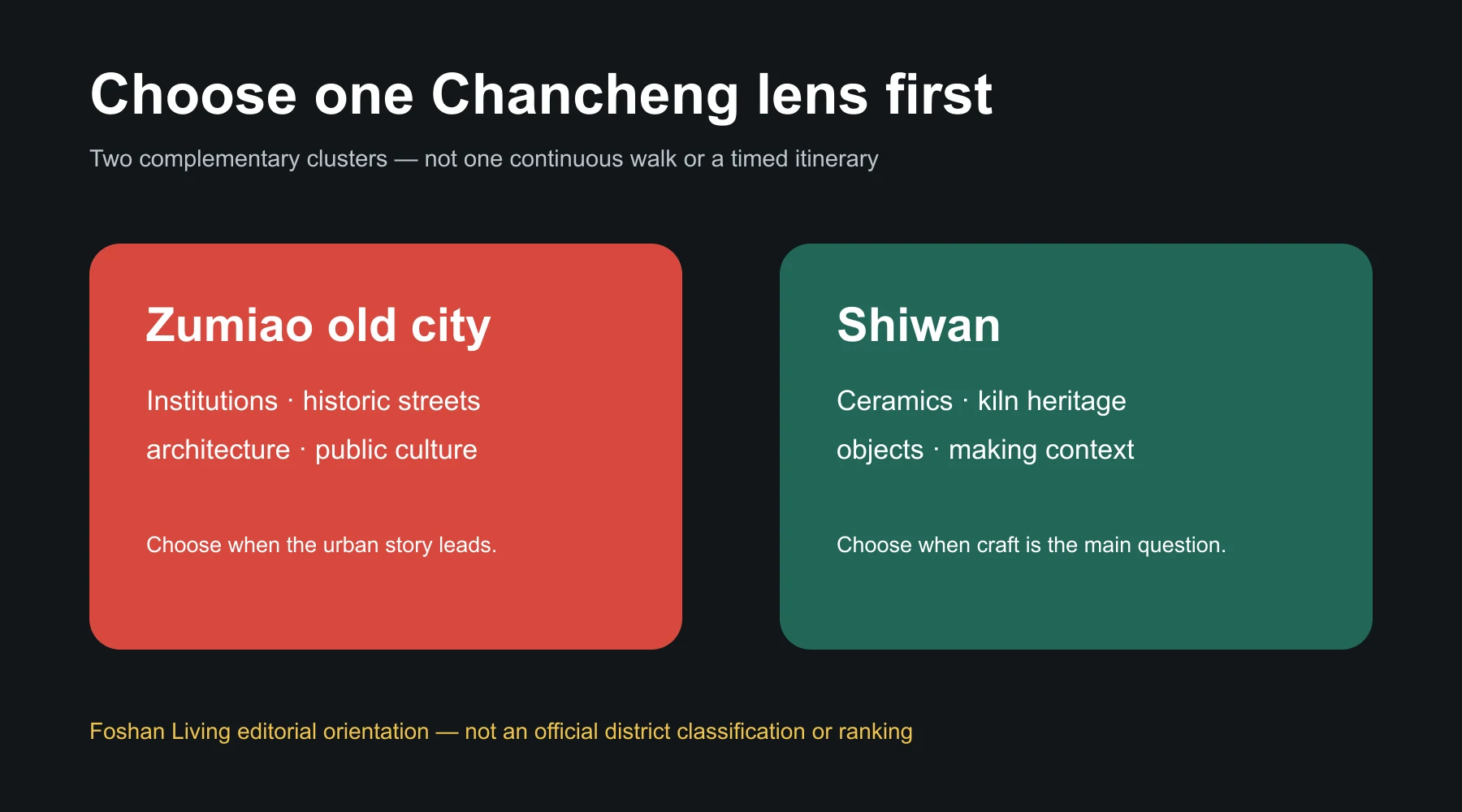 Explore Foshan
Zumiao Old City or Shiwan: How to Choose Your Chancheng Day
Compare Zumiao old city and Shiwan, choose one main Chancheng cluster, and add the other only after checking the complete route and current access.
 Explore Foshan
Chancheng: Foshan’s Historic Urban Core
Understand Chancheng through the Zumiao old city and Shiwan’s ceramic heritage, with guidance on walking scale, transport checks and where to base.
Plan your visitFirst Time in Foshan
Build a first trip around districts, transport, food and one deeper cultural interest.